

Case studies
- UOW ranked first place nationally for equity and access
- UOW delivering on the Australian Universities Accord’s equity agenda
- UOW hosts 28th Indigenous Nationals
- Students collaborate with non-profit to enhance disability employment pathways
- UOW students develop assistive device to secure employment for quadruple amputee
- Unlocking sporting opportunities for kids living with disabilities
The University of Wollongong was named the top university in Australia for equity in the 2024 Australian Financial Review (AFR) Best University Rankings, placing equal ninth overall with excellent results in all criteria.
The AFR rankings evaluate universities across equity, teaching, research and career impact, with UOW ranking among the top 15 in each category. The equity pillar measures five groups of disadvantaged students: non-English speaking background, disability, Indigenous, low socio-economic, and regional/remote.
Around 40 per cent of UOW students come from backgrounds traditionally underrepresented in higher education, supported by extensive regional campuses in the Shoalhaven, Southern Highlands, Eurobodalla and Bega Valley, alongside metropolitan campuses in Liverpool and Sutherland. The first place ranking for equity underscores the University’s commitment to expanding access to higher education for students from all backgrounds.

- SDG 4 – Quality Education
- SDG 10 – Reduced Inequalities
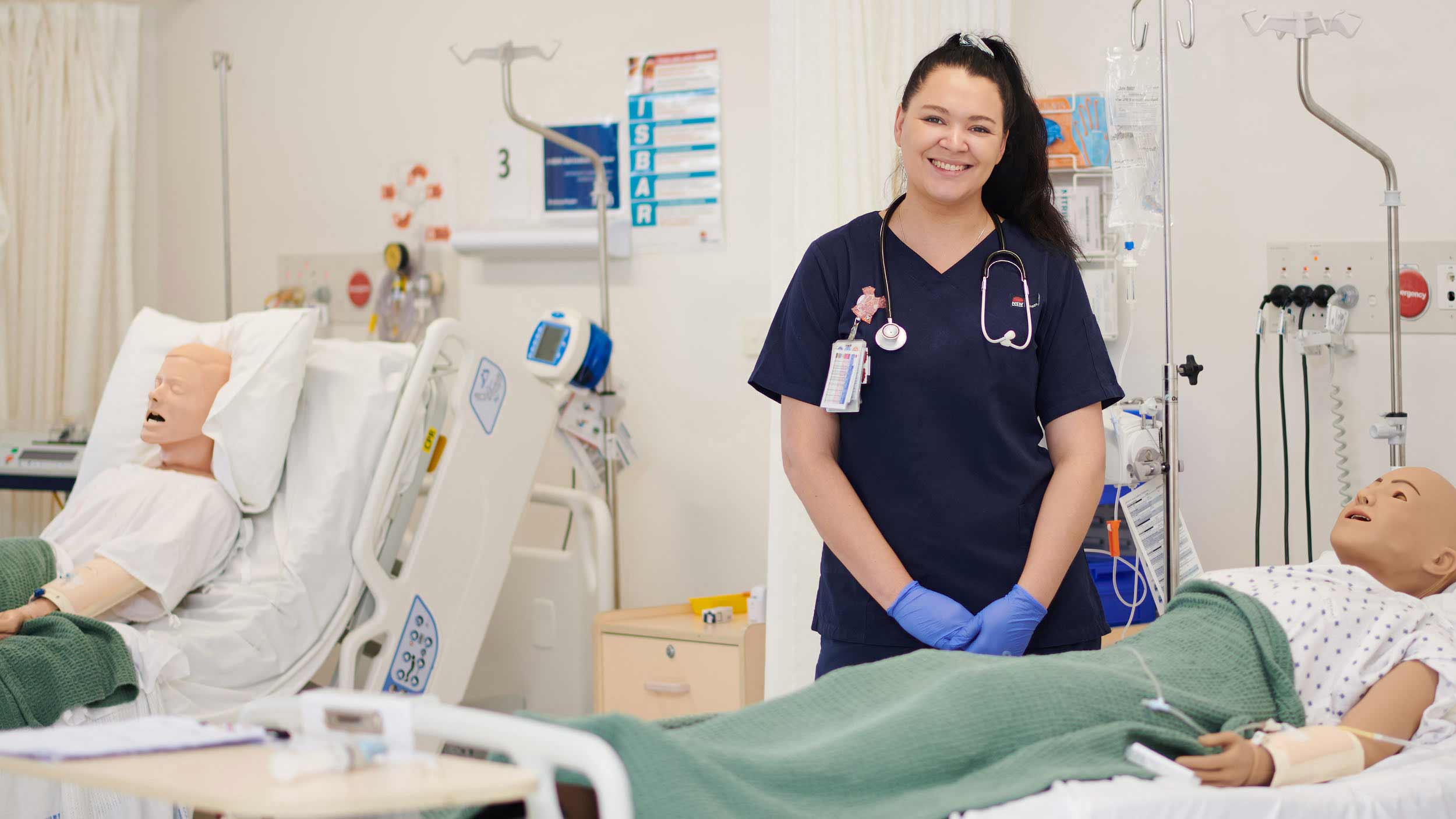
In 2024, UOW's commitment to educational equity continued to position the University as a sector leader in delivering the Australian Universities Accord's reform agenda. Around 40 per cent of UOW students come from backgrounds underrepresented in higher education, demonstrating the University's longstanding dedication to expanding access.
UOW is already exceeding expectations in participation rates among First Nations people, people from low socio-economic status backgrounds, and regional and remote students. This success proves that inclusion and diversity does not come at the price of excellence, innovation or scale, evidenced by UOW's position in the top one per cent of the QS World University Rankings 2024.
The University's pathway programs and network of regional campuses create vital opportunities for students to access world-class education close to home, supporting both individual aspirations and community economic development across NSW.
- SDG 4 – Quality Education
- SDG 10 – Reduced Inequalities
The University of Wollongong hosted the 28th Indigenous Nationals in June 2024, bringing together more than 500 Indigenous student-athletes from 33 Australian universities to compete in touch football, basketball, netball and volleyball. With support from Squadron Energy as Official Team Sponsor, UOW fielded two teams.
The annual event celebrates the rich sporting culture of Indigenous Australia and acknowledges the heritage and history of the participants.
The artwork for the 2024 Indigenous Nationals was created by Wiradjuri and Ngunnawal graphic designer and UOW graduate Brittney Angus. The design featured meeting place symbols reflecting communities from every corner of Australia, with journey lines depicting collective travels to UOW, and dots representing Australia's vast landscape connecting present to past.
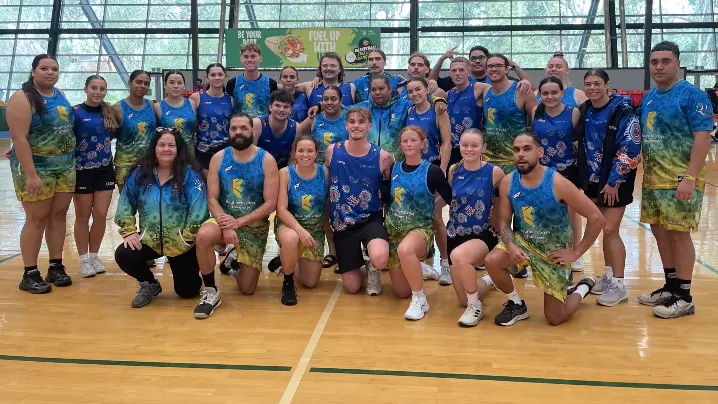
While focusing on community celebration and networking, the games promoted unity, health, fitness and wellbeing, creating new communication networks and reinforcing identity through positive role models.
SDG 3 – Good Health and Wellbeing
SDG 4 – Quality Education
SDG 10 – Reduced Inequalities
SDG 17 – Partnerships for the Goals
A work-integrated learning partnership between UOW and local social enterprise Flagstaff Group provided students with the opportunity to develop a pioneering program to enhance employment pathways for people living with disability.
Through site visits and direct engagement with Flagstaff Group, postgraduate business students undertaking a research capstone subject gained firsthand insight into the challenges and opportunities surrounding inclusive employment. The collaboration encouraged students to explore how meaningful work can be created within community-focused, values-driven organisations, beyond traditional corporate landscapes.
Students applied academic knowledge in practical settings, creating strategic proposals shaped by Flagstaff’s principles of equity, wellbeing and workplace diversity. The partnership proved mutually enriching, with Flagstaff gaining fresh perspectives and innovative recommendations, while students experienced real-world application of their knowledge to address genuine social challenges.
- SDG 8 – Decent Work and Economic Growth
- SDG 10 – Reduced Inequalities
- SDG 17 – Partnerships for the Goals
In an inspiring collaboration between a Wagga Wagga-based employment agency and UOW, two students designed and created an assistive horse grooming device for Grace, a 26-year-old quadruple amputee and a dedicated animal lover.
Grace, who contracted meningococcal as a baby, experienced difficulties pursuing her passion for grooming horses due to her unique needs. To help her find employment, the local agency contacted the UOW Maker Space program to enquire whether there were ways of creating a tailored, assistive horse grooming device for the young woman.
The UOW Maker Space is a workshop for students to explore their creative side using technology, with access to tools, equipment, and regular events and training on 3D printing, Virtual Reality and other STEM (Science, Technology, Engineering and Mathematics) activities.
The device has not only transformed Grace's life but helped her secure a job at a local Wagga Wagga Veterinary Hospital, where she now works with horses. The experience was rewarding for the students who were instrumental in improving Grace’s quality of life by implementing their engineering skills gained at UOW.

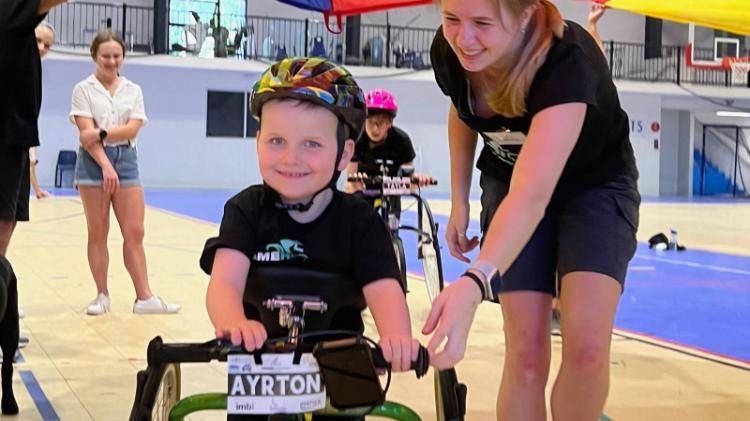
Frame Running Wollongong (FRW) provides valuable sporting opportunities for kids who rely on wheelchairs and walkers. Operating out of UOW’s Sports Hub, this non-profit community service in the Illawarra region, offers children with disabilities or impaired balance the chance to experience the exhilaration of 'free to run' – through frame running.
The frame runner is a three-wheeled frame, similar to a trike, but with no pedals – which supports the athlete as they walk or run. It can be used by people of all ages for recreation and sport at a variety of levels, including children with a disability or impaired movement or balance.
FRW aims to enrich the lives of children with a disability by participating in the sport of Frame Running and is the only provider of Frame Running in the Illawarra Region.
- SDG 3 – Good Health and Wellbeing
- SDG 10 – Reduced Inequalities
Volunteer to enrich the lives of Illawarra kids with mobility challenges