Goal 8: Decent Work and Economic Growth

Promote sustained, inclusive and sustainable economic growth, full and productive employment and decent work for all

The University of Wollongong is committed to working towards the United Nation's Sustainable Development Goals (SDGs) through its governance, teaching and learning, community engagement, partnerships and research. The following initiatives are by UOW staff and students working towards Goal 8: Decent Work and Economic Growth.

Case studies

An experienced team of UOW researchers, led by Associate Professor Tillmann Boehme from the School of Business, was appointed to head up the development of an Illawarra Clean Energy Industry Roadmap for Business Illawarra. The critical project helped to ensure the Illawarra region captures maximum economic benefit from Australia's clean energy transformation. 

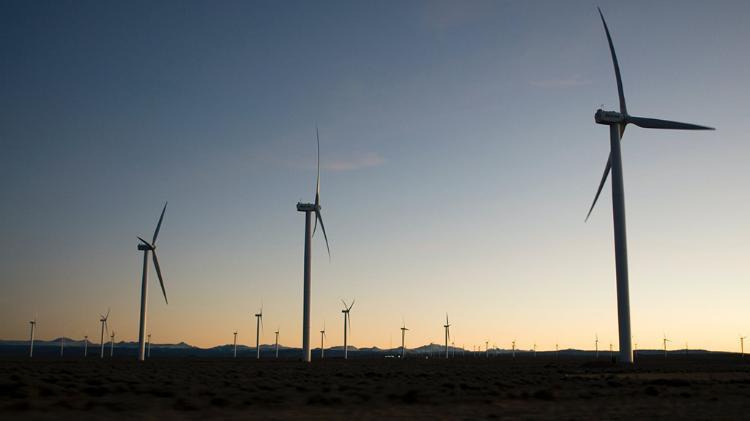
The team’s comprehensive research examined how to retain economic opportunities from the clean energy boom within the region, focusing on workforce development, supply chain optimisation and financing mechanisms. The initiative addresses opportunities across offshore and onshore wind, clean hydrogen production and green energy storage. 

The project is guided by a steering group including Oceanex, Hysata, BlueScope, Squadron Energy and Endeavour Energy, ensuring industry-relevant outcomes. With federal investment in an Energy Futures Skills Centre and Renewable Energy Training facility in Wollongong, plus the NSW government's $275 million Net Zero Manufacturing Initiative, this roadmap strategically positions the Illawarra to maximise clean energy opportunities and deliver green jobs to the community. 
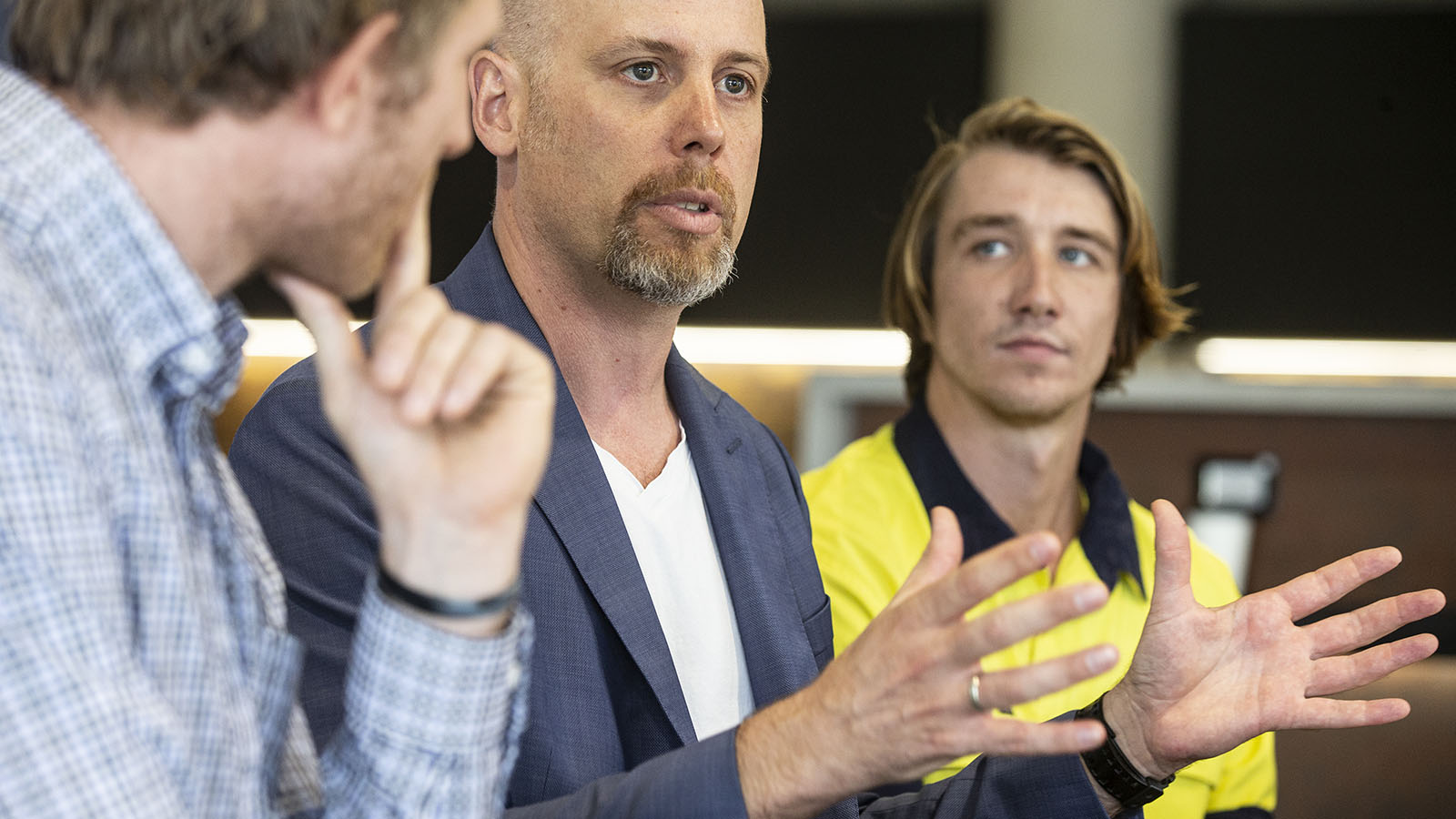
In 2024, work commenced on the Energy Futures Skills Centre, a state-of-the-art learning environment to support the education, training and engagement needs for the workforce of the future. The centre is funded by a $10 million grant from the Australian Government, helping unlock Australia’s renewable energy potential by supporting local communities and industries to create sustainable jobs.

The funding will be used to establish new training laboratories, a Community Engagement Centre for Energy Futures within the existing Science Space at Innovation Campus, and create programs to help people change careers and upskill in clean energy jobs. The courses, jointly designed by UOW and TAFE NSW, will focus on all disciplines needed to service the renewables industry, training everyone from engineers to tradespeople for clean energy careers. 
iAccelerate – UOW’s business incubator – expanded its regional entrepreneur program in 2024 with five regional education programs targeting key industry sectors: fisheries and aquaculture, advanced manufacturing, circularity, ecotourism, and high-quality food production. 

Through each eight-week program, RISE provided regional entrepreneurs with the knowledge and tools to pursue new innovations and develop the necessary skills to bring their ideas to life. Leveraging UOW’s regional presence across the Bega Valley, Eurobodalla, Shoalhaven and Southern Highlands campuses, the new programs brought together pre-accelerator facilitators, UOW academics and industry experts to help regional entrepreneurs tackle sustainability challenges and meet local community needs. 

Since launching regional programs in 2016, iAccelerate has supported 56 regional startups in bushfire-affected areas, creating 300 new jobs. The expanded RISE program demonstrates UOW's commitment to addressing sustainability challenges whilst fostering regional economic development and innovation capacity. 
Unions

UOW recognises the rights of its staff to freedom of association. There are two key unions that represent staff at UOW:

  • The Community and Public Sector Union (CPSU), which is the specialist union for Professional Staff in higher education.  
  • The National Tertiary Education Union (NTEU), which is the specialist union solely representing staff in tertiary education.  

UOW recognises and engages with both key unions as part of the collective bargaining (labour rights) process to renew enterprise agreements for staff. Enterprise agreements apply to all eligible staff, including women and international staff, regardless of whether they are a union member or not. Enterprise agreements at UOW do not discriminate against any staff, and cover a range of employment related topics such as salaries and conditions (e.g. leave), dispute resolution, appeals processes on employee rights and pay, and many more.

Protection of worker rights in outsourced activities

The University of Wollongong (UOW) upholds the rights of third party workers involved in outsourced activities through a framework of policies that promote ethical and fair labour practices. Third parties include suppliers, collaborators and contractors employed by the university.  
 
The Modern Slavery Prevention Policy ensures that all contractors and suppliers uphold ethical employment standards and respect human rights, while the Purchasing and Procurement Policy promotes transparency, accountability, and integrity in supplier engagement. In addition, the University Code of Conduct applies to staff, affiliates, and contractors, outlining expectations for respectful, safe, and equitable workplace behaviour. Collectively, these policies demonstrate UOW’s commitment to protecting the rights and wellbeing of all workers engaged through third parties, not just workers directly employed by the university.  

Making impact locally

UOW is invested in improving the economic, social, and cultural life of everyone within our communities. Every $1 million in gross output due to UOW-related expenditure generates another $1 million of gross output elsewhere in the economy.  

UOW produces an Economic Impact Report every four years that provides insight into UOW’s total economic contribution.

See our economic impact CIRCA 2020 

Initiatives

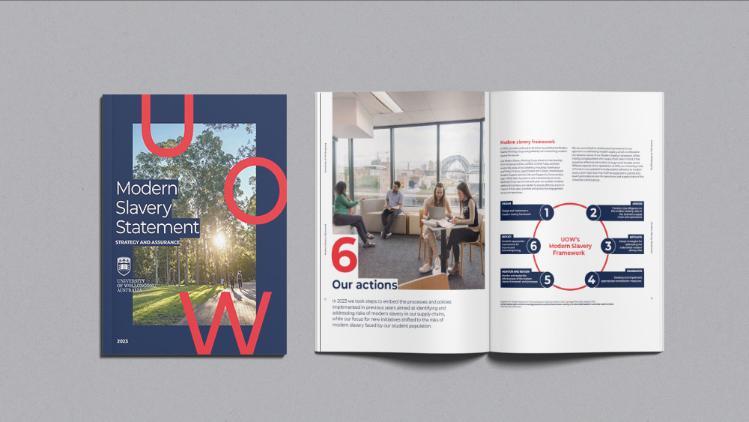
Modern slavery affects some 40 million people across the globe, with women and girls disproportionately affected. This grave violation of human rights is unacceptable. UOW is committed to making change that matters to meet this challenge and is committed to combatting modern slavery, forced labour, human trafficking and child labour. 

How is UOW addressing modern slavery?

Flat lay of teh Modern slavery report showing point 6. IOur actions full spread and teh report cover

iAccelerate plays a key role in the dynamic community of entrepreneurs and innovators transforming Australia's economy.  

As the country's largest university-led incubator, iAccelerate has partnered with around 522 start-ups and scale-ups, creating more than 1,182 jobs and injecting $161.7 million into the economy since inception.  

Each company is introduced to the United Nations SDGs as a foundational subject in the education program, ensuring entrepreneurs are socially conscious and equipped to make a positive impact on the world.  

iAccelerate is the only program of its kind that integrates a pre-accelerator, accelerator and incubator under one roof. In 2024, in response to industry needs, iAccelerate also created and delivered modules and short courses in social enterprise, advanced manufacturing and circularity. 

visit iAccelerate

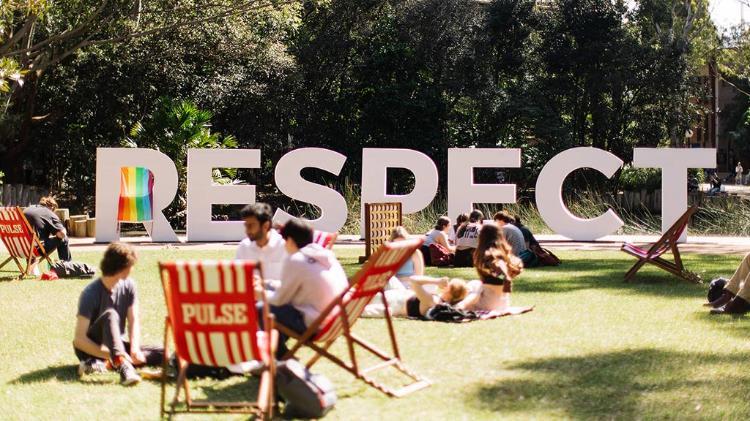
UOW staff reflect the diversity of our community – in gender, sexuality, disability and cultural diversity. UOW is a place for all genders and UOW is proud of our culture that provides equal opportunity, where people can be their authentic selves and have policies and practices in place to ensure that we provide a fair and equitable campus. We welcome anyone regardless of age, race, disability, colour, gender identity or expression, sexual orientation, or economic background.

UOW has policies and practices in place to ensure that we provide a fair workplace and campus free from unlawful discrimination and harassment. Our inclusive values empower all staff to achieve their full potential and remove barriers to participation. We are also committed to removing barriers to the selection, advancement, and opportunities for people of all genders in the workplace and have solid training packages in place. UOW’s gender equality website provides further information on specific programs and initiatives to support gender equity. 

The Centre for Contemporary Australasian Business and Economics Studies (CCABES) fosters the development and promotion of collaborative research in contemporary Australasian business and economics among countries at different stages of economic development. Researchers have strong international profiles and research is innovative, of high quality research and has broad academic, business and policy impact.

visit CCABES

Our vision is to provide opportunity for every UOW student to engage in a variety of scaffolded, purposefully-designed and learner-centred work integrated learning (WIL) experiences within their degree. Work Integrated Learning describes activities that integrate work practices with learning in an academic institution. Through WIL, students undertake authentic, experiential learning relevant to their program of study. WIL may occur in person or remotely, in a physical or simulated workplace, or in the classroom. It includes practicums, placements, internships, service learning, industry projects and experience, workplace simulations and professional activities. 

Empowering Students through WIL