

Case studies
- UOW research reveals recycling process creates harmful microplastics
- Food-water-energy nexus symposium advances climate education
- Humanure as a resource: The Pootopia! project
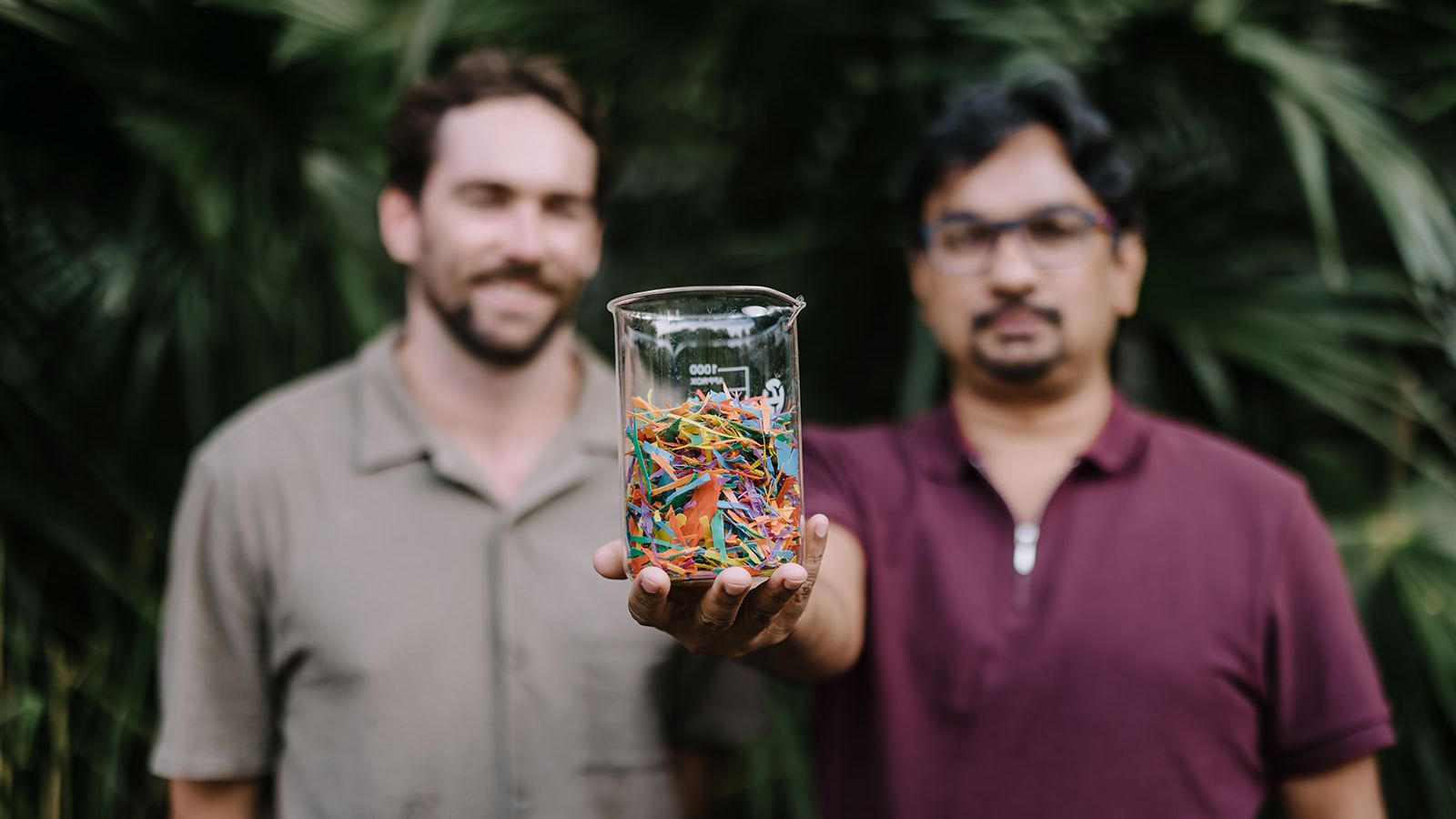
Environmental engineers from UOW have discovered an unintended consequence of plastic recycling, with evidence that mechanical recycling can produce microplastic particles that enter soil and water systems.
The study, conducted by Professor Faisal Hai, Head of the School of Civil, Mining, Environmental and Architectural Engineering and then UOW PhD candidate, now graduate, Dr Michael Staplevan, identified key stages in recycling where microplastic release is highest, providing crucial insights into contamination pathways. The research employed advanced analytical techniques to track microplastic generation throughout different recycling processes, revealing that certain types of plastic processing create substantially more environmental contamination than others.
The findings call for improved technologies and stricter regulations, prompting local governments and industry partners to re-evaluate recycling practices and increase investment in clean technologies. The research has contributed to broader discussions on sustainable waste management and circular economy principles, influencing both public awareness and legislative frameworks.
- SDG 6 – Clean Water and Sanitation
- SDG 9 – Industry, Innovation and Infrastructure
- SDG 12 – Responsible Consumption and Production
As part of Global Climate Change Week 2024, UOW hosted Sustaining Our Future: Navigating the Food-Water-Energy Nexus. The symposium considered how multidisciplinary discussions can inform communities as well as develop UOW curriculum and practice with respect to sustainability and climate change for future generations of learners.
The online event brought together UOW experts to address the food-water-energy nexus in the climate crisis, examining how demand for all three is increasing rapidly. The symposium explored how to achieve integrated and sustainable management of water, food and energy to balance the needs of people, nature and the economy.
The symposium exemplified UOW's commitment to embedding sustainability education across curricula while fostering interdisciplinary collaboration to address complex climate challenges. By bringing together diverse expertise, the event demonstrated how academic institutions can translate research into educational frameworks that prepare future generations to tackle interconnected global challenges.
- SDG 2 – Zero Hunger
- SDG 4 – Quality Education
- SDG 6 – Clean Water and Sanitation
- SDG 7 – Affordable and Clean Energy
- SDG 13 – Climate Action
Following its launch in 2023, the Pootopia! project at UOW continued to challenge conventional views on human waste by treating human excrement (humanure) as a valuable resource rather than a problem. Supported by UOW’s Global Challenges Program, the multidisciplinary team included artists (Associate Professor Lucas Ihlein and Dr Kim Williams), economists (Associate Professor Amir Arjomandi and Associate Professor Alfredo Paloyo), engineers (Professor Faisal Hai) and microbiologists (Professor Martina Sanderson-Smith).
The team expanded their research and public engagement through pilot composting toilet installations at events and locations such as the Yours and Owls music festival and the Wollongong Botanic Gardens. These installations successfully engaged hundreds of participants, generating important data on system performance, public attitudes, and the feasibility of scaling humanure composting in real-world settings.
The project’s collaborative approach, involving partnerships with the permaculture community, festival organisers and the waste management sector, fostered public discussion about sustainable sanitation, regenerative agriculture and circular resource cycles. In 2024, Pootopia! focused on investigating long-term infrastructure potential, policy implications, and strategies for behavioural change, aiming to influence public health outcomes and equitable access to sanitation.
By integrating research, community trials and education, Pootopia! demonstrated how rethinking human waste can support cleaner environments, strengthen community resilience to climate change and contribute to a more sustainable future for all.
SDG 4 – Quality Education
SDG 6 – Clean Water and Sanitation
SDG 11 – Sustainable Cities and Communities
SDG 13 – Climate Action
SDG 14 – Life Below Water
SDG 15 – Life on Land
SDG 17 – Partnerships for the Goals
Pootopia! The art, science, and economics of composting human manure