Goal 12: Responsible Consumption and Production

Ensure sustainable consumption and production patterns

The University of Wollongong is committed to working towards the United Nation's Sustainable Development Goals (SDGs) through its governance, teaching and learning, community engagement, partnerships and research. The following initiatives are by UOW staff and students working towards Goal 12: Responsible Consumption and Production.

Case studies

The University of Wollongong, together with the Blue Economy Cooperative Research Centre, worked alongside industry leaders, government stakeholders, experts and community members to understand the challenges and potential of regenerative aquaculture on the NSW South Coast.  

Regenerative ocean aquaculture is non-intensive, feed-free aquaculture which allows the stock to grow on its own, using natural food sources and conditions. Conducted over a 12-month period, the research explored how Indigenous, community and economic values can inform the emerging seaweed farming and evolving shellfish farming sectors in waters off the NSW South Coast.

Led by UOW Principal Research Fellow Associate Professor Michelle Voyer from ANCORS, the project team explored opportunities for the development of kelp and mussel farming aquaculture in the local area. The study found a very high degree of support for the development of this industry across the NSW South Coast.

To support the transition and responsible growth of a regenerative aquaculture industry in the area, the study recommendations focused on the establishment of research trial sites, co-designed site selection, and the development of a framework to support First Nations leadership in the regenerative aquaculture industry.

Initiatives

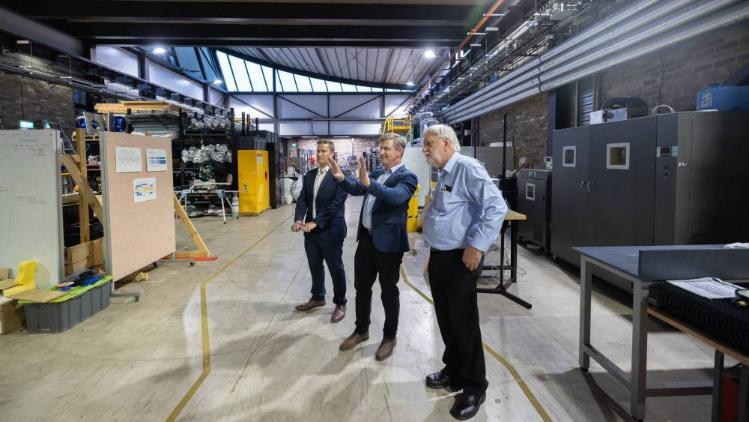
A new, multi-purpose tourism, community and research hub, the National Circularity Centre (NCC) will be built in the Bega Valley on the NSW South Coast, to develop market-leading research and demonstrate replicable models for the circular economy.

The Centre will keep resources in use for as long as possible, extracting the maximum value from them while in use, before recovering and regenerating products and materials at the end of their life.

The University of Wollongong, through its membership of the Regional Circularity Cooperative (RCC), will be a driving partner to establish the Centre, bringing research expertise in energy, materials innovation and sustainable building practices.

The NCC will be a test case for scalable solutions with potential for world-wide application. It will offer business and edu-tourism opportunities where visitors can see solutions they can implement in their own workplaces and homes.

Waste Minimisation of Plastics and Disposable Items

UOW strives to drive behaviours that create a circular economy to reduce the overall amount of waste generated. Our waste management prioritises reducing, reusing, recycling and, where there is no other feasible option, the proper disposal of waste.

Under the guidance of our Purchasing and Procurement Policy, UOW prioritises the purchase of assets and products that are made of recycled materials or can be reused or recycled at end-of-life, and avoid the purchase of single use (disposable) items and plastics. This is outlined in the university’s Waste Management Action Plan [PDF].

The Purchasing and Procurement Policy extends to contractors who are either outsourced suppliers or outsourced service providers. As such, the decrease of waste generation must be a shared goal of UOW and that of its suppliers and contractors. This is outlined in our Waste Management Action Plan. Additionally, according to the environmental sustainability principles of our Supplier Code of Conduct [PDF], the University prefers to work with suppliers that share the same environmental commitments and goals.

Ethical Sourcing Policy

All purchases and procurements by and for UOW are governed by the Purchasing and Procurement Policy. This includes all food and supplies. It states that all products must be sustainably and responsibly sourced with particular emphasis on the social and environmental impact of the sourcing process, and that workers involved in the procurement process are treated fairly in accordance with Anti-Slavery principles.

In terms of food sourcing, the main caterer of UOW, Aspire, is committed to sustainability and implements sustainable work practices in its operations. Where possible, the fruits and vegetables it purchases are locally sourced from sustainable farms and in close collaboration with Green Connect in the Illawarra, our local region, to improve and deliver sustainable food.

Research environment

Australian Power Quality Research Centre (APQRC)
The Centre for Sustainable Ecosystem Solutions (CSES)
ARC Training Centre in Energy Technologies for Future Grids