A laboratory setting with multiple computers and scientific equipment, where one person works at a workstation while another stands nearby.

Mass Spectrometry User Resource & Research Facility (MSURRF)

The Mass Spectrometry User Resource and Research Facility (MSURRF) is in the School of Chemistry and its research projects are part of the Centre for Medical Bioscience and Centre for Medicinal Chemistry and Pharmacology. MSURRF includes research groups led by Professor Jennifer Beck and Associate Professor Todd Mitchell, studying diverse topics such as DNA replication, interactions of potential drugs with DNA, degradation mechanisms in polymer coatings, observation of lipids in cell membranes and ion mobility of biological molecular machines.

Location: The Mass Spectrometry User Resource and Research Facility Building 18, Rooms 101, 103 and 106.

About the facility

Technical staff

Dr Alan Maccarone
Technical Officer
alan_maccarone@uow.edu.au

Karin Maxwell
Technical Officer,
karin_maxwell@uow.edu.au

PHD students

Leighton Alcock
Nawal Assadawi
Monica Birrento
Chris Hansen
Julian Harrison
Lloyd James
Qijynh (Sean) Thai Son Pham

Professor Jennifer Beck

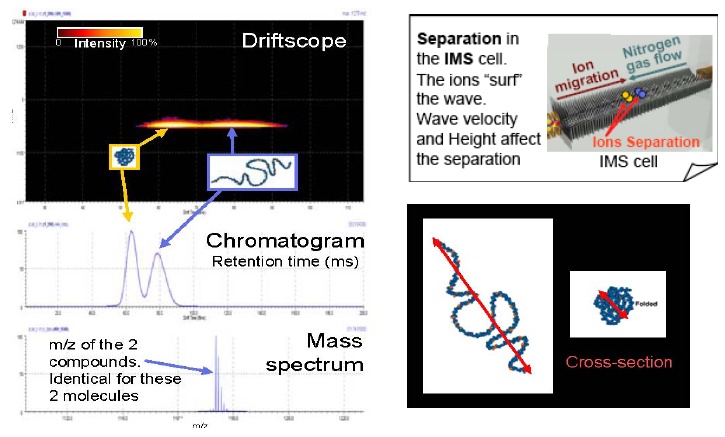
Applications of Ion Mobility Mass Spectrometry

Beck applications of ion mobility ms


Some applications of ESI-MS

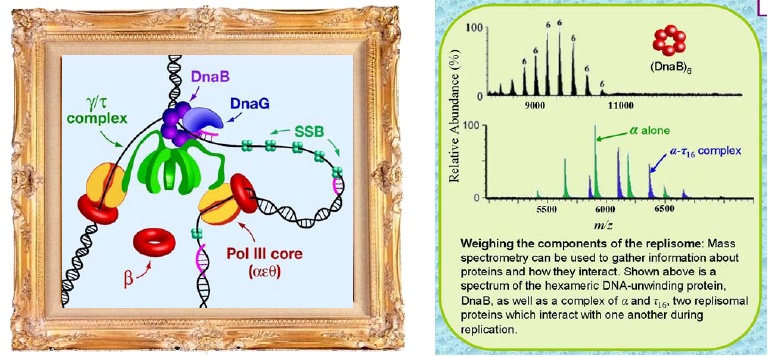
Replication system of Escherichia coli - stoichiometry and subunit assembly

Beck Replication syst

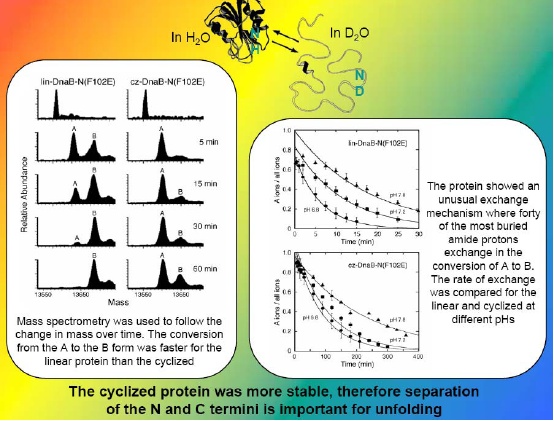
Protein Folding

Beck protein folding

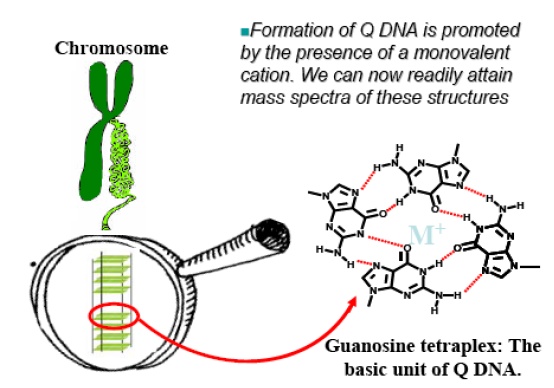
Drug-DNA complexes e.g. Quadruplex DNA

Beck drug DNA complexes

Associate Professor Todd Mitchell

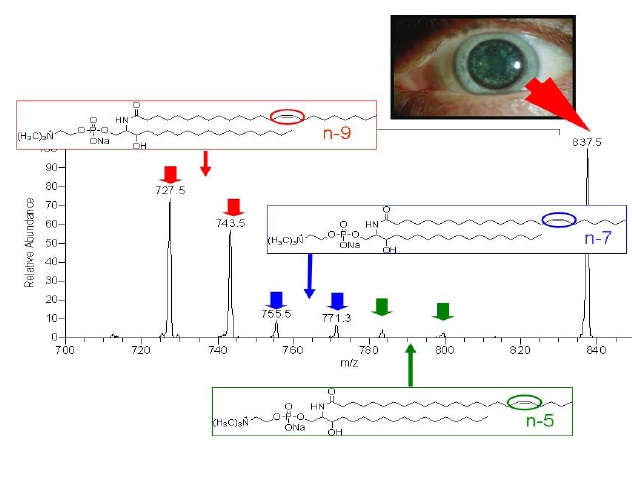
Phospholipids in human lens

Blanksby Phospholipids in human lens

Blanksby Human Lens text


Applications of OzID

Blanksby Applications of OZID

Mass spectrometry equipment

Waters SynaptTM HDMS

Type: Quadrupole (TWIMS) Time-of-flight
Date acquired: 2008
Comments: Triwave technology with high efficiency ion mobility spectrometry enabling sample separation based on molecule's mass as well as their size, shape and charge
Sources: Electrospray (ESI), nanospray and lockspray
Use: Ion mobility study, time aligned parallel fragmentation for structural analysis, high mass protein and DNA research and accurate mass analysis


Waters Qtof Ultima

Type: Quadrupole Time-of-flight
Date acquired: 2004
Comments: Factory modified for high mass/charge transmission
Sources: Electrospray (ESI), nanoESI, lockspray
Use: High mass protein analysis, binding interactions and DNA research.  Accurate mass analysis


Waters Quattro Micro

Type: Triple Quadrupole
Date acquired: 2004 (as 2nd hand instrument)
Sources: Electrospray (ESI), nanESI
Use: Gas phase thermochemistry, reaction monitoring and lipid research


Waters Xevo QTOF

Type: Quadrupole time-of-flight
Date acquired: 2010
Sources: Electrospray (ESI), Lockspray and Atmospheric Solids Analysis Probe (ASAP)
Use: Accurate mass analysis, high resolution mass spectrometry, tandem mass spectrometry
Additional Features: UPLC-MS and GC-MS


AB SCIEX QTrap 5500 With Selexion

Type: Triple quadrupole and linear ion trap
Date acquired: 2013
Comments: Fitted with selexION differential ion mobility spectrometry (DMS) device to allow separation of isobaric and co-eluting molecules. This instrument is part of a collaboration with AB Sciex (Toronto, Canada) through the ARC Linkage Program and has been modified to measure Ozone Induced Dissociation (OzID) mass spectra. OzID is a technique developed in our lab and uses a selective reaction between the ion and ozone gas to cleave double bonds and reveal their position(s) within the molecule. OzID is used routinely for structural characterisation of lipids
Sources: Electrospray
Uses: DMS separation of isomeric lipids, OzID for identification of fatty acid double bond position
Additional features: Eksigent ekspert? nanoLC400 system


AB SCIEX QTrap 5500

Type: Triple quadrupole and linear ion trap
Date acquired: 2011
Sources: Electrospray, Advion Nanomate (chip-based nanoESI)
Uses: The instrument is part of the UOW lipidomics facility and is used for the identification and quantification of a wide range of lipids in extracts from diverse sources including tissue, tears and cell culture. The automated nanomate source allows the investigation of large sample arrays
Additional features: Liquid extraction surface analysis (LESA) allowing analysis of molecules directly from a surface


Shimadzu LCMS-2010EV

Type: Single quadrupole
Date acquired: 2013
Sources: Electrospray (ESI)


Shimadzu QP5050A

Type: Gas chromatography / single quadrupole
Date acquired: 2003
Sources: Direct insertion electron impact (EI)
Use: Purity testing, low resolution compound identification


Thermo Fisher Scientific LTQ XL

Type: Linear ion trap, with coupled Surveyor LC
Date acquired: 2013
Sources: Ion Max Electrospray, 2D desorption electrospray (DESI), will be moved to this instrument soon if that counts as a source
Use: Analysis and identification of lipids and fatty acids


Thermo Fisher Scientific LTQ Orbitrap XL

Type: Linear ion trap, with orbitrap mass analyser
Date acquired: 2012
Sources: Matrix assisted laser desorption ionisation (MALDI)
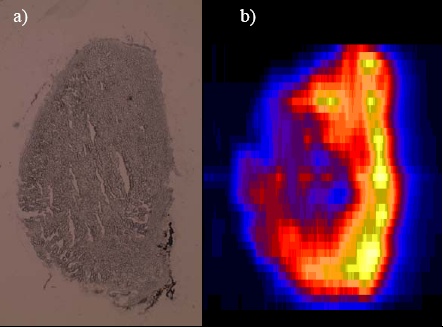
Use: Accurate mass analysis of lipids and peptides. Spatial imaging of lipids in tissues

Nuclear magnetic resonance spectrometers

The School of Chemistry is currently equipped with three NMR Spectrometers:

The NMR facility is primarily used by the research students and staff in the School of Chemistry. NMR services for external researchers can also be provided (reasonable charges apply).

We also have access to:

  • Bruker 600 NMR spectrometer at UNSW
  • Bruker 800 MHz spectrometer at ANU
Further information:

NMR Facility Manager Dr Wilford Lie
Phone: +61 2 4221 3513 (office)
Phone: +61 2 4221 3473 (lab)

We offer the following routine mass spectrometry services:
  • Low Resolution (EI, GC/MS, ESI)
  • High Resolution (EI, ESI, ASAP)

Specialist Tandem MS, LC/MS services available on request.

Our group has been providing a low resolution services since early 1992 and we have considerable experience in dealing with complex or more difficult samples. We also have extensive experience with inorganic compounds.

Please contact Celine Kelso for more information on the services we offer and at what cost and on how to proceed to get your samples analysed.

Dr Celine Kelso
MS Facility Manager

P: (02) 4221 3501 or 4221 5943
E: celine_kelso@uow.edu.au 

Postal Address:
Dr Celine Kelso
University of Wollongong
Wollongong NSW 2522

From 2016, all users, supervisors and project leaders are requested to acknowledge the use of particular mass spectrometer with the MSUURF in all their written communications and oral presentations.

User acknowledgement is an important metric by which the performance of the MSUFF is judged and it enables the MSURRF staff to continue supporting all users in their research and expanding the range of services that can be provided.

Please include the following acknowledgement(s) in all written communications which involve the use of MSURRF instrumentation and/or staff. The acknowledgement may take the following forms:

  • “The authors acknowledge use of the UOW Mass Spectrometry User Resource and Research Facility (MSURRF) within School of Chemistry.”
  • “The authors acknowledge use of the mass spectrometers and the assistance of(Name of MSURRF staff member/s)at the UOW Mass Spectrometry User Resource and Research Facility (MSURRF).”
  • “This research used equipment funded by(Name of the Funding Body and Corresponding Grant number)located at the UOW Mass Spectrometry User Resource and Research Facility (MSURRF).”

The relevant grand numbers associated with each specific mass spectrometer located in the Mass Spectrometry User Resource and Research Facility (MSURRF) are:

QTRAP 5500 (AB Sciex) with nanomate robot: ARC LIEF LE0989078
QTRAP 5550 (AB Sciex) with SelexION: ARC Linkage Project LP110200322
Synapt HDMS (Waters): ARC LIEF LE0882289
Ultima Q-ToF (Waters): ARC LIEF LE0453832
Quattro Micro (Waters): ARC LIEF LE0453832
Xevo Q-ToF (Waters): ARC LIEF LE100100087
LTQ (Thermo): ARC LIEF LE0453832, with a Omni Spray Ion Source with Firefly software: ARC Future Fellowship FT11010024
LTQ Orbitrap XL (Thermo): ARC LIEF LE120100059

All supervisors/project leaders using MSURRF facilities and staff are also asked to email a complete list of their publications to Dr. Celine Kelso, MSURRF manager, at the end of each calendar year.

Reminder emails requesting these details will be sent out to all our users in January-February.