

November 24, 2026
UOW ranked as one of Australia's top 6 most inventive institutions
Three UOW researchers also recognised as Australia's leading researchers in their field in The Australian's 2027 Research Magazine
The University of Wollongong (UOW) has been recognised among Australia's leading research institutions, ranking sixth for research with the potential to drive commercial innovation and industry collaboration. Three UOW academics have also been named among the country's Top 250 researchers.
The recognition comes in the 2027 edition of The Australian's 2027 Research magazine, an annual publication showcasing the achievements and contributions of Australian researchers and research institutions.
UOW also ranked highly for the alignment between research translation readiness and industry collaboration, highlighting how its research is not only innovative but ready to be taken up by industry.
Vice-Chancellor and President Professor Max Lu AO said the results are exactly what UOW strives to achieve as a research-intensive university.
“Through world-leading research, we are generating new knowledge and inventions with potential for translation and commercialisation. UOW has a long-standing track record in delivering research and innovation that address real-world challenges and delivering benefits for our communities, industries and society,” Professor Max Lu said.
The magazine spotlights UOW's hydrogen technology spin-out, Hysata, as an example of how university research and development can translate into new businesses, products and opportunities for Australian workers.
The magazine’s Top 250 researchers list recognises Australia’s leading academics across 250 research fields. Three UOW researchers have been named leaders in their respective disciplines: Professor Liz Halcomb in Nursing, Professor Rabindra Nepal in Environmental Law and Policy, and Dr Steven Duong in Theoretical Computer Science.
UOW was also recognised as the leading institution for the Economic History field, reflecting the contributions of Emeritus Professor Simon Ville.
Liz Halcomb – Field leader in Nursing

Professor Halcomb’s research focuses on nursing in primary care, including the general practice nursing workforce, team-based primary care and chronic condition prevention and management.
"High-quality primary care improves health outcomes by preventing disease and enabling early intervention to reduce its impact. A growing primary care nursing workforce can expand access to care, but funding models and policy continue to limit its potential. Our research explores how nurses can be better supported within primary care teams to deliver the care consumers want and need,” Professor Halcomb said.
"It is an honour to be recognised for the quality of our research and the contribution it is making to knowledge."
Rabindra Nepal – Field leader in Environmental Law and Policy

Applied economist Professor Nepal is internationally regarded for economic and policy analysis involving energy, the environment and resources, including environmental and climate financing.
"Being recognised as one of the top researchers by the 2027 Research magazine is a proud achievement for me and for our research collaboration as this recognition mirrors the excellence and impact of our collaborative research on environmental policy and climate justice in bridging the gap between knowledge theory and policy practice,” Professor Nepal said.
“This underscores the policy impact of our research in energy regulation and reforms, climate finance, just energy transition including clean energy access for major national and international organisations.”
Steven Duong – Field leader in Theoretical Computer Science
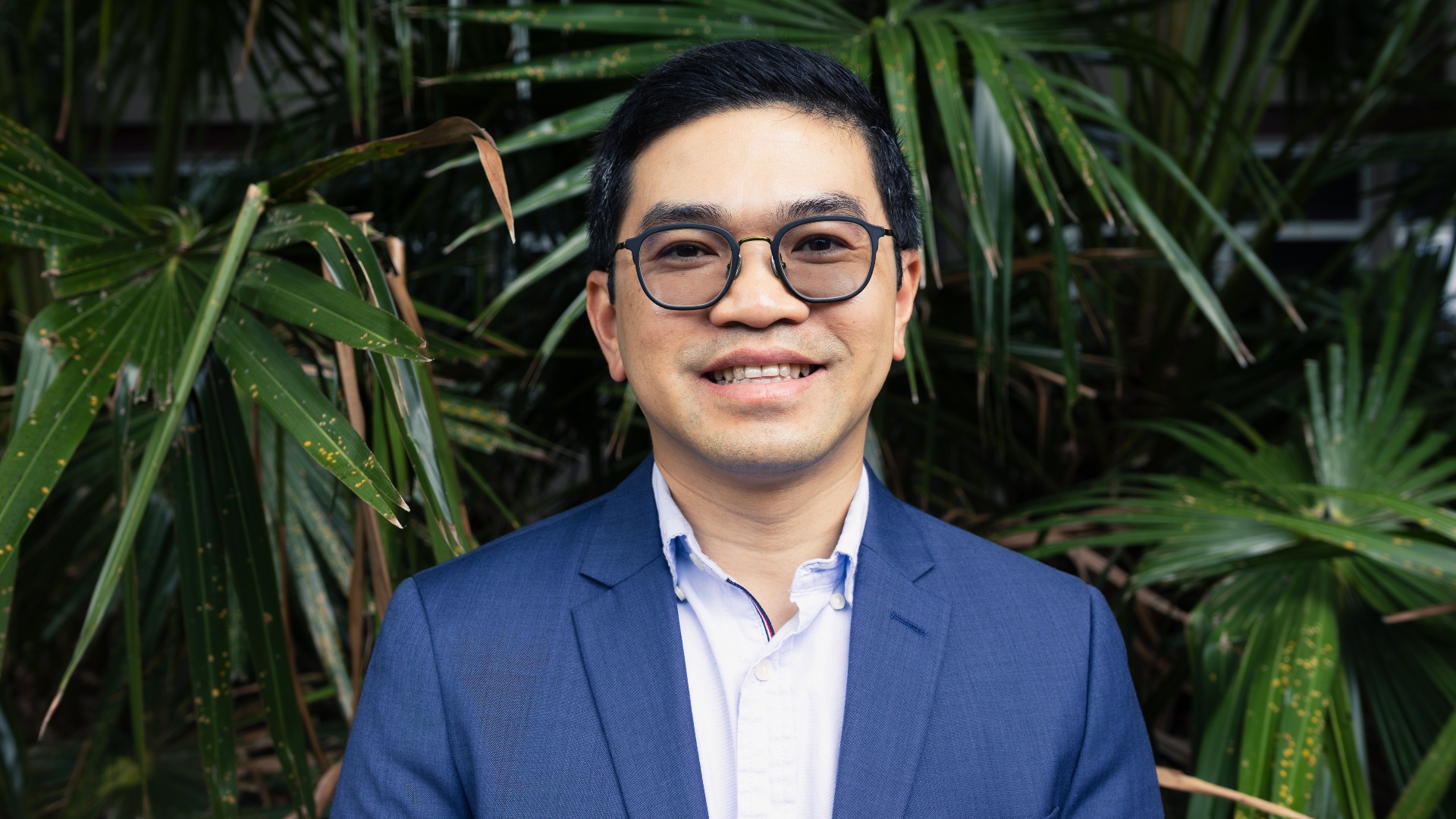
Dr Duong's research focuses on post-quantum cryptography. He primarily examines its mathematical foundations, including hard problems and how they can be used to build new security methods that withstand future quantum computers.
"It is an honour for me to be among the Top 250 researchers in Australia. Theoretical computer science asks what computers can and cannot do efficiently. My research uses these questions to design new cryptographic methods that keep our data safe in the quantum era. I am grateful to my collaborators and students who have contributed to our research," Dr Duong said.