

November 20, 2026
We found a seaweed that hadn’t been spotted in 90 years ‑ and discovered vast underwater forests
Deep, cool water could be the refuge seaweed forests need as oceans warm
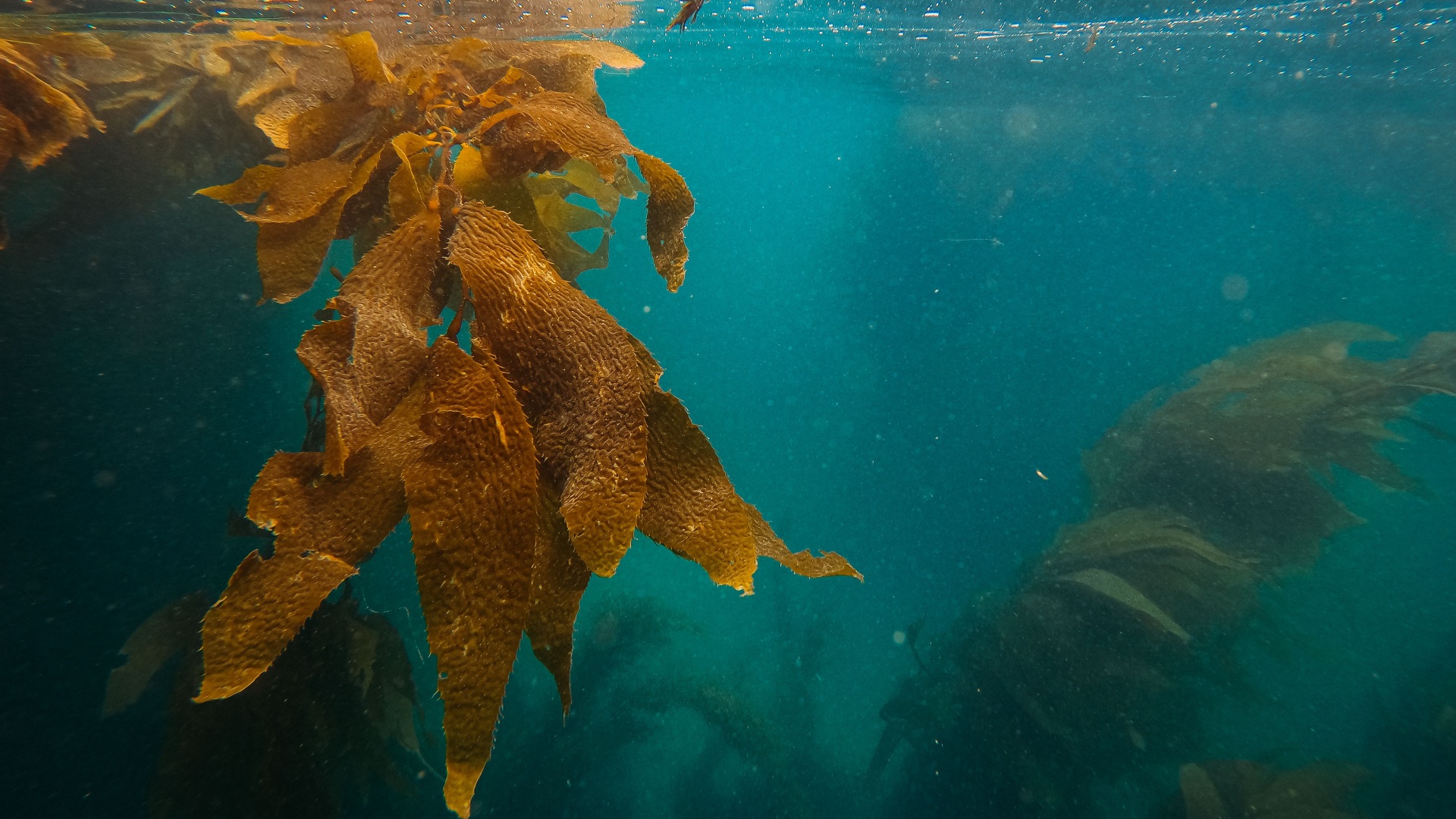
A tangle of long, caramel-coloured seaweed.
That’s what botanist A.H.S. Lucas found in 1935 while conducting research near Lord Howe Island, a World Heritage-listed site known for its unique biodiversity. After collecting some large adult specimens of this previously unidentified seaweed, Lucas named it Sargassum howeanum.
Over the next 90 years, only small, immature specimens were ever found in the shallow waters surrounding Lord Howe Island. This puzzled scientists, who could only wonder where all the adult populations of S. howeanum had gone.
We’ve finally solved this mystery.
Using underwater cameras, we discovered vast seaweed forests near Lord Howe Island at depths of 20-38 metres. Our new study suggests these deep water habitats could act as potential refuges for seaweed, particularly as climate change warms the world’s oceans.
Seaweed forests shrinking
As ocean temperatures rise, the world’s seaweed forests are rapidly shrinking. In some regions such as Tasmania and Northern California, kelp forests have declined by 95%. Marine heatwaves and ocean warming are the main factors driving these declines, but growing populations of invasive, seaweed-eating sea urchins can also have an impact.
This is deeply worrying. Seaweed forests provide vital habitat and food for many marine species, including species of reef fish, seadragons and abalone. Seaweed also removes nearly 56 million tonnes of carbon from the atmosphere each year.
Researchers rely on long-term environmental monitoring to track how seaweed forests are faring. In 2022, our team helped monitor several marine parks surrounding Lord Howe Island, located about 600 kilometres off Australia’s eastern coast. There, we took underwater videos of shelf habitats found 20-50 metres below the ocean’s surface.
This involved deploying baited remote underwater video systems, which scientists commonly use to estimate the abundance and diversity of fish and their habitats. They are particularly useful in sensitive environments, such as World Heritage-listed sites and marine parks.
Solving a seaweed mystery
After our first day of surveys, we reviewed this footage and noticed something unusual. At one routinely monitored site, the once-bare seafloor had transformed and was blanketed in a thick forest of tall seaweed.
As we surveyed other monitoring sites, we kept finding dense seaweed forests. This piqued our curiosity and prompted us to send seaweed specimens – which occasionally became entangled in our camera equipment – to Gerald Kraft, an algal expert with a particular interest in Lord Howe Island algae. Back in the lab, Kraft identified two species: Sargassum spinuligerum and Sargassum howeanum.
The S. howeanum specimens were adult plants up to 72 centimetres in length. They also had fruiting bodies receptacles, which are finger-like, specialised structures used for reproduction. This revealed the source of adult S. howeanum, solving the 90-year mystery of this elusive seaweed.
While A.H.S Lucas never recorded where or how he collected his specimens, our observations suggest he likely collected them at similar depths using a deepwater dredge, a metal frame that is towed along the seafloor.
An underwater refuge
Researchers have previously completed underwater video surveys in the marine parks around Lord Howe Island in 2009, 2013, 2017 and 2022. Our research team analysed this survey footage and found the entire area covered by Sargassum forests had grown by 22 times between 2009 and 2022.
We don’t currently know what is behind this remarkable increase. However, ocean temperatures may play a role.
Research shows sea surface temperatures at Lord Howe Island have increased by about 0.2°C each decade since 1985. However, satellite data suggests ocean temperatures at depths of 20-50 metres were cooler in the lead up to 2022, compared to earlier survey years. These cooler waters may have boosted the growth and expansion of Sargassum forests.
Our observations, while preliminary, suggest deep cooler water habitats in Lord Howe Island may serve as seaweed havens, particularly as the planet warms. This is because deeper habitats, known as depth refugiums, are less exposed to the pressures of rising temperatures and overgrazing by tropical herbivorous fish moving poleward that commonly afflicts shallower ecosystems. However, more research is needed to confirm this.
To understand these deepwater habitats, we must invest in long-term monitoring programs. This is particularly urgent as extreme weather becomes more frequent and severe.
Long-term environmental monitoring programs are incredibly valuable. They allow scientists to track the conditions of ecosystems worldwide and find ways to protect them. And in the case of S. howeanum forests, they may even help us solve the occasional environmental mystery.
Matthew Rees, Honorary Fellow and Research Scientist in Marine Ecology, University of Wollongong and Nathan Knott, Senior Researcher, Marine Ecology, UNSW
This article is republished from The Conversation under a Creative Commons license. Read the original article.
UOW academics exercise academic freedom by providing expert commentary, opinion and analysis on a range of ongoing social issues and current affairs. This expert commentary reflects the views of those individual academics and does not necessarily reflect the views or policy positions of the University of Wollongong.