
Motor Neurone Disease (MND)

MND Research Fund

Continuing a legacy of hope

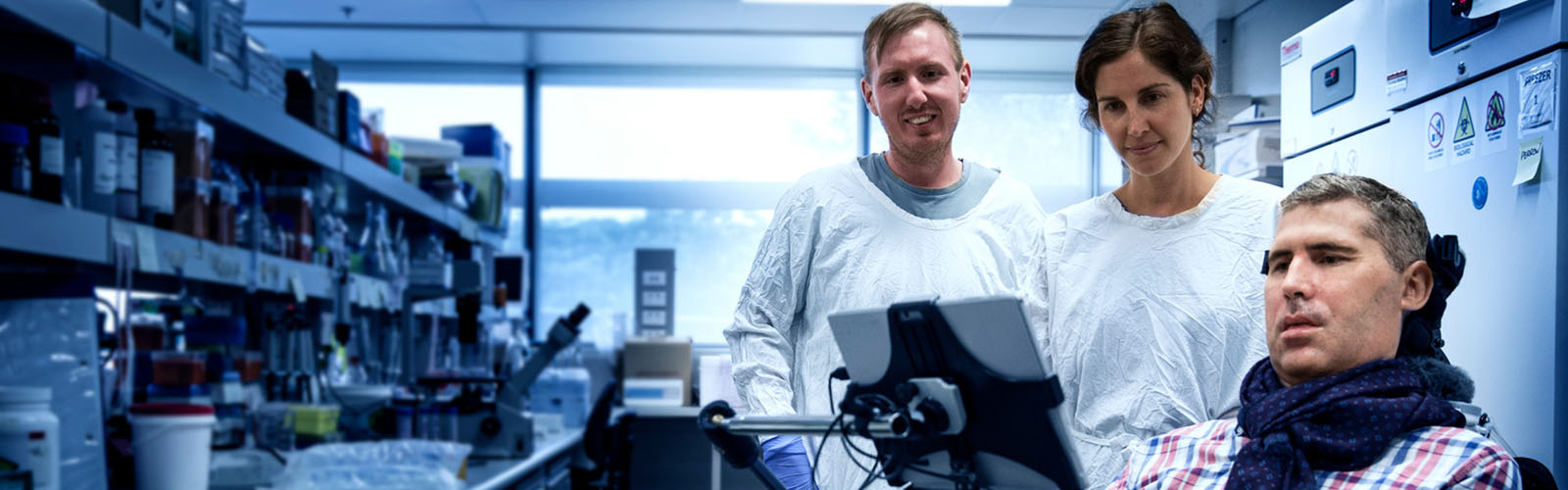
Established in 2009 with the support of the late Professor Justin Yerbury AM, the Motor Neurone Disease Research Fund supports scientists at the University of Wollongong to understand the causes of Motor Neurone Disease (MND) and translate that knowledge into therapies and new drugs.  

MND is a rare and devastating condition that progressively damages the nervous system, causing degeneration of motor neurones in the brain and spinal cord. Nearly 2,100 Australians live with MND. Each day, two Australians are diagnosed and two Australians die from the disease. For most, life expectancy can be measured in just a few short years, sometimes even months.  

For Professor Yerbury, the fight against MND was deeply personal. In 2002, he lost his mother, grandmother and aunt to the disease in just six weeks, followed by his sister, uncle and cousin.  

This devastating chain of events inspired him to leave his career in professional basketball with the Illawarra Hawks and return to UOW, where he completed a Bachelor of Science and then a PhD. He was in a race against time to discover treatment for the disease that ran through his family. 

As an esteemed molecular biologist, Justin established the Yerbury Lab at UOW’s Molecular Horizons, where he and his team worked to understand the cellular processes that prevent proteins from forming clumps that are the hallmark of degenerative diseases.  

In 2023, the same disease he dedicated his life to sadly took his. But his mission lives on.  

Today, the  of Professor Heath Ecroyd, Justin’s close friend and collaborator. 

“He inspired so many researchers to join the cause, and in doing so, created an amazing pool of research talent.” Professor Heath Ecroyd 

The next generation of MND research

Inspired by the legacy of Justin Yerbury, three researchers forge ahead, each guided by their own sense of purpose. Together, Dr Luke McAlary, Dr Christen Chisholm, and Dr Jeremy Lum form a powerful alliance with a singular goal – to unlock the secrets of motor neurone disease (MND) and bring hope to those affected.

Find out more

Your impact

“Thanks to the generosity of our supporters, donations are directly fuelling groundbreaking research in the Yerbury Lab. Uncovering causes of MND and developing new diagnostics and treatments. In the past year, gifts have helped us retain researchers who worked side by side with Justin, advance novel targeted therapies, identify promising molecular targets and accelerate tools that could one day enable earlier detection. Donations also help us purchase critical materials and access to equipment. Put simply, your support maintains momentum to transform the future for people diagnosed with MND.” Professor Heath Ecroyd 

What your gift today could do:  

  • $50 – pays for reagents required to maintain cells used to test potential new therapeutics.  
  • $500 – contributes to precision tools to measure and handle small volumes of liquid 
  • $1,000 – funds initial screening of a new, untested drug from our library 
  • $10,000 – allows detailed examination of potential therapeutics in our cell-models of MND.  

Donate to the Motor Neurone Disease Research Fund

The information you provide via this form is collected by the University of Wollongong (UOW) for the purpose of processing your donation and communicating with you regarding your donation. This information may also be used to keep you informed about other UOW giving opportunities and donor events.

More information about how your information will be used and stored is provided in the UOW Advancement Privacy Statement and UOW Privacy webpage.

For more information about how your donation will be managed please see our FAQs.

Thanks to the generosity of our supporters, donations are directly fuelling groundbreaking research in the Yerbury Lab. Uncovering causes of MND and developing new diagnostics and treatments. In the past year, gifts have helped us retain researchers who worked side by side with Justin, advance novel targeted therapies, identify promising molecular targets and accelerate tools that could one day enable earlier detection. Donations also help us purchase critical materials and access to equipment. Professor Heath Ecroyd