

Mito-nuclear coevolution as a driver of speciation in stingless bees
Environmental Futures Seminar - Dr Ros Gloag
-
-
-
Wollongong Campus
32.G01
Dr Gloag undertook her PhD at the University of Oxford investigating the co-evolution of brood parasitic birds and their hosts. She followed this with short postdocs at Oxford and the Australian National University. She then took up a University of Sydney Postdoctoral Fellowship to investigate rapid evolution in invasive honey bees, followed by a lectureship in Evolutionary Biology at the School of Life and Environmental Sciences. In 2022 she began as an ARC DECRA Fellow researching the evolutionary ecology of native Australian bees, and in 2023 as a USYD Robinson Fellow.
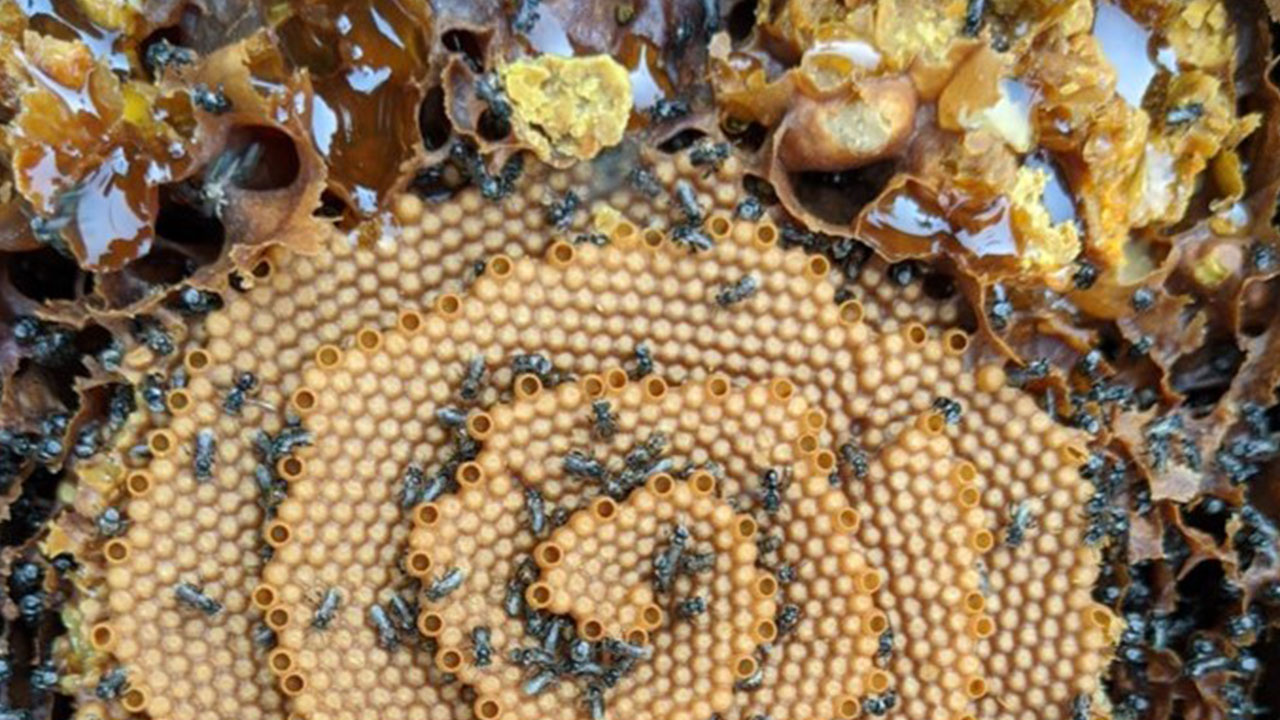
How do new species form? According to the classic genetic model of speciation, proposed by Dobzhansky and Muller in the 1930s, isolated populations adapt to local conditions and become fixed for different alleles at two or more genes. If the populations later reunite, these diverged alleles are incompatible in combination, preventing or reducing gene flow. Although such genetic incompatibilities were originally envisaged to arise from interacting nuclear genes, recent theory suggests they might more commonly involve coadapted mitochondrial and nuclear genes. In this talk, I will explain efforts to untangle a cryptic species complex of stingless bees on Australia’s tropical north and east coasts, and how these bees might help us to better understand the role of mito-nuclear coevolution in speciation.