

Evolution of the color polymorphisms on Theridiidae spiders from the temperate rainforest of southern South America
Environmental Futures Seminar - Darko D. Cotoras
-
-
-
Wollongong Campus
6.210
Darko Cotoras is an evolutionary biologist interested on understanding the historical processes that create biodiversity in conditions of isolation. His main study group are spiders and other invertebrates present around the Pacific Ocean, with focus on volcanic archipelagos and the Gondwanic land masses. He combines field and museum work with phylogenetics, population genetics and genome assembly. He is an assistant professor in evolutionary biology at the Facultad de Ciencias Biológicas of the Pontificia Universidad Católica de Chile and Director of the Colección de Flora y Fauna Prof. Patricio Sánchez Reyes. He is also a research associate at the California Academy of Sciences. Previously, he was a Humboldt postdoctoral fellow at the Senckenberg Museum working in the evolution of the color polymorphism of the Selkirkiella (Theridiidae) spiders, a genus endemic to the temperate rainforest of southern South America. Before that, as a postdoctoral researcher between the University of California, Santa Cruz and the California Academy of Sciences, he worked on improving ancient DNA methods for museum specimens in order to answer island biogeography questions. He earned his PhD from the University of California, Berkeley studying an adaptive radiation of Hawaiian spiders. His Master in Ecology and Evolution, and Bachelors in Biology are from the Universidad de Chile. He has been faculty on several field courses with the Organization for Tropical Studies in Costa Rica.
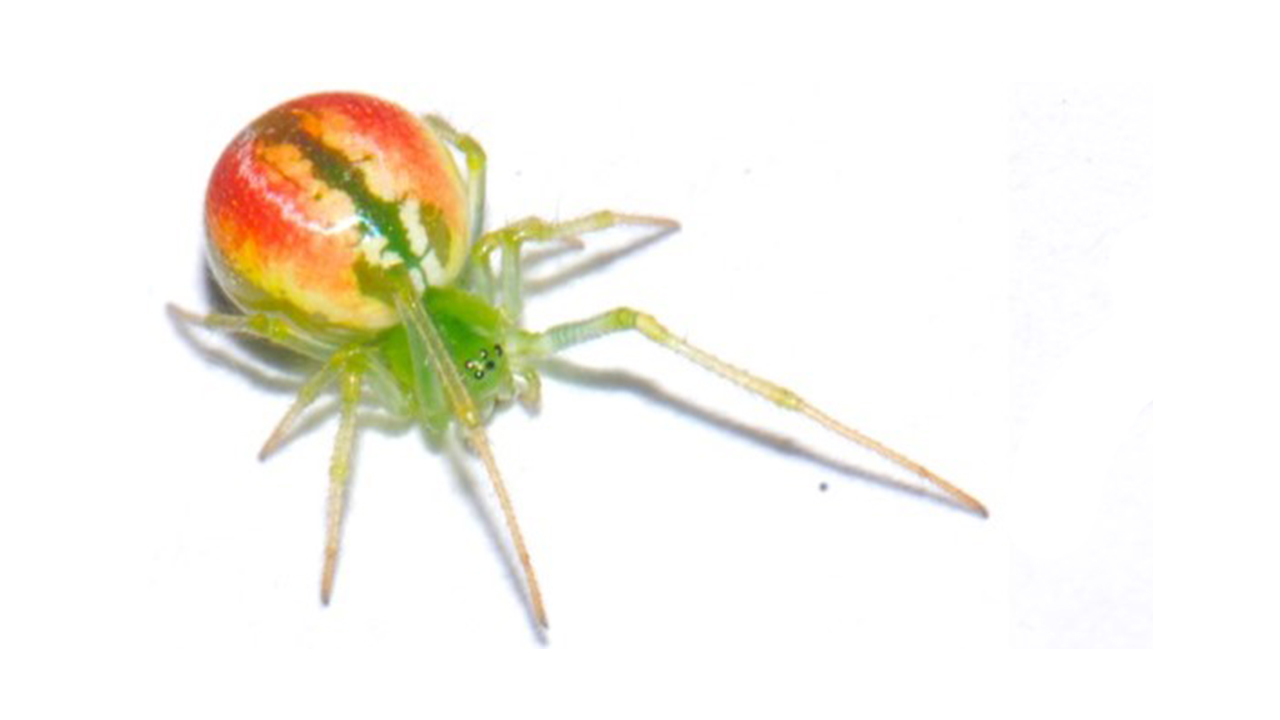
Color polymorphisms are an expression of morphological diversity with tight links with the ecology of the organisms. There are several cases of color polymorphism on spiders from the family Theridiidae. Here, I will present two cases of genera present along the temperate rain forest of Chile. First, the genus Selkirkiella is one of many geographically isolated and distantly related Theridiidae species across the world which share many characteristics (design, frequencies, inheritance mode, etc.) on their polymorphism. While similar ecological pressures and developmental constraints have been proposed as mechanisms to explain this parallel evolution, the way of how population variability is inherited through speciation events remains poorly understood. In order to answer this, we are working into reconstruct the evolutionary history of the color polymorphism on Selkirkiella. The second example is on the genus Kochiura, where closely related species with a huge color variation across several populations distributed on a large geographic area. What are the determinants of color variability? In other words, why not all the populations across species look the same? Here, the working hypothesis is that the color variability of each population is determined by a combination of genetic, ecologic and historic factors. The results presented for both projects are research in progress. They will extend our understanding on the evolution of complex traits and update our knowledge on endemic genera from the Valdivian forest biodiversity hotspot.