
ACCESS would like to invite you to our next seminar, Shoreline Monitoring and Coastal Management: Case Studies in Selected Islands of Oceania
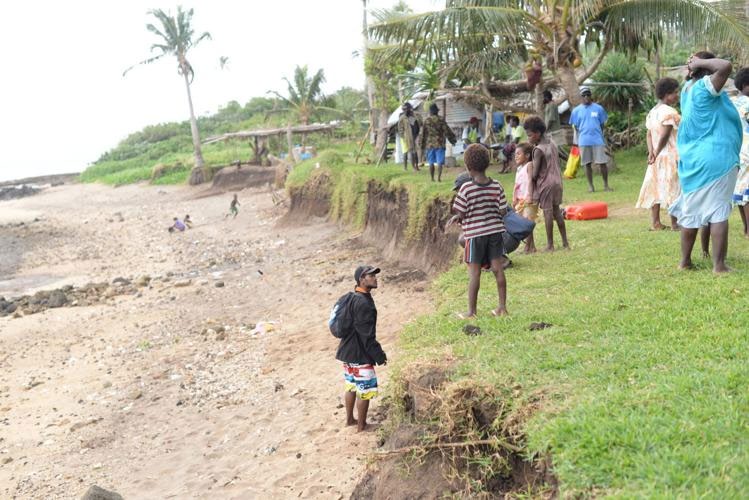
ACCESS Seminar: Shoreline Monitoring and Coastal Management
-
-
-
Wollongong Campus
21.G08 and online via Zoom
Presenter
Associate Professor Pascal Dumas
French University of New Caledonia and Espace-Dev Research Unit,
French National Research Institute for Sustainable Development (IRD)
Abstract
Since reliable shoreline monitoring has been available, a widespread trend of coastal retreat has been observed in many areas. Today, it is estimated that nearly 70% of sandy coasts worldwide are affected by erosion. This situation is even more pronounced for atolls and low-lying islands in the Oceania region, which are particularly exposed to coastal erosion and marine flooding risks. This presentation will focus on a few past and ongoing research projects in New Caledonia, Vanuatu, French Polynesia, and Fiji, which aim to characterize these coastal hazards and their dynamics, while contributing to improved shoreline monitoring knowledge to better account for current changes in coastal management, governance, and protection of coastlines and low-lying islands. Two key points will be emphasized: the implementation of participatory shoreline monitoring by local communities (especially school groups) through beach profile measurements as part of climate change awareness activities, and the use of drones for coastal surveying. Ultimately, these monitoring datasets could serve as the foundation for a genuine coastal observatory to track shoreline changes and trends in response to climate change.
Biography
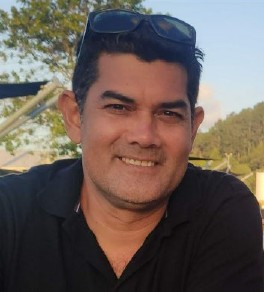
Geographer and geomatics specialist, I am an Associate Professor (tenured) at the French University of New Caledonia and a researcher with the Espace-Dev Research Unit at the French National Research Institute for Sustainable Development (IRD). Currently my research focuses on integrated coastal zone management, shoreline dynamics and monitoring, coastal hazards, territorial vulnerability, and the impacts of climate change in tropical island contexts. In my research I make use of Geographic Information Systems (GIS), remote sensing, drones, and participatory science methods. My main study areas are in the South Pacific (New Caledonia, Vanuatu, Fiji, Tuvalu, French Polynesia), but I have also had the opportunity to work in Réunion Island, Madagascar, and Clipperton. I have coordinated and taken part in numerous interdisciplinary and international research projects, and have supervised several PhD students working on coastal hazards (erosion, submersion), soil erosion modeling, mining activity and social and environmental dynamics. I am also actively involved in local and regional scientific committees (vice-president, Scientific Council, Coral Sea Marine Park 2018–2024). In parallel with my research activities, I have been in charge of the academic coordination of the DAEU (Diploma of Access to Higher Education, humanities track) for 20 years, and I have been involved in the development and management of university programs at the undergraduate and master’s levels.