

Faculty - SSQ
Meet the School of Space Qualification (SSQ) faculty
- Melanie Berg
- Benedikt Bergmann
- Jeffrey Black
- Michael J Campola
- Jeff Chancellor
- Li Chen
- Francis Cucinotta
- Stuart George
- Sylvain Girard
- Martin Grossmann
- David M Hiemstra
- Cornelia Hoehr
- Mitsuru Imaizumi
- Justin Likar
- Takeshi Ohshima
- Christoph Shuy
- Daniel Söderström
- Stephen Stone
- Michael Trinczek

Melanie Berg has over 37-years of experience as a designer, verification engineer, instructor, and reviewer for ASIC and FPGA applications. Melanie’s more visible accomplishments are her FPGA design contributions for the NASA sponsored New Horizons Pluto and Beyond Mission; and her research/development in radiation effects + mitigation strategies.
Melanie was a member of the Radiation Effects and Analysis group at NASA/GSFC for over 20 years; and is the founder/CEO of Space R3 LLC.
She has published and presented several papers regarding: ionization and microelectronic error-response characterisation, reliable synchronous design methodology, robust verification techniques, mitigation strategies for critical circuitry, reliability/survivability prediction calculations, and hardness assurance for space flight systems.
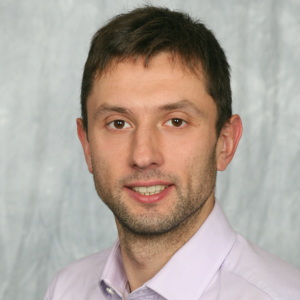
Benedikt Bergmann is an expert in ionizing radiation interactions in matter and in the design and application of pixel detector radiation sensors. His research focuses on high-energy physics, accelerator environments, and space radiation. Benedikt earned his PhD in 2019 from the Erlangen Centre for Astroparticle Physics, University of Erlangen-Nuremberg. In 2020, he became Head of the “Electronics and Software“ Department at the Czech Technical University in Prague. Since 2022, Benedikt has been actively shaping detector development within the Medipix Collaborations as a member of the project management consortium. In 2023, he joined the Evaluation Panel P203 (Nuclear and Particle Physics, Astronomy, and Astrophysics) of the Czech Science Foundation. In 2024, he became a member of RADECS (Radiation and its Effects on Components and Systems) and will serve as General Chair of the RADECS 2026 conference, which is expected to host around 500 participants and 50 exhibitors.
Throughout his scientific career, he has contributed to advancing the understanding of fundamental physics processes. He designed table-top experiments to measure nanosecond-scale half-lives with picosecond-level precision in radioactive decays. At the Los Alamos Neutron Science Center, he investigated the interplay between non-ionizing energy loss (NIEL) and ionizing energy loss (IEL) in silicon—crucial for predicting sensor degradation and single-event effects (SEE). He analysed and interpreted SATRAM (Space Application of Timepix Radiation Monitor) data, gaining expertise in the radiation environment of low Earth orbit (LEO). The success of SATRAM laid the foundation for the next generation of space radiation monitors based on Timepix technology.
Benedikt contributed as key personnel to several ESA projects and co-proposed an innovative instrument based on the magnetic spectrometer principle—the Penetrating Particle Analyzer (PAN)—for in-situ measurements of galactic cosmic rays.
He was invited to speak at international conferences, seminars, and schools, including IEEE NPSS Prague EduCom International Summer School (2025), the CERN EP Seminar Series (2024), the School on Space Qualification (2024), Advances in Space Astroparticle Physics (2023), IEEE Real-Time Conference (2022) or the International Workshop on Radiation Imaging Detectors (2022).
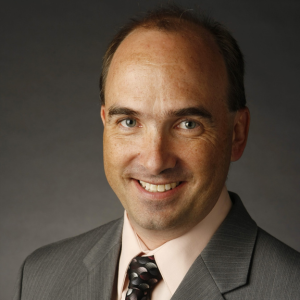
Jeffrey Black currently works for Sandia National Laboratories in the Radiation and Electrical Sciences Center. His areas of specialty and interest include transient radiation effects – modelling and simulation, circuit mitigation approaches, and experimental execution. Prior to joining Sandia, Jeffrey worked for the United States Air Force, Mission Research Corporation, and Vanderbilt University. He received his education from the United States Air Force Academy (BSEE, 1988), University of New Mexico (MSEE, 1991), and Vanderbilt University (PhD, 2008). His 37 years of experience have covered nuclear survivability, satellite communications, fault-tolerant computing, and radiation hardening of microelectronics.
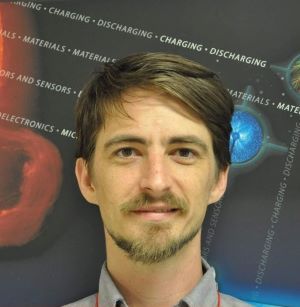
Michael J Campola received the Bachelor of Science degree in Engineering Physics from Embry-Riddle Aeronautical University, and a Masters of Electrical Engineering from Arizona State University.
He is currently the leader of the Radiation Effects and Analysis Group at National Aeronautics and Space Administration’s Goddard Space Flight Center (NASA-GSFC). Michael joined the Flight Data Systems and Radiation Effects Branch at NASA-GSFC in 2007. Throughout his career, he has been working on the center’s spaceflight projects to capture system-level radiation response through analysis and ground-based testing of semiconductors with research into promising future technologies through the NASA Electronic Parts and Packaging (NEPP) program. The primary goal of this work and research is to provide support for mission success through implementation of Radiation Hardness Assurance (RHA) practices.
He is a member of the Institute for Electrical and Electronics Engineers (IEEE) and Nuclear and Plasma Sciences Society (NPSS).
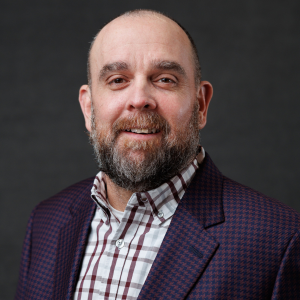
Dr Jeff Chancellor is Director of the Aerospace Medicine Program at Texas A&M University’s Naresh K. Vashisht College of Medicine and a leading expert on radiation effects in human spaceflight. His research combines radiobiology, 3D Monte Carlo modelling, and advanced computing to investigate heavy-ion interactions with tissue and shielding materials, informing astronaut health protection and mission design.
A former NASA flight controller and radiation lead for multiple Space Shuttle missions, Chancellor has trained astronauts, advised mission managers, and developed shielding strategies for Orion. He also founded two aerospace technology companies, most recently Audax Exploration, whose hardware will fly on Intuitive Machines’ IM-3 lunar mission to study the radiation environment around the Moon. His career bridges academia, industry, and mission operations, making him a recognised leader in space medicine and exploration.
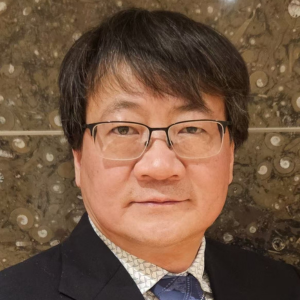
Li Chen received the Bachelor of Science degree from Tianjin University, Tianjin, China in 1991, and the Masters of Engineering and PhD degree from University of Alberta, Edmonton, Canada in 2000 and 2004, respectively.
Dr Chen has been a faculty member of Department of Electrical and Computer Engineering, University of Saskatchewan since 2006, where he was endowed with the Barbhold Chair Professor in Information Technology. He was promoted to Associate Professor and Professor in 2011 and 2016, respectively.
His main research interests are radiation effects and radiation-tolerant microelectronics. He has served as Associate Editor for Journal of Microelectronics Reliability, Vice Chair of 2025 IEEE ICREED conference, Session Chairs for 2024, 2022 IEEE Nuclear and Space Radiation Effect Conference, etc., and the Technical Advisor Committee board member for CMC Microsystems from 2013 to 2018. He has received four million dollars research grants/contracts during last six years and 100 publications in referred journals and conferences proceedings.
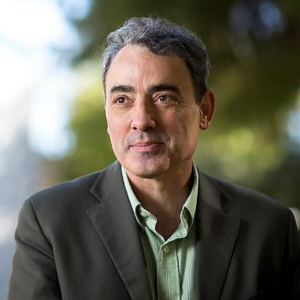
Dr Francis A Cucinotta is a Distinguished Professor of Health Physics at the University of Nevada, Las Vegas (UNLV). He received his doctorate in nuclear physics from Old Dominion University in 1988. He worked for the National Aeronautics and Space Administration (NASA) from 1990 to 2013 in several positions, including research scientist, radiological health officer for spaceflight, and manager and chief scientist for the Space Radiation Research Program. Dr Cucinotta was NASA’s manager for the construction and operation of the NASA Space Radiation Lab (NSRL) at Brookhaven National Laboratory (1997-2003). He developed the astronaut exposure database of organ doses and cancer risk estimates for all human missions from Mercury to the International Space Station (ISS). He led NASA’s biodosimetry program for the ISS and discovered the association of increased incidence of cataracts in astronauts due to space radiation exposure. He developed the space radiation quality factors and risk models that were approved for use at NASA.
Dr Cucinotta has published more than 400 peer-reviewed journal articles and book chapters, and 80 NASA technical reports. His areas of research include nuclear and space physics, radiation shielding, DNA damage and repair, biodosimetry, systems biology, normal tissue effects including FLASH effects, and cancer and central nervous system risk assessment models. His research is published in numerous scientific journals, including Reviews of Modern Physics, Science, Nucleic Acids Research, Nature Reviews Cancer, The Lancet Oncology, and Radiation Research. His work has been cited more than 30,000 times with an h-index of 81. He has won research grants from NASA, the Department of Energy (DoE), and the National Cancer Institute (NCI).
Dr Cucinotta has mentored over 30 Master of Science, Doctor of Philosophy and Post-Doctoral Research scholars. He has earned numerous awards for his efforts, including the Silver Snoopy Award in 2001, the Barrick Scholar Award in 2018, and the Harry Reid Silver State Research Award in 2020. Dr Cucinotta received the NASA Lyndon B. Johnson Spaceflight Centre Software of the Year Award in 2012 and 2013. He was a Council Member of the National Council on Radiation Protection and Measurements (2001-2007, 2013-2019). Dr Cucinotta served as president of the Radiation Research Society during 2014 and received its highest scientific achievement award, the Failla Award, in 2018.
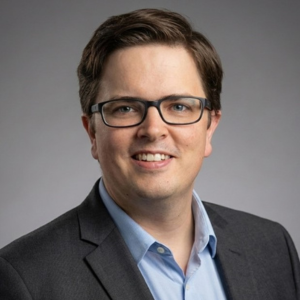
Dr Stuart George is the instrument lead for the NASA Space Radiation Analysis Group (SRAG) at Johnson Space Center, where he leads and supports the development and delivery of space radiation instrumentation for human spaceflight. He has contributed flight hardware for the International Space Station and exploration and commercial missions, including Artemis I/II/III, Polaris Dawn, Fram2, and Astrobotic Peregrine. Dr George is the Principal Investigator of the Compact Electron Proton Spectrometer (CEPS), funded by NASA’s Development and Advancement of Lunar Instrumentation program and the Mars Campaign Office, and manifested for flight on the upcoming CAPSTONE2 mission. His work has been published in journals including Nature and Science Advances and has been featured by outlets including CNN, Reuters, ABC Australia, and on the NASA and CERN homepages. Previously, he held a postdoctoral appointment at the University of Houston and a Marie Skłodowska-Curie Fellowship at CERN as part of the ARDENT EU project. He received his PhD from the University of Wollongong (2016) and an MPhys in Physics from the University of Sheffield (2012).
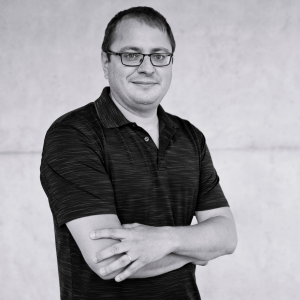
Sylvain Girard obtained his PhD in Photonics in 2003 from the Université Jean Monnet (UJM), France. He joined the CEA (French Atomic Energy Center) in 2004 to investigate the vulnerability and radiation hardening of optical components for the Laser Mégajoule and became a CEA Senior Expert in 2011. In 2012, Sylvain joined the UJM as a Full Professor. Today he is leading the MOPERE research group of Laboratoire Hubert Curien, Saint-Etienne, France and is one of the founders of the LabH6 joint research lab between UJM, CNRS and the industrial Exail. His main research axis deals with the radiation effects on photonic technologies, in particular fiber-based technologies. His research led to the implementation of fibers and fiber sensors in different environments such as space, fusion-devoted facilities, nuclear industry and medicine.
He serves the radiation effects community in several positions, in particular as Member-at-Large on the IEEE NPSS Radiation Effects Steering Group, as one of the Associate Editors of IEEE Transactions on Nuclear Science and as Technical Chair (2023) and General Chair (2025) of the RADECS Conference.
He has authored or co-authored more than 330 peer-reviewed papers and hold several patents. Sylvain received the 2013 IEEE NPSS Early Achievement Award, the 2014 IEEE/SEE Léon-Nicolas Brillouin Award from and the 2021 Research Prize from the iXcore, iXblue, iXlife Foundation. In 2023, he has been nominated as a Senior Member of the Academic Institute of France, IUF.
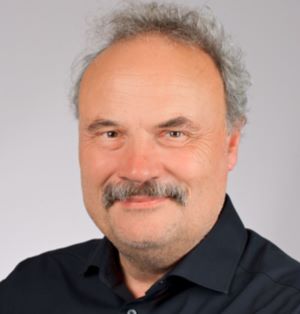
Martin Grossmann has worked in High Energy Physics at CERN and in Muon Physics at the Paul Scherrer Institute (PSI), Switzerland, before joining the Center for Protontherapy (CPT), in 1995. He programmed the therapy control system for the world’s first pencil beam scanning gantry which started clinical operations in 1996.
For many years he lead the IT & Electronics group at CPT and was in charge of control and safety systems for several PSI built treatment rooms. He is now Senior Technical Advisor at CPT.
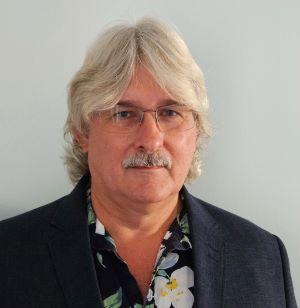
David M Hiemstra received his Bachelor of Engineering and Management (1984) and Master of Engineering (1993) degrees in Electrical and Biomedical Engineering, respectively from McMaster University.
He is a Senior Member of the IEEE. David joined MacDonald, Dettwiler & Associates (MDA), formally Spar Aerospace, in 1984, where he is a Senior Staff Engineer. He is involved in radiation effects and embedded avionics hardening for space, nuclear, and military applications.
His ongoing area of research for the past 32 years has been radiation effects on commercial off-the-shelf microelectronics. He has designed analog integrated circuits, hybrid microcircuits and data acquisition electronics.
David is currently a technical advisor on Canadarm3 (Lunar Gateway Robotics) avionics. He was embedded avionics technical lead on EXOMARS (Custom Single Board Computer), On-Board Processing (IR&D), RCAM, OSIRIS-REx Laser Altimeter, Earth Video Camera, VIPER, MSL Alpha Particle X-Ray Spectrometer, HTV Berthing Cueing System, and SRMS Display and Control Panel Redesign. He has worked on a number of other space programs including: OneWeb, MMX, DDVS, PCW, PhoenixMET, RADARSAT Constellation, Hubble Servicing Cameras, Sapphire, Cassiope, RapidEye, Orbital Express, Space Station Cameras, ISS and Space Shuttle. He designed proof of concept data acquisition and robotics electronics for the ITER fusion reactor. Early in his career he designed electronics for the shipboard infrared surveillance systems: SIRIUS and AN/SAR-8.
He is currently collaborating with the University of Saskatchewan on the study of radiation effects on GPU’s, FGPA’s and data acquisition electronics. He is also a guest lecturer on space radiation effects on embedded avionics. David has taught space radiation effects on embedded avionics at: York University, aerospace firms, and IEEE CCECE (2016, 2018 & 2019). He has collaborated extensively with Canadian Universities on space radiation effects. He coordinated radiation effects programs at the University of Toronto Institute for Aerospace Studies, University of Waterloo, and York University. David has been active with NSREC, serving as Member-at-Large Radiation Effects Steering Group (2000-2003), Awards Committee (2002, 2005), Devices and Integrated Circuits Session Chairman (2000), Radiation Effects Data Workshop Chairman (2006), Local Arrangements Chairman (2009), IEEE NPSS ADCOM Radiation Effects (2013-2017), Poster Session Chairman (2015) and as a reviewer on an ongoing basis. He has presented papers at every Nuclear and Space Radiation Effects Conference (NSREC) since 1995. He has authored/co-authored more than 90 papers on nuclear and space radiation effects with an emphasis on field programmable gate arrays.

Cornelia Hoehr earned her PhD in experimental physics from the University of Heidelberg and carried out postdoctoral work at the Max Planck Institute for Nuclear Physics, Argonne National Laboratory, and TRIUMF. She holds adjunct faculty positions in medical physics at the University of British Columbia – Okanagan and the University of Victoria.
Her research focuses on developing medical radioisotopes, advancing innovative radiotherapy techniques, and creating cutting-edge detector systems for clinical applications.
She has contributed her expertise to numerous national and international boards, committees, and expert panels, including those of the IAEA, PTCOG, and CMIE. She serves as Vice President Elect of the Canadian Association of Physicists (CAP).
Cornelia Hoehr currently serves as Interim Director of TRIUMF’s Life Sciences Division, where she guides the division’s scientific programs and the Institute for Advanced Medical Isotopes (IAMI) initiative. She leads a diverse team operating at the crossroads of nuclear physics, radiochemistry, medical physics, and accelerator science, driving both fundamental discoveries and applied research aimed at improving health outcomes.
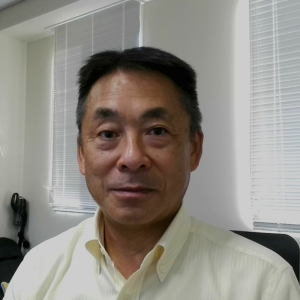
Mitsuru Imaizumi earned a PhD at Toyota Technological Institute in 1999. From 2000, he started R&D activity on state-of-the-art space solar cells at the Japan Aerospace Exploration Agency (JAXA). Mitsuru led the InGaP/GaAs/Ge lattice matched triple-junction and InGaP/GaAs/InGaAs lattice mismatched (IMM) triple-junction space solar cell R&D projects, especially in the field of rad-hardness establishment. The cells have been adopted by many of the JAXA missions including the SLIM Lunar lander.
In 2021, Mitsuru retired from JAXA and moved to Sanjo City University as a professor.
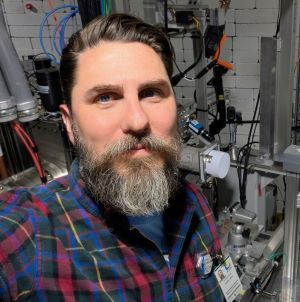
Justin Likar has nearly 25 years of experience working in areas of radiation survivability, spacecraft charging effects, radiation hardness assurance and space weather. Justin spent over 15 years working for the commercial and defense industry prior to joining John Hopkins University (JHU) Applied Physics Laboratory in 2018, where he is presently a Principal Professional Staff Engineer, Chief Technologist and Supervisor in the Space Exploration Sector Space Environmental Effects Engineering group. He is also an instructor with the JHU Whiting School of Engineering, an Associate Fellow of the American Institute of Aeronautics and Astronautics (AIAA) and Member at Large with the IEEE Nuclear and Plasma Sciences Society Radiation Effects Steering Group (RESG). Current projects include optimising Single Event Effects (SEE) test methods at US heavy ion accelerators, technology development for sustained lunar surface operations and quantifying radiation survivability related risk to non-radiation hardened systems.
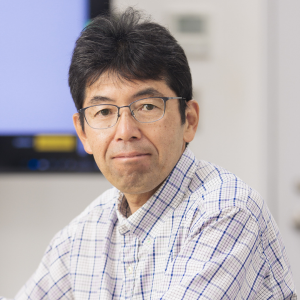
Takeshi Ohshima is currently Director of Quantum Materials and Applications Research Centre (QUARC), Takasaki Institute for Advanced Quantum Science, National Institutes for Quantum Science and Technology (QST). He is also working at the Department of Materials Science, Tohoku University, as a Specially Appointed Professor. Takeshi also holds a position at the Cabinet Office, Government of Japan, as a Sub Program Director of “Promoting application of Advanced Quantum Technologies to Social Challenges” of the Cross-ministerial Strategic Innovation Promotion Program (SIP).
Takeshi graduated with a PhD from the Division of Materials Science, University of Tsukuba, in March 1994. He then joined Japan Atomic Energy Research Institute (JAERI), now QST.
He is interested in material science, especially radiation effects on semiconductors. He studies radiation effects on semiconductor materials and devices for space and nuclear applications, such as the radiation response of space solar cells and the development of particle detectors. Also, Takeshi studies the modification and functionalisation of wide bandgap semiconductors for quantum applications such as the creation of nitrogen-vacancy in diamond and silicon vacancy in silicon carbide.
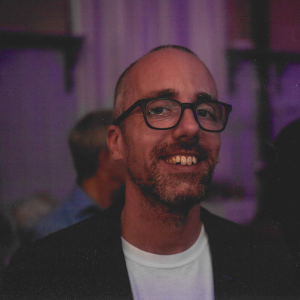
Christoph Schuy graduated with a PhD (Dr. rer. nat) in physics from the Technical University of Darmstadt, hosted by GSI's biophysics department in 2014. His main research focus as a PostDoc researcher in the Space Radiation Physics group of GSI's biophysics department was nuclear fragmentation experiments for particle therapy and space radiation protection. He has specialised mainly in cross-section measurements, enabling novel ions in particle therapy, and the development and verification of passive beam modulators for therapy, enabling FLASH irradiations, and space applications. His current main research interest is the development of GSI's galactic cosmic ray simulator and its next-generation counterpart for use with future higher energy heavy ions provided by FAIR. Since the beginning of 2024, Dr Christoph Schuy has been the group leader of the Space Radiation Physics group of GSI's biophysics department.
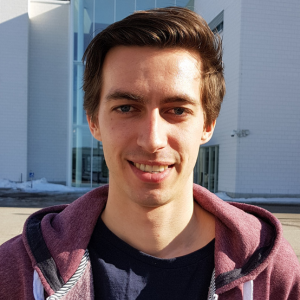
Daniel Söderström, PhD, is an applied physicist at CERN (SY-STI-BMI) since 2023, where he is working with radiation effects on electronics, as well as radiation dosimetry and monitoring of radiation levels around the CERN accelerator complex. He completed his doctoral studies at the University of Jyväskylä, Finland, in 2023, focusing on the same topics of dosimetry and radiation effects research. Before this, he studied Engineering Physics at Lund University in Sweden, completing the MSc program in 2016.
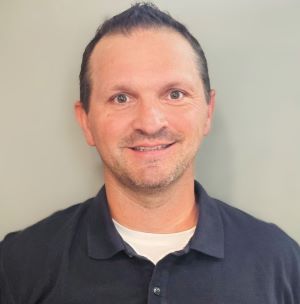
Stephen Stone has a background in physics and nuclear engineering (BS and MS respectively from The Ohio State University) and is an Associate Fellow and Principal Systems Survivability Engineer at Lockheed Martin Space. He has over 17 years’ experience in hardening satellite systems against natural and hostile radiation environments and over 20 years in relevant sciences and is author or co-author on 16 peer reviewed publications including a recipient of the IEEE NSREC Meritorious Paper Award. He is an active member in the space community chairing committees and running sessions at NSREC and HEART and was an invited speaker at the Space Weather Advisory Group (SWAG) meeting , a Federal Advisory Committee advising the White House Inter-agency Space Weather Operations, Research, and Mitigation (SWORM) Subcommittee.
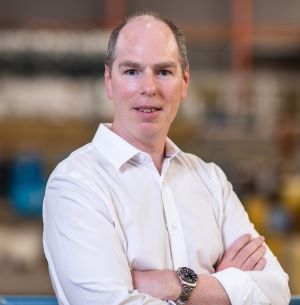
Michael Trinczek received his PhD in experimental nuclear physics from Simon Fraser University, Canada in 2001 after completing a Bachelor of Science (Honours) in chemistry. Following a post-doctoral research term at the Max-Planck-Institute for Nuclear Physics in Heidelberg, Germany, he returned to TRIUMF where he has held various roles in facilities and operations. In 2010, Michael assumed responsibility for TRIUMF’s Irradiation Facilities and since then he has been actively involved in the NSREC and RADECS communities where he was part of the research collaboration that won the Outstanding Paper Award at NSREC in 2014 and 2015. He has helped grow the TRIUMF irradiation business over the past few years, using targeted facility upgrades and customer outreach, increasing commercial revenue by more than 400% and regularly hosting many dozens of companies each year. Michael is the scientific secretary for the TRIUMF Life Sciences Projects Evaluation Committee as well as a member of both the IEEE and the Canadian Association of Physicists and in his role as Chief Business Operations Officer, he leads and manages commercial operations and project work as the primary technical and operational liaison that facilitates, enables, and troubleshoots activities that utilize TRIUMF infrastructure and expertise on site.