

April 14, 2026
New project develops smart surfboard fins to help reduce shark attack risk
UOW's Surf Flex Lab will contribute to the design, manufacturing and real-life testing of new shark deterrent technology for surfers
Following a summer of increased shark activity along the New South Wales coast, researchers from the University of Wollongong (UOW) are key contributors to a recently launched project developing next generation surfboard fins designed to reduce shark encounters and support safer ocean use for both surfers and marine life.
Co-funded by the Australian Composites Manufacturing Cooperative Research Centre (ACM CRC) and led by Gowing Bros Ltd, UNSW Sydney and UOW’s Surf Flex Lab, the researchers will use advanced composite manufacturing techniques to create smart composite fins embedded with shark-repellent technologies including miniaturised sensors, electromagnetic systems and illumination features that increase surfer safety while maintaining board performance.
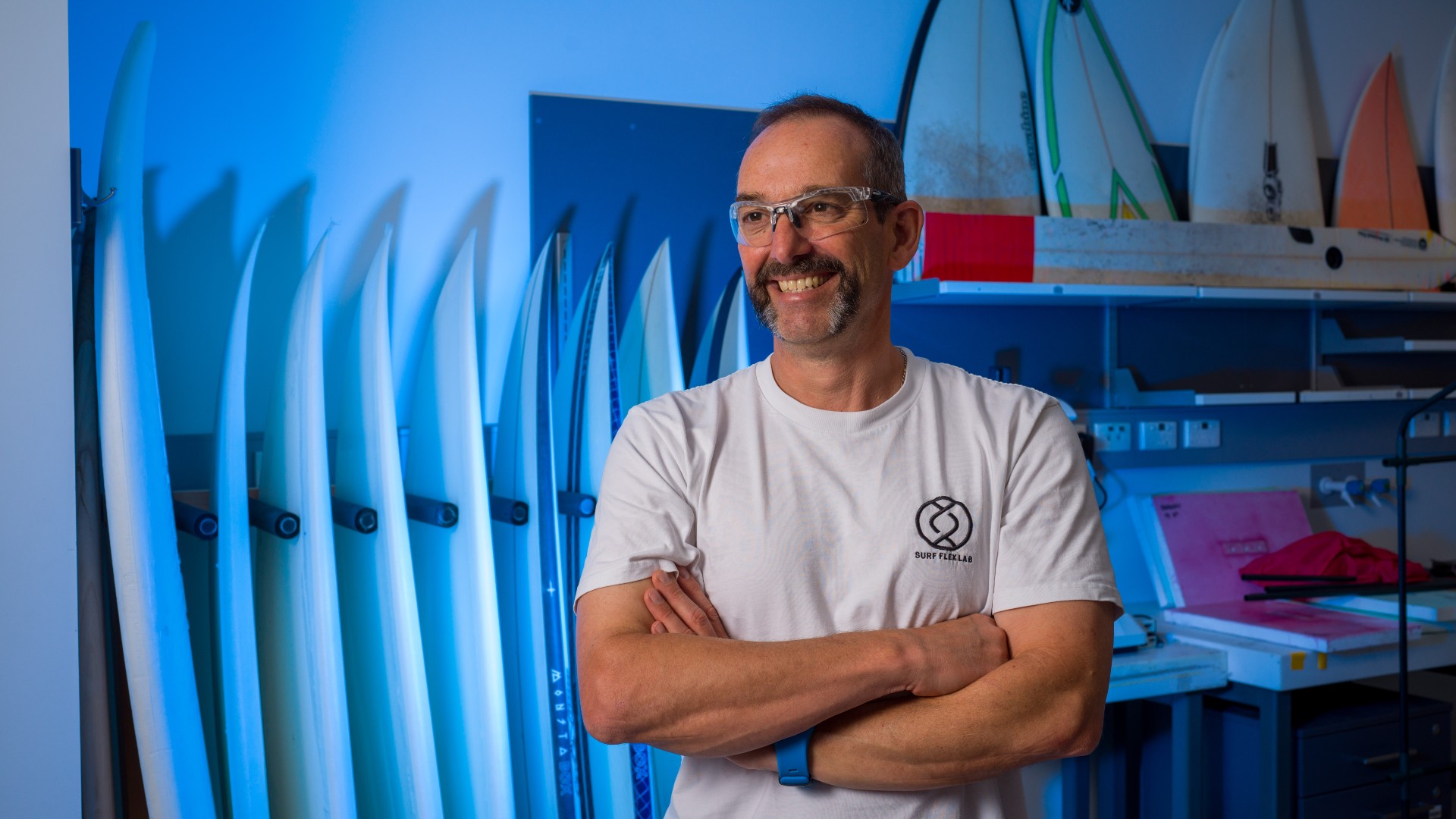
UOW’s Surf Flex Lab advances surf and water sports technology to improve performance, enjoyment and sustainability. Director Professor Marc in het Panhuis said the lab will provide specialist insight into surfboard and fin performance and play a key role in designing, building and testing the prototypes.
“Our focus is on ensuring these new fins perform just as well as traditional designs while incorporating advanced shark-deterrent technologies. Surfers won’t adopt safety innovations if they come at the expense of flex, responsiveness, and manoeuvrability,” Professor in het Panhuis said.
“This is about creating a solution that works in real conditions without compromising on critical board design features. By combining our expertise in surf engineering with advanced manufacturing techniques, we’re creating a practical way for surfers and sharks to share the ocean more safely.”
In addition to designing the prototype fins and surfboards, UOW’s Surf Flex Lab will lead the advanced manufacturing stream, exploring automated and scalable production methods that support future commercial use. They will also run testing and validation, conducting performance assessments and field trials to ensure the technology meets industry standards and the realities of real-world surfing.
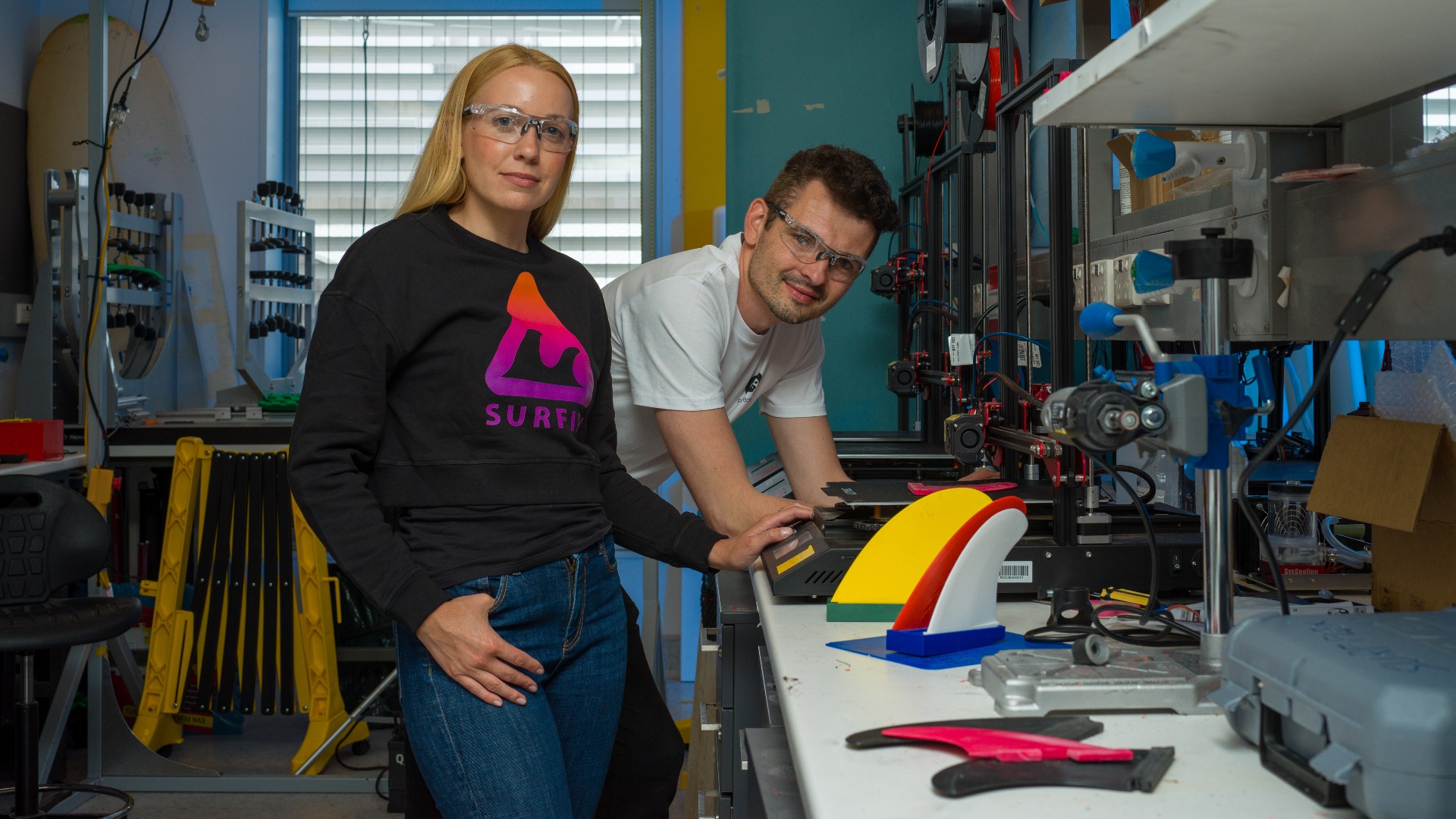
Key research team members, Magda Krzyzanowska and Pawel Krzyzanowski
Broader elements of the project include creating automated processes for fin and fin box production, surfboard shaping to incorporate shark-deterrent fins and sensors and composite material deposition.
ACM CRC CEO Luke Preston said the initiative demonstrates the practical impact of advanced manufacturing and has strong commercial potential.
“Innovative composite manufacturing and technology can have life-changing impacts. By embedding functional technologies into lightweight, composite materials we can support both innovation and practical application, delivering the next generation of surfboards at a time when shark attacks are apparently on the rise,” Preston said.
“This is a world first that is strengthening the capabilities and resilience of Australian surfboard manufacturing, giving us a competitive edge in a crowded global market.”