

November 16, 2026
Campus emissions cut by three-quarters as renewable energy use surges
Report shows 75% reduction in emissions since 2019 as more than half of the University’s energy now comes from low-carbon sources
The University of Wollongong (UOW) has cut its Scope 1 and 2 greenhouse gas emissions by 75.4 per cent since 2019 and now sources more than half of its energy from low-carbon sources, the University’s 2025 Sustainable Development Goals (SDG) Report reveals.
The report highlights how UOW is contributing towards the United Nations’ 17 Sustainable Development Goals for a more sustainable and equitable future through its research, teaching, operations and partnerships.
“The Sustainable Development Goals Report demonstrates UOW’s purpose in action, from advancing clean energy and sustainable infrastructure to improving health outcomes, widening participation and working with communities to address complex social and environmental challenges. And that extends to how we operate our campuses, use resources and partner with industry and communities in putting sustainable solutions into practice.”
UOW Vice-Chancellor and President Professor Max Lu AO
The report shows that 53.3 per cent of the energy consumed across UOW in 2025 came from low-carbon sources, up from 15 per cent in 2019. The 75.4 per cent reduction covers scope 1 and 2 emissions.
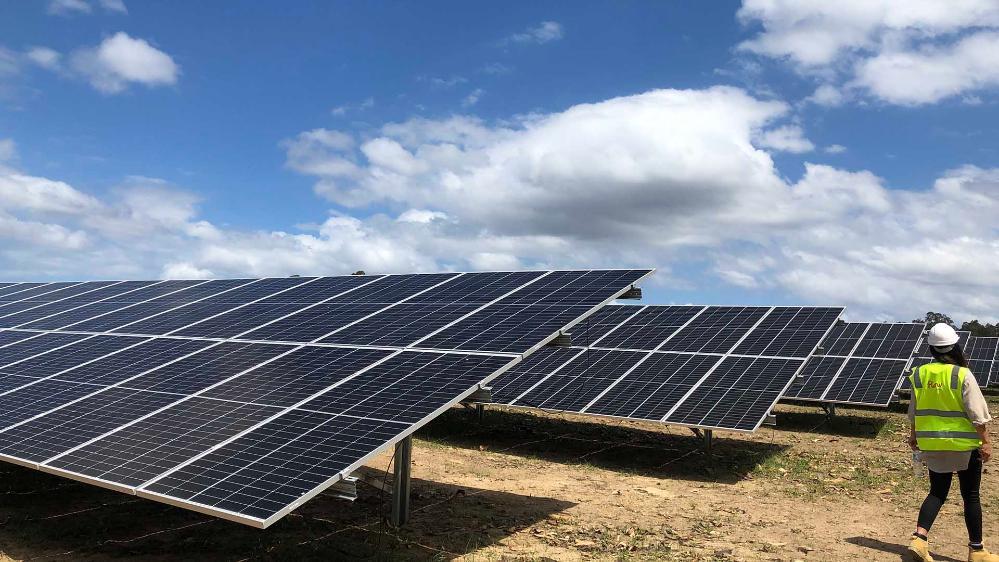
UOW generated 1,755MWh of renewable energy onsite in 2025 and had 1.8MW of solar PV capacity operating on campus. Ten community batteries were installed across the Wollongong and Innovation campuses through a project funded by the Australian Renewable Energy Agency (ARENA) and coordinated with Momentum Energy. The batteries help power research laboratories and teaching facilities, reduce electricity costs and allow excess solar or grid energy to be stored and sold into the National Electricity Market.
UOW also expanded its electric vehicle charging network by 18.6 per cent in 2025. It now has 13 charging locations with a total peak capacity of 1,124kW, alongside 2 electric shuttle buses.
Students and research
The report also shows growing student engagement with sustainability. In 2025, 32,253 students studied subjects about the SDGs, an increase of 34.2 per cent on 2024, across 183 SDG-related subjects.
UOW also offers two free online courses, open to students and the public, inviting participants worldwide to access high-quality climate education. In 2025, a combined 2,317 learners from 80 countries enrolled in the courses to build climate literacy and understand more about the UN SDGs.
UOW’s research output is concentrated in areas central to the region, state and nation’s future. Good health and well-being (SDG 3) accounted for 26.2 per cent of UOW research publications contributing to the SDGs, followed by affordable and clean energy (SDG 7) at 25.3 per cent and industry, innovation and infrastructure (SDG 9) at 16.2 per cent.
UOW was ranked =41st globally in the Times Higher Education Impact Ratings 2026 and 52nd for climate action (SDG 13).
For more information read the full 2025 Sustainable Development Goals (SDG) Report.