UOW research and innovation

Chemical Characterisation Facility

From unlocking the secrets of DNA replication to mapping cellular lipids, the Chemical Characterisation Facility drives cutting-edge molecular discovery at the intersection of chemistry, medicine, and pharmacology.

About the Chemical Characterisation Facility

The Chemical Characterisation Facility houses a wide range of state-of-the-art equipment focused on analytical techniques for comprehensive sample characterisation. This ranges from dedicated mass spectrometers for biological tissue and cell imaging applications, to nuclear magnetic resonance spectroscopy for compound structural elucidation, to high performance and ultra-high performance liquid chromatography equipment, freeze dryers and AI-driven synthesis capabilities - providing complete project analytical workflows from sample preparation and purification through to compound characterisation and quantitation.

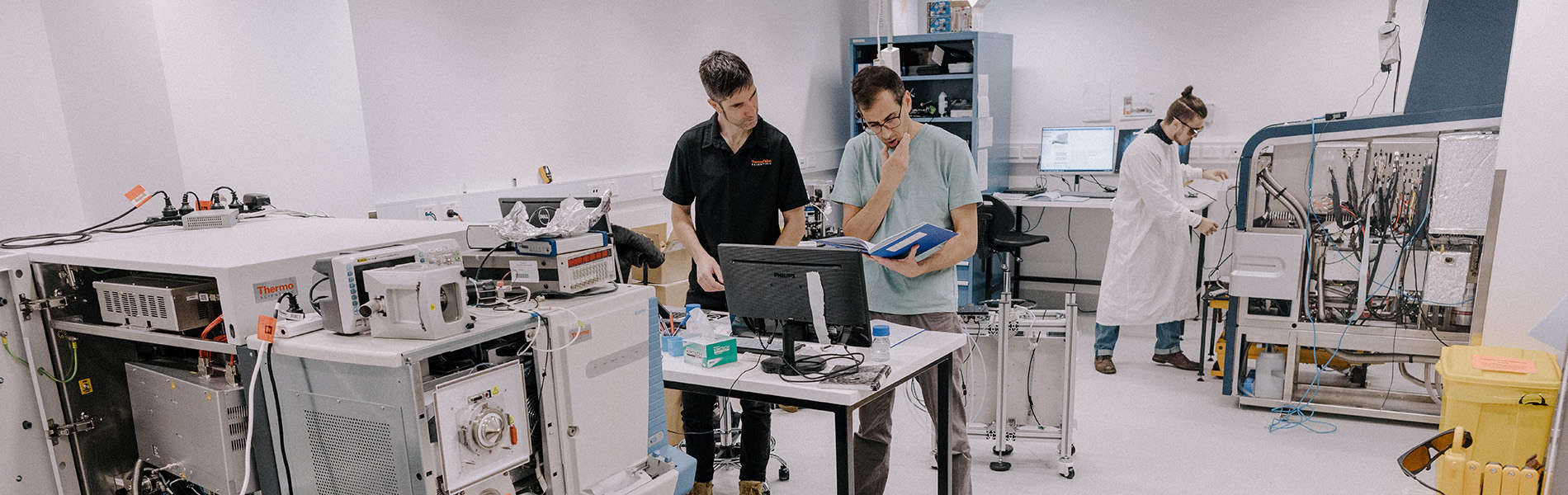
The Facility brings together not only an advanced suite of equipment, but also a wealth of expertise to support fundamental, medical, biological, and molecular and macromolecular research. Our staff are experts in their fields, applying their knowledge to real-world problems, whether that's training users to access our instruments or performing analysis on their behalf.
Equipment and capabilites

The Chemical Characterisation Facility houses a range of mass spectrometers, most of which can be used for manual sample injection or employ automated low flow injections for low volume samples. All mass spectrometers allowing for ion mass measurements of analytes present in the sample. 

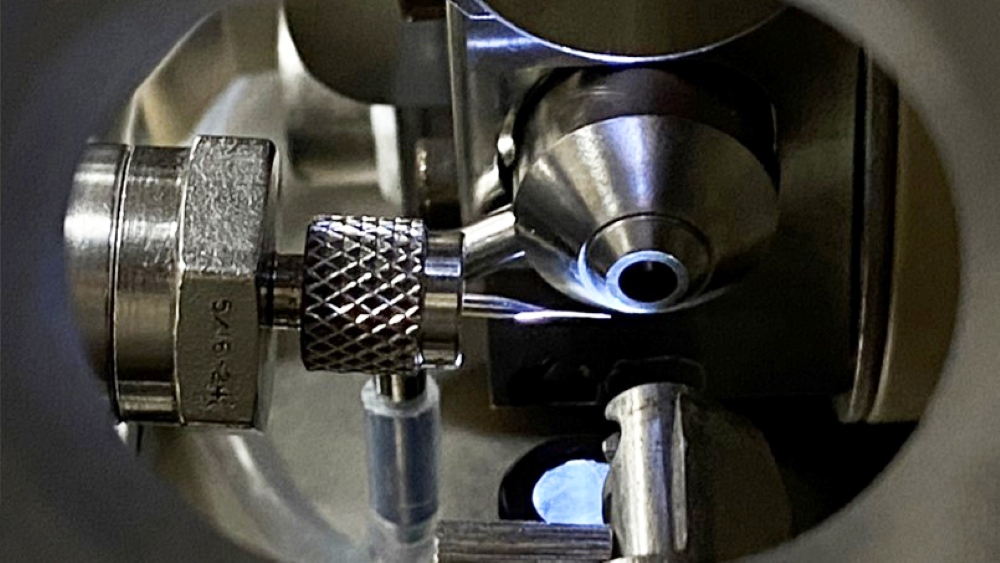
Overall, this suite of instruments offers users flexibility of access to a range of ionisation techniques (electrospray, nano electrospray for lower sample volumes, MALDI, electron impact), detectors (single quadrupole, time-of-flight and orbitrap for higher mass resolving power capability), mass-to-charge detection range (m/z 50-35000) and fragmentation mode (full scan mode, select ion monitoring (SIM), multiple reaction monitoring (MRM), tandem MS (MS/MS)) to best match your application’s requirements.

Example of in house expertise and analysis capabilities using mass spectrometry.

  • Protein molecular weight measurements and determination of subunit stoichiometry
  • Native and denaturated intact protein analysis
  • Gas phase separation of small molecules, DNA and protein conformers by ion mobility
  • DNA-small molecule and protein-small molecule interactions and binding studies
  • Shotgun lipidomics (lipid make up in extracts from various matrices – plant, microorganisms, animal and human, fluids or tissues).
  • Lipid structural elucidation by OzID (determination of fatty acid composition, sn- position and double bond position)

Mass spectrometry instruments available for access include the following:

  • Sciex QTRAP 5500 (with optional differential mobility separation capabilities)
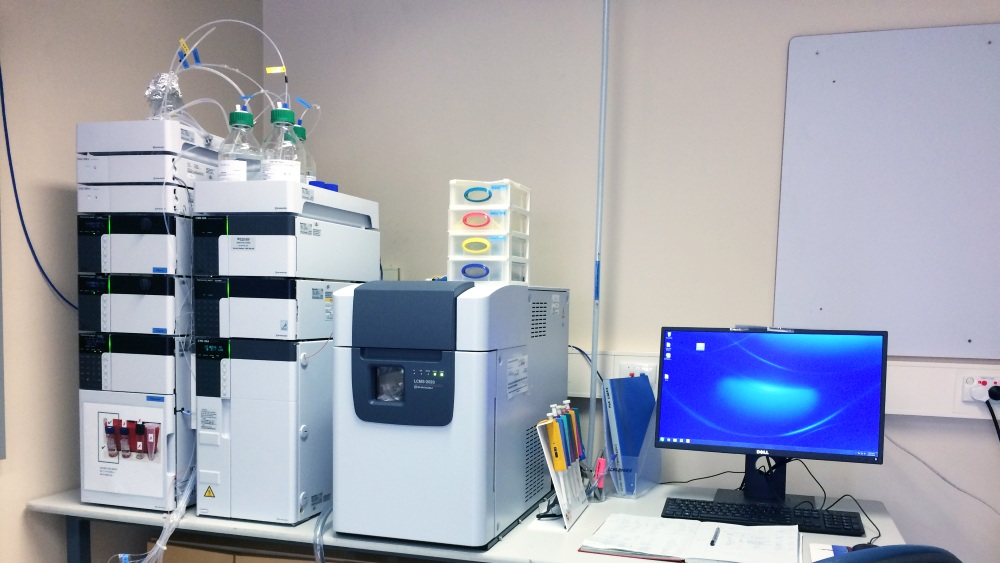
  • Shimadzu LCMS2020
  • Shimadzu QP2020 (direct injection electron impact ionisation)
  • Waters Synapt HDMS (with optional ion mobility separation capability)
  • Waters Ultima
  • Thermo Fisher Fusion 

To improve of the capabilities offered by standalone mass spectrometry, coupling of liquid chromatography can be used to introduce one additional analyte separation dimension (time resolved) before detection mass spectrometry, or by introducing UV-vis prior MS for dual detection, thus maximising sample characterisation in one single analysis.

The suite of chromatography systems available for access are mobile offering flexibly of analysis to most of our suite of mass spectrometry instruments, thus allowing analyte separation prior to detection using an array of detectors (single quadrupole, time-of-flight and orbitrap for higher mass resolving power capability), detector mass-to-charge ratio range (m/z 50-35000) and fragmentation mode (scan mode, select ion monitoring (SIM), multiple reaction monitoring (MRM), tandem MS) to provide the best suited option for your analysis.

Example of expertise and analysis capabilities using liquid chromatography mass spectrometry:

  • Efficiency of remediation processes for forever chemicals (PFAS)
  • Potency testing of cannabis dry herb and concentrates
  • Fate of antibiotics in water and wastewater treatments
  • Synthesis reaction monitoring

Liquid chromatography systems available for LC-MS applications include the following:

  • Eksigent MicroLC 200 (micro flow rates 1 - 100 µL/min)
  • Waters Acquity Classic (flow rates 0.2 – 1 mL/min)
  • Waters Acquity Premier (flow rates 0.2 – 1 mL/min, optional UV detection)
  • Shimadzu Nexera UHPLC with in line UV detection (dedicated to Shimadzu LCMS2020)
  • ThermoFisher Dionex 3000 (flow rates 0.2 – 1 mL/min, optional UV detection)

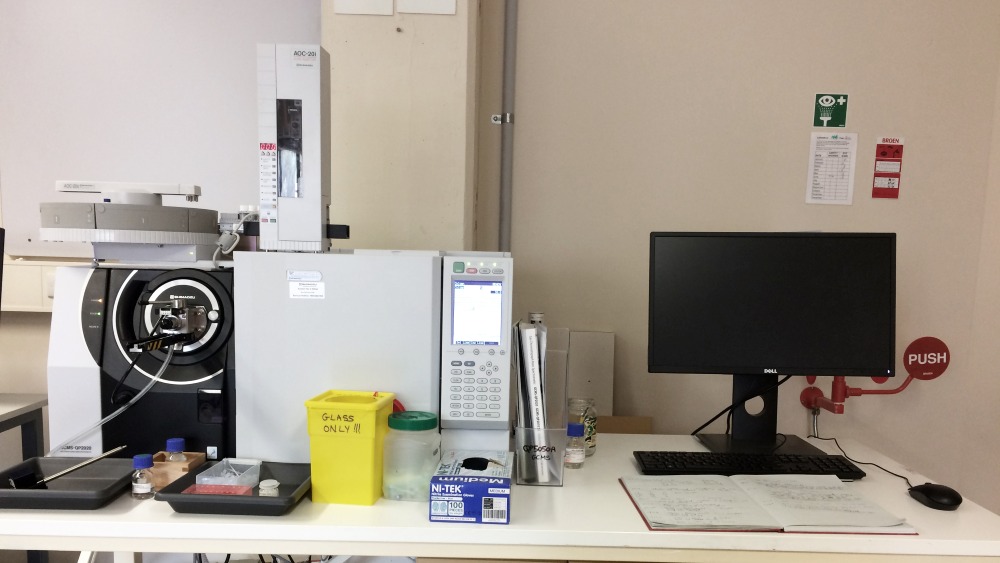
A dedicated system for gas chromatography applications with dual injection modes offers users access to both liquid sample analysis via automated liquid sample injection (150 sample carousel) or sample head space analysis (volatiles contained in the air above the sample) via solid phase micro extractions (SPME) manual injections. Complemented by a large electron impact spectral libraries (NIST17, Pesticide 3rd edition) and the ability to create your own spectral libraries, this system offers both qualitative and quantitative capabilities to delve into sample complexity.

Expertise and analysis capabilities using gas chromatography mass spectrometry:

  • Chemical content of vaping products (e.g. nicotine, flavours and other components)
  • Residual solvent analysis after production of vaping concentrates
  • Terpene profiling of cannabis products
  • Alkane profiling of vegetation rich and vegetation poor sediments

Gas chromatography system available for access:

  • Shimadzu QP2020 (automated liquid injection, or manual SPME sample injection modes)

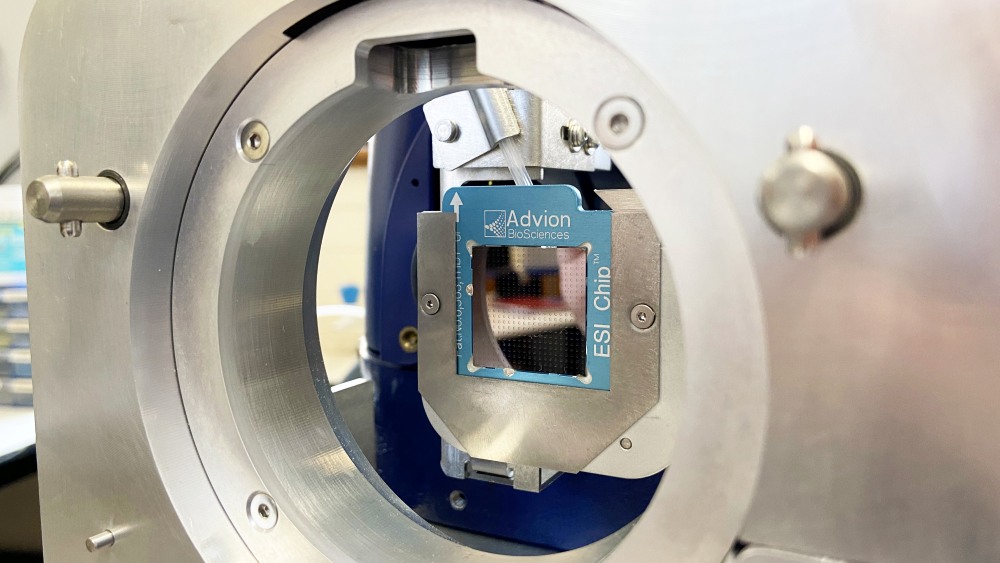
A set of four state-of-the-art mass spectrometers provide a strong mass spectrometry imaging capabilities within the Chemical Characterisation Facility. Most of these instruments are dedicated imaging platforms for biological sample imaging providing users with access to high spatial and high mass resolution to visualise analyte distribution within an array of tissue sections or cells. 

This imaging technique can be applied to a wide range of projects and biological questions ranging from drug distribution in tissues to elucidation of molecular mechanisms involved in a range of diseases.

Example of expertise and analysis capabilities using mass spectrometry imaging:

  • Mass spectrometry imaging (MSI) of tissues and cells at high spatial (down to 1µm) and high mass resolution (up to 120,000)
  • MALDI-MSI combined with laser-post-ionisation (MALDI-2) for enhanced sensitivity and spatial resolution
  • Identification and distribution of lipids and metabolites in different tissue types (e.g. brain, kidney)
  • Imaging metabolic dynamics using isotope labelling
  • Application of MSI to a range of diseases to elucidate molecular mechanisms and spatial alterations within tissues and cells

Mass spectrometry imaging systems available for access include the following:

  • Thermo Fisher Elite (orbitrap detection, MALDI-MSI and MALDI-2-MSI)
  • Bruker TimsTof Pro (time of flight detection, MALDI-MSI with plasma ionisation)
  • Bruker TimsTof Flex (time of flight detection, MALDI-MSI)
  • Thermo Fisher Fusion (orbitrap detection, atmospheric pressure MALDI-MSI)

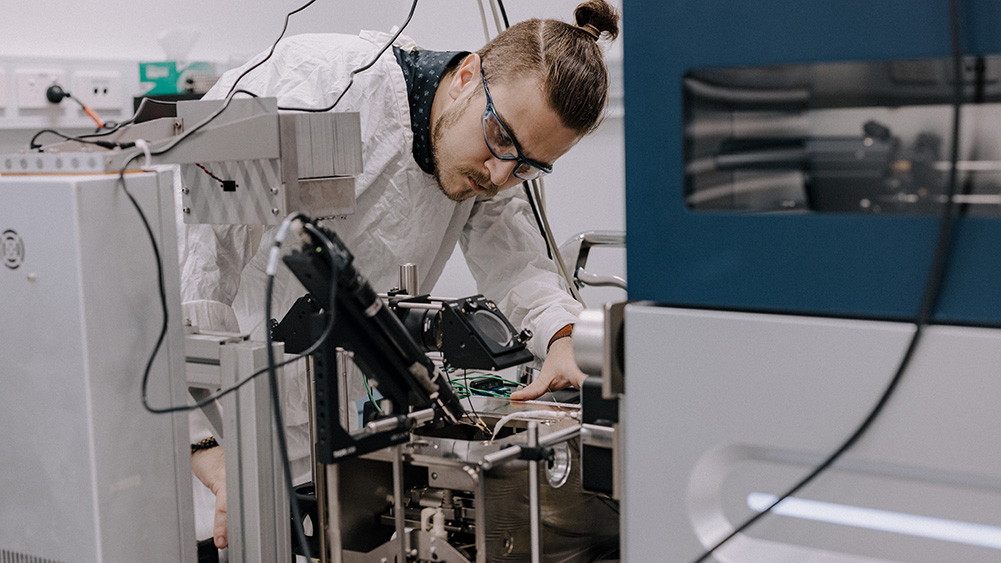
A technician in a lab coat focuses on assembling machinery, surrounded by scientific equipment and wires.

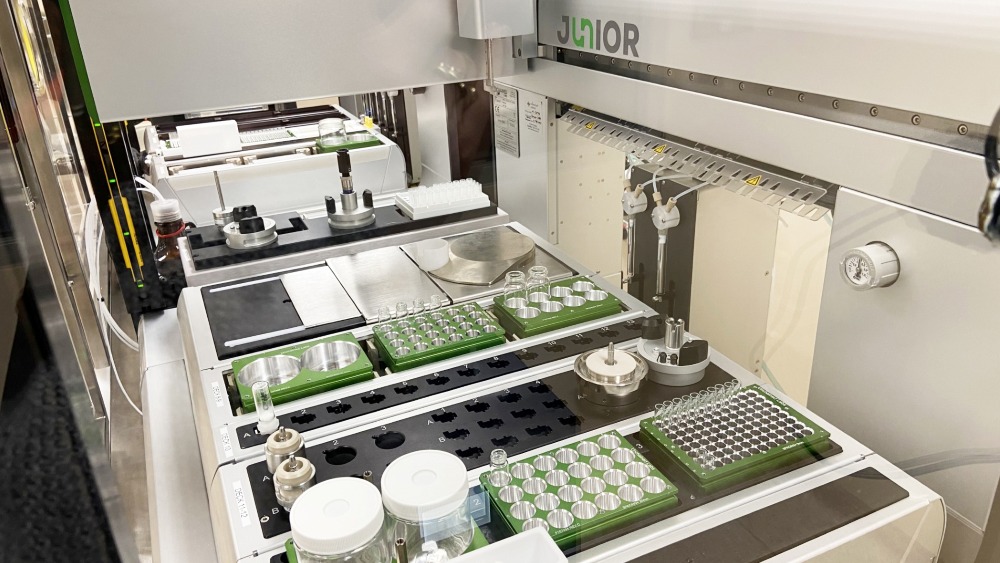
An asset for all chemists, the twin Junior robot units from Unchained Lab provide ultramodern access to automated chemical reactions under controlled inert atmosphere, delivering both high reaction throughput and AI guided database optimisation. 
The robot is equipped with controlled weighing, heating, stirring, mixing, filtration, extraction, dispensing and many more functional modules, allowing for a plethora of combinations to suit almost any reaction configuration for a very versatile range of applications.

The data generated from each reaction can be entered in an Oracle database allowing for AI guided synthesis reaction optimisations for accelerated discoveries.

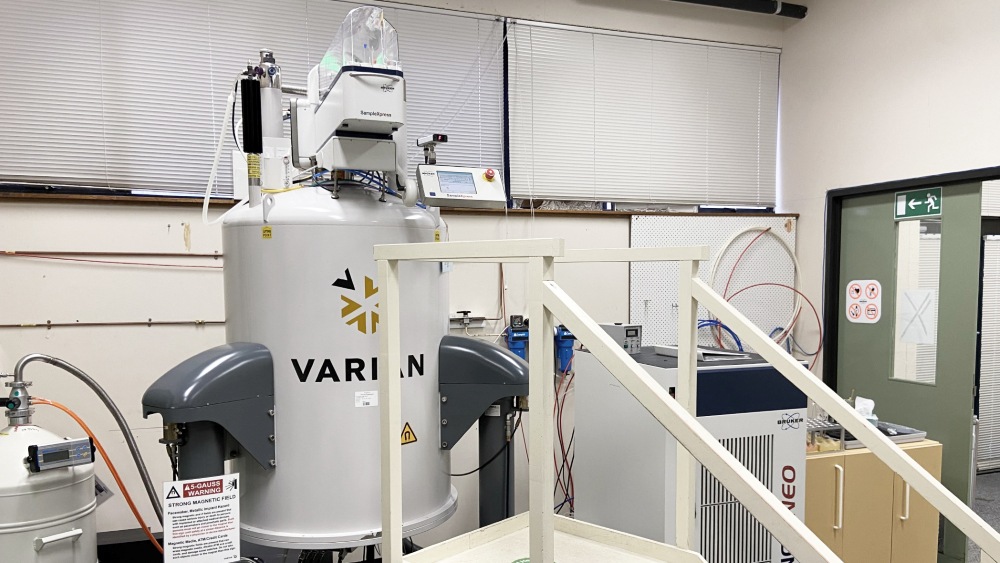
The suite of analytical instrumentation within the Chemical Characterisation Facility also includes two modern nuclear magnetic resonance (NMR) spectrometers, both fitted with autosamplers for sample queuing and optimal analysis turnaround.

The dual systems offer ample flexibility for the elucidation of compound structure with access to the 400 MHz spectrometer catering towards more routine NMR analysis while the higher resolution 500 MHz instrument is generally reserved for more specialised experiments and longer acquisitions. In addition, the availability of three different probes for the 500 MHz spectrometer allows for a wide range of measurements to be carried on a range of samples types ranging from liquid samples (liquid probe) to low concentration liquid samples (cryo-probe) and solid samples (solid state probe) for those difficult to dissolve analytes.

In addition to the classic 1D NMR (1H and 13C) and 2D NMR experiments (e.g. NOESY, COSY), access to expert technical staff can support your project with more sophisticated characterisation experiments based around other nuclei (e.g. 19F, 31P, 11B, 29Si, 15N) or pulse sequences (e.g. HSQC-TOCSY).

Example of expertise and analysis capabilities using NMR spectroscopy:

  • Full NMR structural characterization and verification for small molecules
  • Sample purity analysis (% w/w) via quantitative NMR (with water or impurity quantification)
  • CP-MAS ssNMR analysis for investigating insoluble materials (e.g. resins or catalysts)
  • Advanced customized NMR experiments (e.g. Kinetics Analysis, 3-D Protein NMR, DOSY, T1/T2 Relaxometry, Quantitative NOE, No-Deuterium NMR reaction monitoring, etc.)

NMR spectrometers available for access include the following:

  • Bruker Avance III (400-MHz, liquid probe, lower resolution, routine analysis)
  • Bruker Avance Neo (500-MHz, liquid, solid and cryo-probes; higher resolution, routine and specialised analysis)

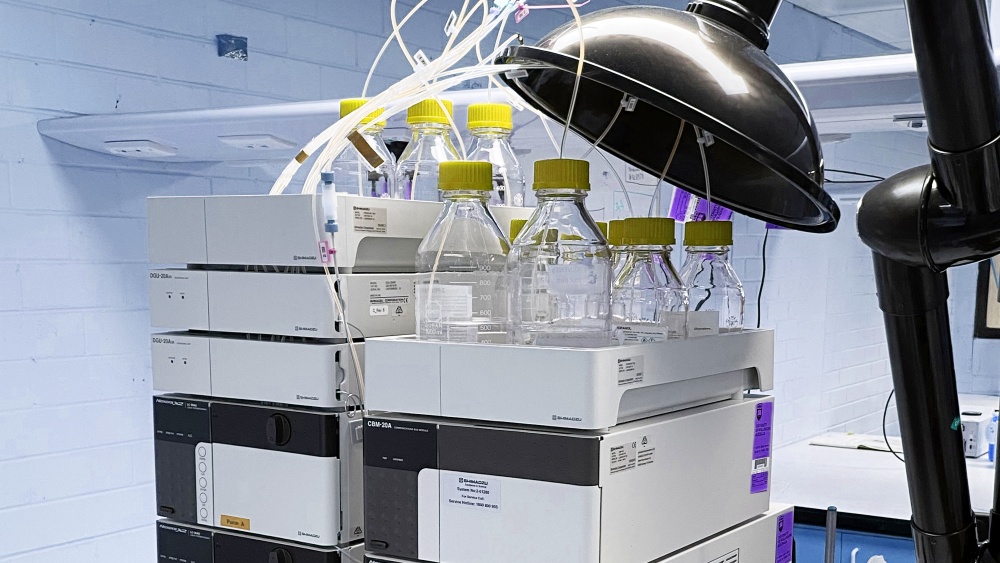
Independent from the suite of liquid chromatography (LC) systems dedicated for mass spectrometry applications, another set of liquid chromatography equipment is housed within the Chemical Characterisation Facility for dedicated fast sample purification and recovery or content analysis with UV-visible detection.

This dedicated LC-UVvis instrumentation offering separation for compound purification or sample analysis ranges from low, high to ultra-high pressures (HPLC and UHPLC). Separations can be carried out on an analytical, semi- or preparative scale for application ranging from small scale analysis to large scale compound purification and recovery, and allowing for compound separation under normal phase, HILIC, chiral or reverse phase conditions. 

Example of expertise and analysis capabilities using liquid chromatography include:

  • Isolation and identification of fractionated anti-microbial peptides extracted from fly maggots
  • Purification of large-scale compounds in multistep synthesis reactions
  • Separation of isomers to determine enantiomeric excess ratios in reaction mixtures

Dedicated liquid chromatography with diode array UV detection systems available for access include the following:

  • Waters Acquity premier (analysis, UHPLC, reverse phase and HILIC separation)
  • Shimadzu Nexera X2 (analysis, UHPLC, normal and chiral phase separation)
  • Shimadzu Prominence (analysis, HPLC, reverse phase and HILIC separation)
  • Shimadzu Nexera (purification and recovery, HPLC, reverse phase)
  • Waters HPLC (small scale purification, recovery and analysis, HPLC, reverse phase and HILIC separation)
  • Buchi Pure C-815 Flash (flash chromatography purification, low to medium pressures, normal or reverse phase)

Other types of techniques and equipment targeted to samples analysis and analyte characterisation is also available for access within the Facility.

This ranges from sophisticated pieces of equipment dedicated to specialised analysis to more generic access to lab spaces and small routine equipment for sample preparation and more routine characterisation. Overall equipment available for access within the Facility is as follow with a short description of their respective applications.

Large or specialised equipment:

  • MBraun UNIlab Pro Glove Box (enclosure for handling of sensitive chemicals under an inert Argon atmosphere)
  • Perkin Elmer PinAAcle 900Z Graphite furnace (highly sensitive spectrometer designed for trace-level elemental analysis to deliver exceptional detection limits and minimize matrix interferences in complex samples)
  • BioRad CFX96 Fluorescence Resonance Energy Transfer (FRET) (Energy transferred non-radiatively from an excited "donor" molecule to a nearby "acceptor" molecule for measurement of quaternary structure changes in molecules)
  • Jasco J-810 spectropolarimeter (a variable-wavelength circular dichroism spectropolarimeter to measures the difference in absorption of left and right circularly polarized light by optically active molecules to analyse the structure and stability of biomolecules like proteins and nucleic acids)
  • Jasco P-2000 Polarimeter (compound characterisation technique, measurement of the angle of rotation caused by passing polarized light through an optically active substance).
  • BMG Labtech POLARstar Omega Microplate Reader (a highly versatile, multi-mode microplate reader designed for life sciences supporting up to seven detection modes, including fluorescence intensity, luminescence, and a proprietary ultra-fast UV/Vis spectrometer for sample absorbance measurements)
  • Buchi M-560 Melting point apparatus (compound characterisation technique, determination of a compound melting point)

Benchtop and routine equipment:

  • Rotary evaporators (removal of organic solvent from a solution, complement compound recovery post purification by preparative liquid chromatography)
  • Freeze Dryers (removal of water from a frozen solution, complement compound recovery post purification by preparative liquid chromatography)
  • Sample concentrator (temperature controlled, small scale removal of solvent from a solution)
  • Savant SpeedVac (safe evaporation of solvents and concentrate sensitive samples like proteins, DNA, or RNA)
  • Sonicator (compound dissolution)
  • Analytical balances (accuracy to 0.1 mg and to 0.01mg)
  • Oven
  • Vortex and shaker plates (sample mixing)
  • Benchtop centrifuges (up to 16000 rcf, room temperature or temperature controlled)
  • Fume hoods (a ventilated laboratory enclosure that protects users from hazardous fumes, vapours, and dust)
  • pH meters (determine a solution pH)
  • Heating plates and baths (water, oil or sand baths to heat up samples/solutions)
  • Temperature controlled environments (fridge, -20 °C and -80 °C freezer for temporary sample storage during sample preparation and analysis while onsite) 

Contact us


Contact the Chemical Characterisation Facility team to find the right analytical solution and experts to achieve your goals.