

The optimiser
Professor Ana Deletic has built a career on helping people achieve more than they thought possible
October 21, 2026
UOW’s first Provost brings an engineer’s instinct for how systems work, along with a firm belief in the people within them, to her new role.
Professor Ana Deletic has spent much of her career helping people and institutions realise what they are capable of.
A globally recognised leader in water engineering and sustainable water systems, she has held senior roles at Monash University, the University of New South Wales (UNSW) and Queensland University of Technology (QUT). Her career has spanned education, research, academic leadership and institutional change.
But when Professor Deletic talks about the work she finds most rewarding, she returns to something less easily measured: seeing people develop, find their confidence and achieve things they may not have thought possible.
"It's that people side that drives me," she says. "Otherwise, I would still be in the lab."
As UOW's first Provost, Professor Deletic has arrived at a significant moment for the University. She is conscious that many staff have experienced a difficult period, and that trust is not rebuilt through words alone.
A familiar sense of place
"The whole campus is amazing. We're so lucky when it comes to space and infrastructure, but also the people are lovely."
Professor Deletic has spent the first months of her appointment getting to know UOW and the Illawarra, while establishing a rhythm between Wollongong, where she now lives, and Sydney, where her husband is based.
She had previously spent five years travelling between Sydney and Queensland after moving to QUT from UNSW.
"Now it's really lovely. It's much easier," she says.
She grew up in Čačak, a town of around 100,000 people in the former Yugoslavia, where her father was an academic at a regional university. She later lived in Belgrade and Scotland before moving to Australia, first to Melbourne and then to Sydney and Brisbane.
Although she has lived in many places, she says the scale and character of Wollongong feel familiar.
"I grew up in an even smaller town," she says. "My father was an academic in a similar-sized university."
Professor Deletic was drawn to UOW's size, technology focus, international connections and clear ambition for the future. She believes wholeheartedly in the vision set out by Vice-Chancellor and President Professor Max Lu AO, that UOW can build on its foundations while becoming more ambitious, connected and globally recognised.
"I really like the size and the bones of Wollongong," she says. "There are so many things we can do.
That opportunity comes from seeing UOW's regional strengths as a base for wider connections.
Professor Deletic often explains this through the idea of local and global optimisation, looking beyond what works for one part of the University to consider how its faculties, campuses and partnerships can work together to create greater impact.
"I'm all for global optimisation," she says. "If everyone works to get the whole organisation thriving, everyone benefits." 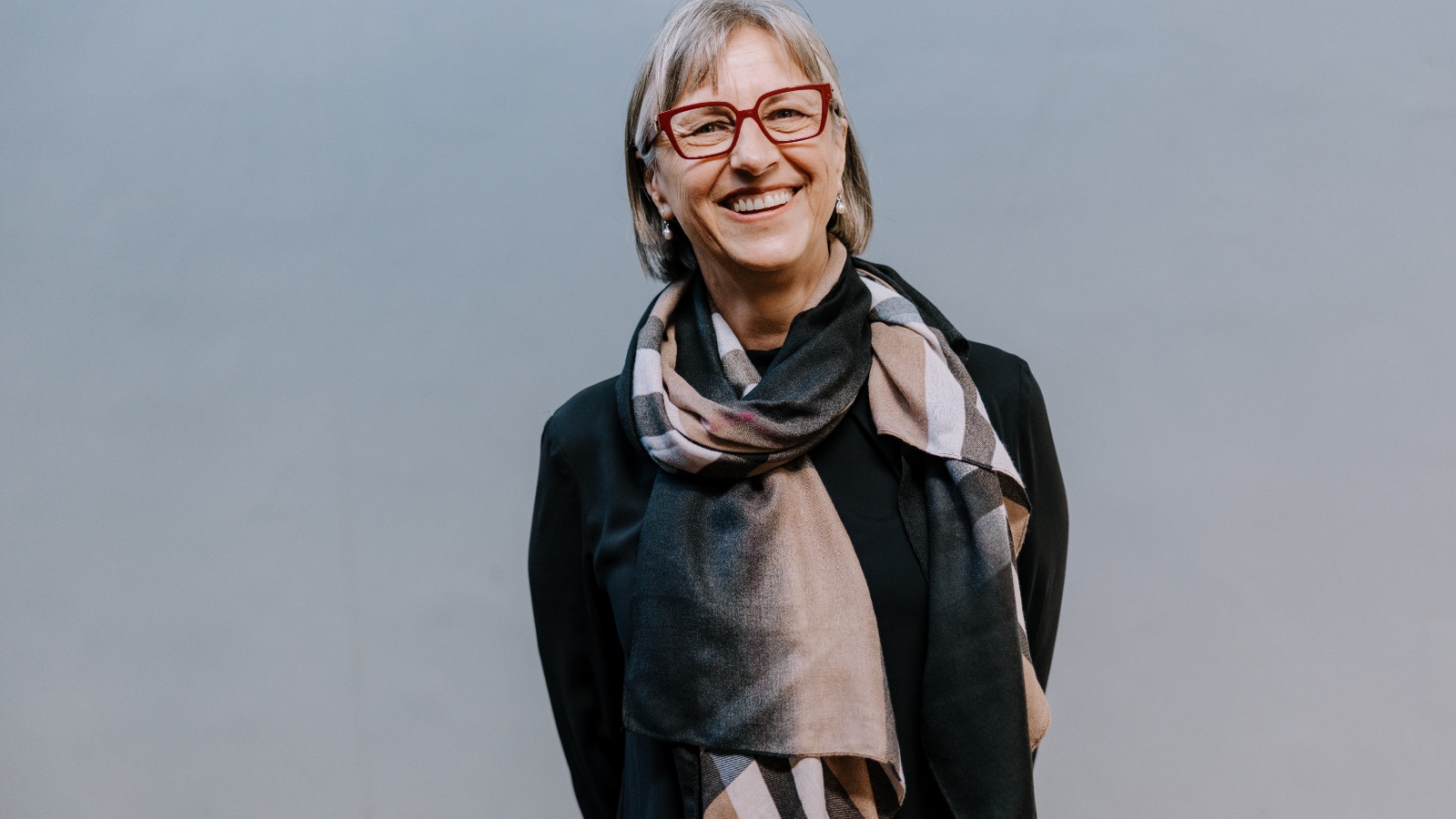
Leading from the centre
Professor Deletic's decision to become Provost followed senior roles spanning research and faculty leadership, including Pro Vice-Chancellor (Research) and Professor in the Water Research Centre at UNSW, and Executive Dean, Faculty of Engineering at QUT.
Those roles showed her the importance of a senior academic leader who can connect a university during periods of complexity and change.
"When COVID hit, if we had not had a Provost, we would have been gone," she says. "You need that chief academic to hold everything, particularly when it's stressful."
She sees the Provost as both an academic leader and an advocate.
"You need that person to lead the academic side, and sometimes even advocate for academics," she says.
At UOW, she wants to connect the different parts of the University, understand the strengths and pressures across faculties and ensure the academic perspective is part of decisions that affect their work.
Her approach is shaped by her engineering background and her instinct to understand how systems work.
She describes herself as an "optimiser" – someone looking for ways to reduce unnecessary effort while improving outcomes.
"It's not about running, it's about getting there in the smartest way," she says.
She believes academics and professional staff are already working hard, and that better systems can help focus more of their energy on supporting students, advancing knowledge and strengthening the University's contribution to the community.
"I would like people to know where they are going but also get support to get there."
Creating clearer pathways
That philosophy is informing her approach to UOW's Academic Achievement Framework. Professor Deletic sees the Framework as the structure that can give academics, particularly those early in their careers, a clearer understanding of what progression and achievement can look like.
"You need to know what you need to achieve to go to the next stage," she says.
The next step is to work with the faculties and schools to give that structure practical meaning. Professor Deletic is clear that achievement cannot be understood in exactly the same way across every discipline.
"Every discipline is different. We need to put a disciplinary lens on what this means," she says.
That work will involve looking at both measurable achievements alongside the broader contributions academics make through education, research, leadership, service, mentoring and engagement.
"We will do quantitative and qualitative indicators," she says.
Professor Deletic also wants academic careers to have room to change direction. Her own career began in an education-focused role at the University of Aberdeen, where she taught while completing her PhD.
"I was given an amazing opportunity," Professor Deletic says.
She taught several subjects, continued her research and supervised her first PhD student before completing her own doctorate. It was an unconventional beginning, but one that helped shape her belief that academic careers do not need to follow a single path.
"I started as education-focused, and then moved to blended, and then moved to research-focused," she says.
"Your career can be anything. You can move from one area to another and then back again."
Professor Deletic says academics should be able to develop their strengths over time, with excellence in education recognised alongside excellence in research.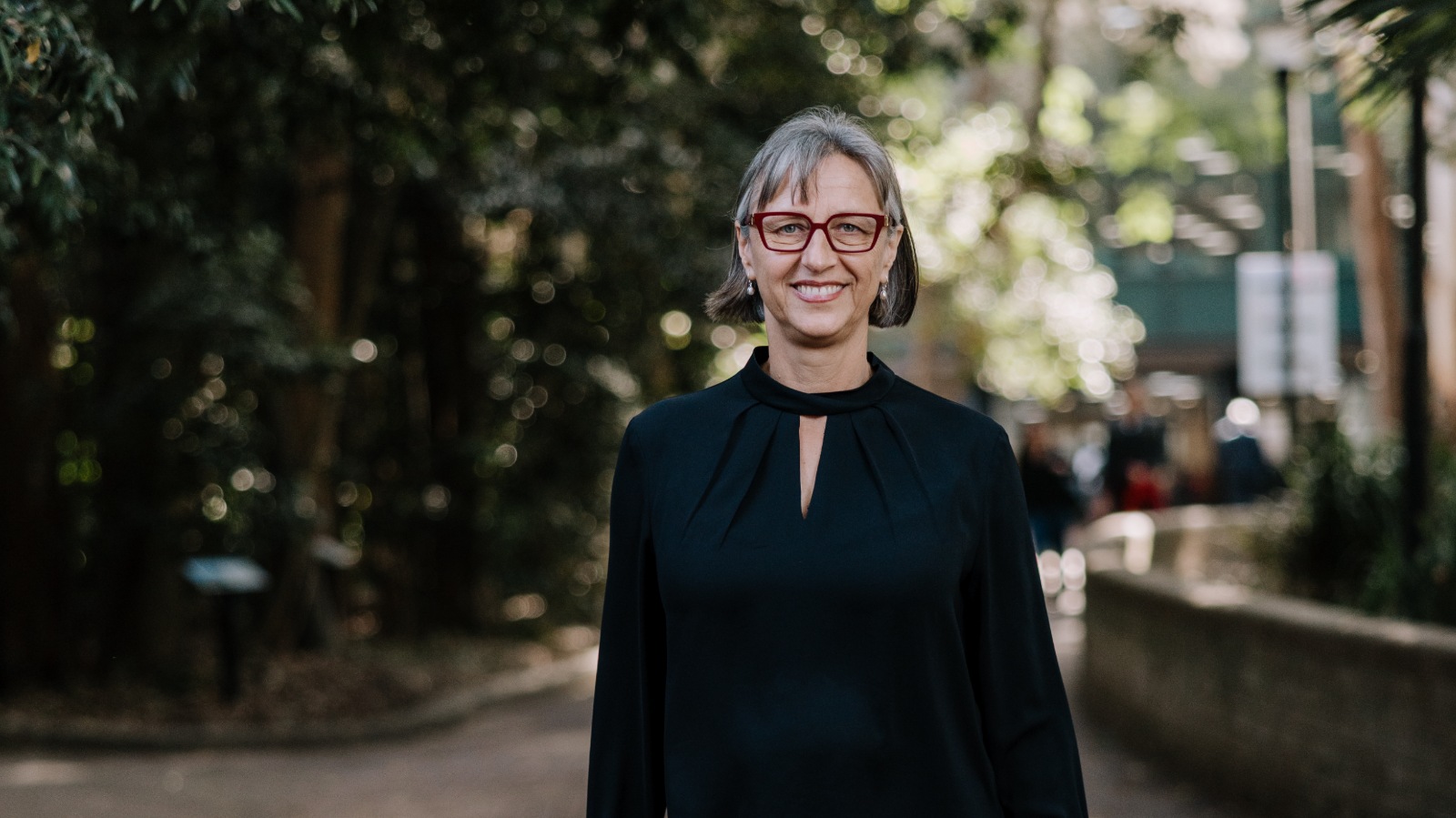
Opening doors
For Professor Deletic, creating a fairer academic environment means making sure people have genuine opportunities to develop and be recognised for their strengths.
She believes success is shaped not only by talent and hard work, but by whether people can access the networks and opportunities that help them progress.
"To succeed, it's a lot to do with opening doors," she says.
That means recognising talent in both teaching and research, supporting early-career academics and ensuring career pathways are not limited to a single model of achievement.
"We need to develop and support talent in both teaching and research," she says.
That principle extends beyond academic careers. Students benefit when educators are supported to innovate and create meaningful learning experiences, while research and industry connections can open further opportunities for graduates.
"We make a huge impact on society by educating people so they go into industry or practice and make the difference."
Her research has focused on stormwater management, integrated urban water infrastructure, wastewater treatment and recycling, sustainable water systems and urban flood management, including practical solutions for cities in Australia, Asia and the South Pacific.
Professor Deletic is Editor-in-Chief of the journal Water Research, a Fellow of the Australian Academy of Technology and Engineering and an Honorary Fellow of Engineers Australia. Her recognition includes winning the 2012 Victoria Prize for Science and Innovation in the Physical Sciences and being named Australia's Most Innovative Engineer by Create magazine in 2017.
Her work has brought international recognition, but Professor Deletic speaks most warmly about the people she has supported along the way.
A lot of her former PhD students are now professors and research leaders around the world. Many continue to call her for advice.
"Some call me 'academic mum'," she says. "They are everywhere now, and they still call me. I really love that."
At UOW, Professor Deletic wants to apply that same focus to a university with strong foundations, ambitious goals and a community capable of achieving more with the right support.