

Meet the UOW TEDxWollongong speakers
Alumni, lecturers and researchers shared their insights.
March 13, 2026
The inaugural TEDxWollongong event showcased 12 local speakers including eight with a connection to the University of Wollongong (UOW).
In his opening address to the Saturday, 7 March, event, UOW Vice-Chancellor and President Professor Max Lu AO drew attention to the day’s theme – Lookout – and the importance of perspective; looking at something up close allows you to see details, while from farther away you gain an understanding of the relationships at play.
Individually, each speaker provided a snapshot of insight into their specialty. Together, the event offered the audience an appreciation of the breadth of innovation and progress happening across Wollongong and beyond.
Below, catch up with the UOW alumni, researchers and lecturers that shared their expertise at the inaugural TEDxWollongong.
Dr Meghan Dares: The hidden risk of living longer
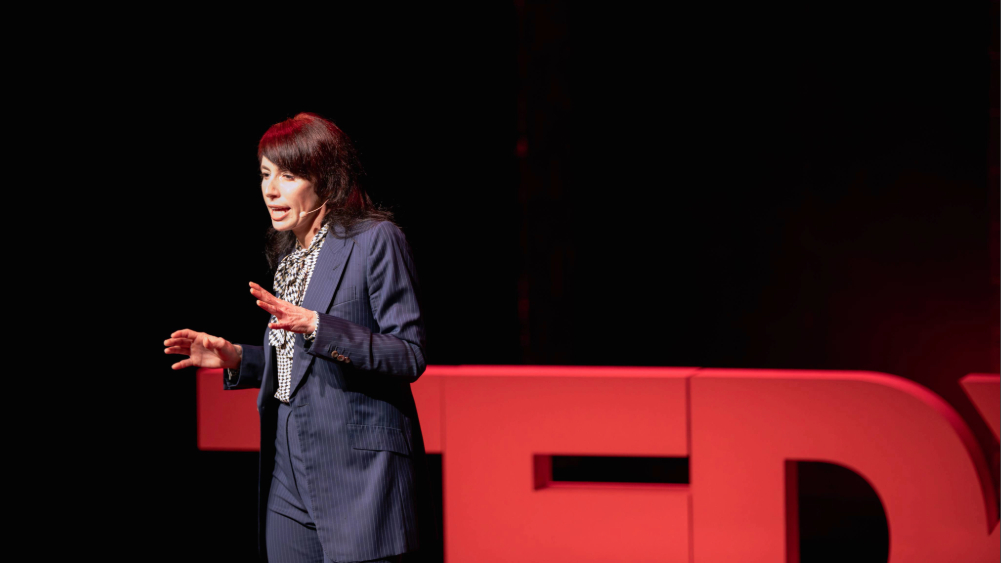
UOW graduate and orthopaedic surgeon Dr Meghan Dares is Co-Founder and Chief Medical Officer at Joint Vision Orthopaedic Group and its affiliated research institute, and previously held the esteemed position of Director of Orthopaedics at Wollongong Hospital. She specialises in joint preservation and lower-limb reconstruction, combining advanced surgical techniques with research into movement longevity.
In the first talk of the day, Dr Dares shared her mission to help Australians age well and maintain their independence by protecting strength and mobility. With humans living longer than ever before – but not necessarily being able to move well in those extra years – she asked us to shift focus from not just extending our lifespan but also strengthening our health span.
In a LinkedIn post celebrating TEDxWollongong, Dr Dares said: “People gradually start giving up the movements they love – the longer walks, the sport, the dancing – because movement becomes a little harder and immobility becomes a little easier. These changes often begin in middle age, long before we expect them to.”
“The reality is that movement doesn’t just underpin joint health, it underpins everything: cardiovascular health, metabolic health, independence, self-esteem, mental health, longevity and happiness.”
Reframing pain as a warning signal we’ve been trained to ignore, Dr Dares encouraged us to start protecting movement as early as possible – and keep dancing.
Dr Emanuela Brusadelli: Crazy little thing called trust
Dr Emanuela Brusadelli is an expert in psychodiagnosis. After years of working as a clinical psychologist and research consultant in Italy, she came to UOW in 2019. As Senior Lecturer in the School of Psychology, she aims to deepen collective understandings of people’s lives and open meaningful conversations with students and the broader community about how we can nurture trust, connection and resilience.
Dr Brusadelli is currently researching help-seeking and epistemic trust, which is trust in communicated knowledge, or a person’s willingness to accept new information from others as reliable and accurate. Epistemic trust is said to develop in early attachment relationships with primary caregivers and allows social learning and the ability to update one’s awareness and understanding of the world.
In her talk, Dr Brusadelli explored how our life experiences shape our capacity for trust and how we as people extend our trust to others. Are you slow to extend trust, like Mad Max, or quick to offer it, like Little Red Riding Hood? Either way, she believes trust is a muscle that can be trained.
Carlie Schofield: The trauma you can’t see – The inheritance no one talks about
Carlie Schofield has worked as a counsellor and cultural consultant for the past 12 years. She is an associate lecturer in Indigenous trauma recovery at UOW and a passionate advocate for the mental health and wellbeing of mothers. She also works as a Cultural Advisor and Indigenous Mental Health Professional at MindSpot, where she co-developed the Indigenous Wellbeing Course, a free online program supporting Aboriginal people with low mood, anxiety, trauma and stress.
As a Yuin woman and mother, Carlie’s work explores how intergenerational trauma, perfectionism and silence shape women’s emotional lives and how reclaiming safety and self-leadership can change entire family legacies.
Carlie said the purpose of her talk was simple: “to create awareness about Aboriginal mental health and intergenerational trauma. Not to create guilt. Not to make people feel sorry for Aboriginal people. But to build the capacity for empathy and understanding.”
She did this through storytelling, sharing her mother’s experience being taken away from her family, and her own experiences growing up as the child of a member of the stolen generation.
Carlie’s talk was a reminder that this history is not distant, and it is still impacting many in our community, as trauma can be inherited if it is not acknowledged or repaired. She invited the audience to frame trauma not as something that happened to them, but as something that can be worked with.
Dr Greg Ryder: AI is too hot right now
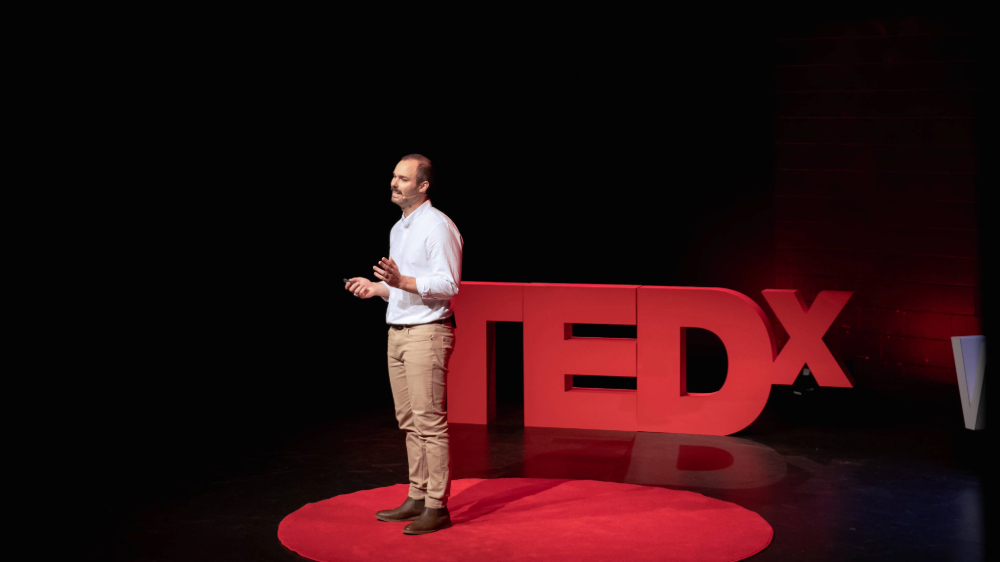
From his undergraduate degree to a PhD in organic chemistry methodology and his role as a research associate, Dr Greg Ryder has a long history with UOW. Now, he’s a Senior Research Scientist at Sicona Battery Technologies, an Australian materials company pioneering the next generation of energy storage and thermal management solutions.
With over a decade of experience in advanced materials research, his mission is to help build a digital future that’s as sustainable as it is intelligent.
The TEDx Wollongong audience heard about the intersection of advanced materials and environmental responsibility, as Dr Ryder shared his perspective on one of the hidden challenges behind the rapid growth of AI: the demand on resources for cooling AI infrastructure. He discussed the role smarter materials and better design can play in building a more efficient digital future.
Kylie Moffitt: Change your perspective – The treatment hiding inside you
Kylie Moffitt believes exercise is a kind of medicine that is underused, undervalued, and overdue for a rethink. The UOW graduate and award-winning businesswoman has over 25 years’ experience in health and medical care as a physiotherapist, accredited exercise physiologist and lymphoedema therapist.
As the founder of both PhysioHealth and Sports Injury Clinic and CanConquer Lymphatic and Cancer Rehab, Kylie’s mission is to change the way we think about exercise and embed prehabilitation into standard cancer care across the Illawarra.
Telling the story of one of her cancer patients who saw improved outcomes through exercise, Kylie explained how physiotherapy can support patients from the moment of diagnose. It can help strengthen the body for treatment, minimise treatment-related side effects, and rebuild the body and spirits after treatment ends.
“This moment represented years of learning, questioning, building, believing, and seeing firsthand what’s possible when people are given the right support,” said Kylie after the event. “My hope is that this conversation continues to grow and that we see exercise not as an optional extra, but as a meaningful part of treatment, recovery and long-term health.”
Dr Karl Kruszelnicki: Great moments in looking out
One of Australia’s most trusted science communicators, Dr Karl Kruszelnicki grew up in Wollongong and graduated with a degree in physics from UOW in 1968 when it was known as the Wollongong College of the University of New South Wales.
Known across the country as Dr Karl, he is celebrated for making complex ideas clear, engaging and accessible. With a background in medicine and biomedical engineering, he has spent decades bringing science to the public through ABC radio, television, live events and more than 40 bestselling books. Passionate about evidence, curiosity and critical thinking, Dr Karl helps audiences see the world and their place in it with fresh perspective.
He arrived at TEDxWollongong with graphs to support his argument that climate change can only be fixed by throwing insane amounts of money at it, not new technology. He urged politicians to redirect the vast subsidies flowing to fossil fuel companies toward solar and zero emissions.
Nuwangi Cooray: Lookout! The future of sunscreen begins under the Australian sun
Although early in her career, PhD candidate Nuwangi Pramuditha Cooray is already an accomplished science communicator, who knows that scientific research doesn’t change the world if no one hears about it. As the winner of the 2025 UOW final of the Three Minute Thesis competition, Nuwangi is skilled at presenting the complex world of advanced nanomaterials to non-specialist audiences.
Working at the intersection of nanotechnology, sustainability and publish health, her research and work as the founder of start-up Sun&Co focuses on developing next-generation safer sunscreens designed specifically for Australia’s extreme ultraviolet (UV) environment.
Nuwangi’s talk dismantled the comfortable fiction that Australians understand UV exposure, arguing that most people don’t even come close.
“UV protection isn't just about the number on the bottle,” she said. “It's about dose, the total UV that accumulates on your skin over time.”
By combining advanced nanomaterials with a new UV index-based testing method, Nuwangi aims to bridge the gap between laboratory performance and real-world protection, helping Australia lead global innovation in sun safety.
Jack Brown: The power of asking twice
Psychology student Jack Brown shared the story behind Talk2mebro, a national suicide prevention charity working to change how we talk about mental health and suicide. As Co-Founder and Director of the community-based program, Jack uses lived experience and a background in psychology in his mission to reduce suicide to zero in Australia through a communal, trauma-informed approach.
The 2025 Wollongong Young Citizen of the Year and nominee for 2026 Young Australian of the Year spoke about something simple that can have a powerful impact: asking someone “How are you?” and then taking a moment to ask it again.
“Often the first answer is ‘I’m good,’” he said. “But that second question, asked with genuine care, can open the door for someone who might be struggling to share what’s really going on.”
Jack explained that the inspiration for Talk2mebro was his cousin Big Matty who committed suicide but was always the life of the party and you wouldn’t know he was struggling – unless you asked.
Jack believes you can make a big impact if you ask again and mean it, listen without feeling compelled to fix anything, and don’t rush the silence.
We will update this story with videos of each talk when they are available so check back soon.