

Common sense parenting tips with Maggie Dent
Australia’s ‘queen of common sense’ shared her wisdom at Early Start Discovery Space.
June 5, 2026
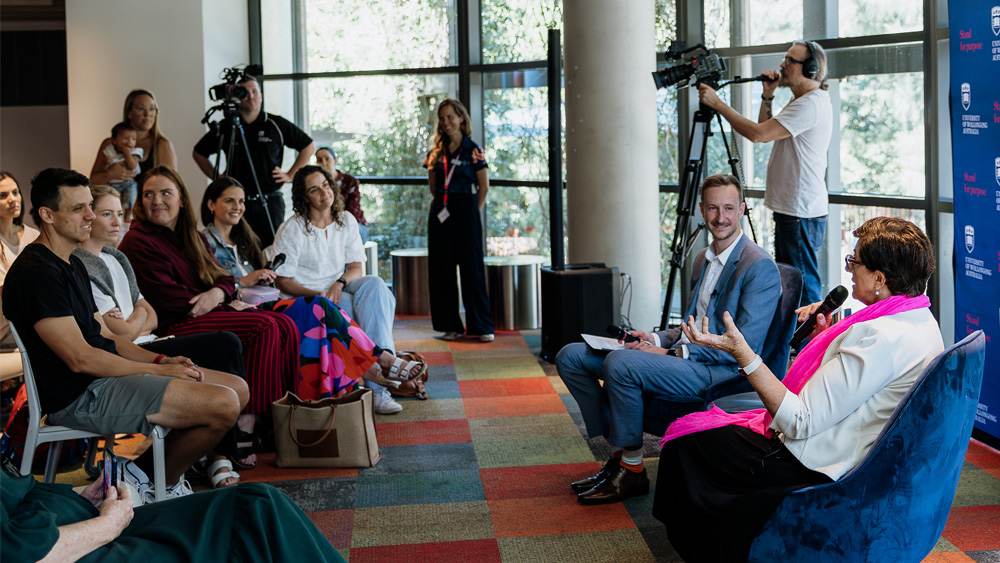
Bestselling parenting author and educator Maggie Dent joined us at Early Start Discovery Space for a Q&A with local families.
Attending the University of Wollongong (UOW) to receive an honorary doctorate for her work supporting families, educators and young people across Australia, Maggie Dent took some time to visit Early Start Discovery Space for a special Dad Space event in April 2026. Manager of Early Start Operations Joe English welcomed the ‘queen of common sense’ and explained that her work as an advocate for supporting boys and the adults who raise them speaks directly to the purpose of the weekly Dad Space events: to support male caregivers to strengthen bonds, build confidence and develop practical parenting strategies.
Maggie shared practical, compassionate advice, answered questions from local parents, and spoke about the latest research. Watch the full Q&A or read our summary below.
“Play is not a waste of time; play is the work of children.”
Maggie explained that the rapid growth and development of a baby’s brain in the first five years doesn’t happen without safe human interaction and real experiences, which can sometimes be messy.
“The more feral and free your children are in terms of play in the first five years, the healthier they’re going to grow, all through life.”
Maggie’s play tips:
- Choose outdoor nature play over toys marketed as educational.
- Give children agency about what they choose to do. You don’t always need to set up the play equipment for them.
- The best equipment is something that can be used differently every time, such as blocks, magnetic tiles or loose parts.
- Honour imaginative play – such as playing doctors, shops or school – as it is how children interpret the world through their lens.
- Prioritise opportunities for your children to play with multi-age children of all genders and all neuro types, in environments with potential risk, within screaming distance of one safe adult. Older children will automatically be thinking about how to keep the younger ones safe, while the younger children will watch how the older ones are navigating the things that they need to do next.
“Trust your child’s early warning system.”
Maggie assured parents that children need to experience risks: “You are biologically wired as a parent or grandparent to keep your children safe. There’s nothing wrong with that, but we've made you terrified of normal children's development, even walking the wrong way up a slide.”
“Trust that your child’s early warning system will work for them most of the time. If not, there’s the natural consequence of falling, which they need to put into their brain for the next time they go to the same place. Just keep breathing.”
When they’re about to do something that scares you:
- Clench your knuckles tight
- Bend your knees
- Keep breathing
- Say nothing.
“There’s no perfect parent.”
When asked how we can help build dads’ skills and confidence in parenting, Maggie said, “Men’s self-worth comes from what they judge themselves to do well. If they want to be a dad, they want to do it well and they don’t want to muck it up. The first thing I want dads to know is: there’s no perfect parent.”
“Research shows kids who have a warm, connected relationship with at least one safe adult have better outcomes. When that adult is their father there are some added benefits. One of the best social shifts in our culture, is dads stepping up to be the dad they want to be, and we need to celebrate that.”
However, it can be difficult to navigate team parenting and what mums do and what dads do.
“It's about having big conversations and working out what works for your family.”
Remember:
- We all muck up; it is a normal part of parenting.
- Dad’s way of doing something might be different to mum’s but that doesn’t mean it’s not valid.
- Father figures can come in the form of teachers, uncles, grandparents or neighbours.
- Collective parenting is still the best way to raise healthy kids, not stuck in silos, battling on our own.
- Think of the one thing you want your kids to learn from you because you are their dad and honour it.
“Tantrums are exactly what they are meant to be doing.”
While it is an annoying developmental phase, your toddlers’ big emotions and tantrums are a beautiful sign they are developing autonomy and ‘I want to have what I want’.
“That is why your toddler can melt down because you cut the sandwich the wrong way. They cry all those big things out, and they learn what happens with big feelings. They have to do that so many times, beside a safe grown up, to be able to navigate it themselves.”
The biggest challenge is staying calm yourself, especially in today’s parenting landscape which Maggie believes is harder than ever. “Moments will happen where you will shout and yell, because you’re also human. The difference today is when we’ve calmed down, we come back and repair the rupture in some way.”
Tantrum tips:
- When they’re in meltdown mode, they cannot hear you and cannot respond to logic.
- Tantrums are not a sign that you’re a lousy parent or that there’s something wrong with your child.
- Your child is not deliberately trying to annoy you, and it isn’t naughty behaviour. There will usually be an unmet need (or a few unmet needs that make it seem completely irrational) and your child is learning to cope.
- Repair the rupture after everyone is calm. This lets your kids know they are safe and okay.
- Every stage has different challenges and gifts. If you focus on the hard bits, you’re not focusing on the good.
- The number one fundamental need of children is fierce, unconditional love, as much as we can. Aim to be a calm, connected parent as much as possible, but know that the research shows you only have to be good enough 30–40 per cent of the time to raise kids who can turn out alright.
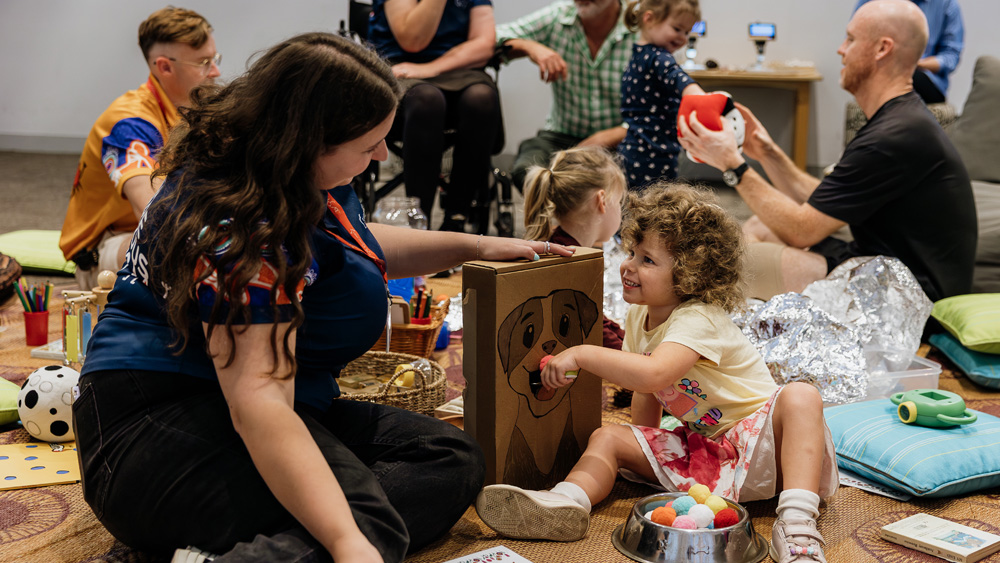
“Celebrate their natural talents.”
One parent in the audience raised concerns about schools using leader boards and merit systems and asked how to ensure her naturally people-pleasing young daughter’s self-worth isn’t solely connected to the ideal of being good.
We now know that punishments and rewards don’t work, Maggie began. While acknowledging that schools are gradually recognising this issue, she said behaviourism is still deeply embedded into our education systems. In school, these methods cause stress on children trying to get onto the leader board, and shame as children start to rank themselves or feel less than if they can’t do what their peers are doing.
“They are then reluctant to want to go to that environment,” Maggie said. “So, what do we do?”
“Our kids need to know that our capacity to love them exactly as they are will never change.”
Give reassurance and celebration:
- Let children know you want them to be able to do the best they can at school, but that some days things will go well and some days they won’t. That’s okay.
- Every child has their own unique gifts and challenges. Celebrate that and reassure them of their natural talents.
- At home, provide as many opportunities as possible to play and be a happy, restored child without the pressure of ‘is my name on the board?’
- You don’t have to over reward your kids, and you don’t have to punish them, because it doesn’t teach them how to make better choices next time. Punishment creates more cortisol, more aggression and the feeling of ‘I don’t like being here’. If they are making poor choices, is there an unmet need that can be addressed?
- To get our kids to do what we want them to do, we keep reminding them warmly, and we keep validating when it happens.
“Our children need a childhood that’s not digital.”
Another parent asked about the impact of technology on children’s developing brains and how to encourage schools to reduce the use of screens in the classroom.
The question was timely for Maggie, who has been collaborating with Kirra Pendergast on an upcoming book titled Digital Freedom: A guide to less screen time for safer, happier and healthier families. Referencing research showing clear damage to the prefrontal cortex of preschoolers, she explained how devices impact the ability to focus, concentrate and decode language.
“Our kids are also more anxious because their dopamine receptors are being wired up,” Maggie said. “Our children need a childhood that’s not digital, for brain and social development, and reducing anxiety.”
“The tides are moving,” she said, highlighting that schools are starting to remove or limit screen usage. “We’re now working out how we navigate this responsibly to raise responsible digital citizens.”
Be an advocate at home and at school:
- If you need a break, television is better than an iPad or a tablet which is close to the face. While the TV is on, they’ll still be jumping around or drawing at the same time.
- When you take away devices, they’re more likely to play, read and do what children are meant to do, so they turn up at school less anxious and with stronger social and emotional skills.
- The worst thing kids can be watching at any age is short reels (Instagram Reels, YouTube Shorts or TikTok).
- Many teachers agree and want to go back to the basics of how we teach and engage children in learning.
- Keep being an advocate, share resources and research with other parents, and express concerns as a group.
“Siblings come in all shapes and sizes.”
The final question came from a parent with a blended family seeking practical advice for raising three children of different ages with very different personalities and dynamics.
Maggie explained that the fundamental thing for all children is ensuring they have a secure attachment to at least one human.
“Secondly, let’s recognise that siblings come in all shapes and sizes,” she said. “When you mix them into a home, they will react to what is happening in different ways.
“Siblings are meant to have conflict, it’s what we do around those conflict moments that makes a difference.”
Some tips for raising siblings:
- Don’t assume you know what is happening or who is to blame in a moment of conflict.
- When children’s nervous systems are flooded, they can’t make good choices. A change of environment like going outside, or a plate of healthy snacks, can shift kids’ energy and their ability to get on.
- Create shared joyful memories by prioritising times where you do an activity that they all really love, like going to the beach or cooking pikelets together.
- Display printed photos of siblings in moments of joy together in areas they see regularly (like on the back of the toilet door) to give them an endorphin rush of connection and love.
- Play board games together to work on frustration, tolerance and sportsmanship, while building bonds through fun.
- You’re never going to be able to bridge large age gaps between siblings. But you can make sure older children know how much they are a special part of the younger one’s life and how they can help them experience joy and wonder.
“Put the stick down you beat yourself up with.”
Finally, Maggie reassured the gathered parents that they are doing okay.
“You’re all going to have days where it just doesn’t go well. Focus on the moments where it goes beautifully, the glimmer moments, and you’re going to be okay. You’ve got this.”
The perspectives shared in this discussion are those of the interviewee and don't necessarily reflect those of the University of Wollongong.