

Weaving Country, culture and art through Saltwater mobs
Behind the scenes of UOW Gallery's latest exhibition.
October 29, 2026
First Nations students reflect on co-curating an exhibition that celebrates the connection between mob and art through Saltwater Country.
For students Caity Atherton, a Wiradjuri woman, and Thomeissa ‘Meissa’ Mason, a Wiradjuri, Gomeroi and Awabakal woman, co-curating an exhibition at UOW Gallery offered a chance to explore the connections between Country, culture and community.
Together, they have brought these ideas to life in Where Saltwater Weaves, an exhibition that honours storytelling, kinship and belonging through contemporary creative practice. Featuring 32 artworks across a range of mediums, the exhibition spans decades of creative practice, inviting audiences to consider the enduring connections between First Nations people, art and Saltwater Country.
The exhibition was made possible through an internship with the Aurora Foundation, an Indigenous organisation that supports opportunities for First Nations students. Meissa received a scholarship through the program, enabling her to gain curatorial experience at UOW Gallery while completing her Bachelor of Creative Arts.
The Aurora Internship
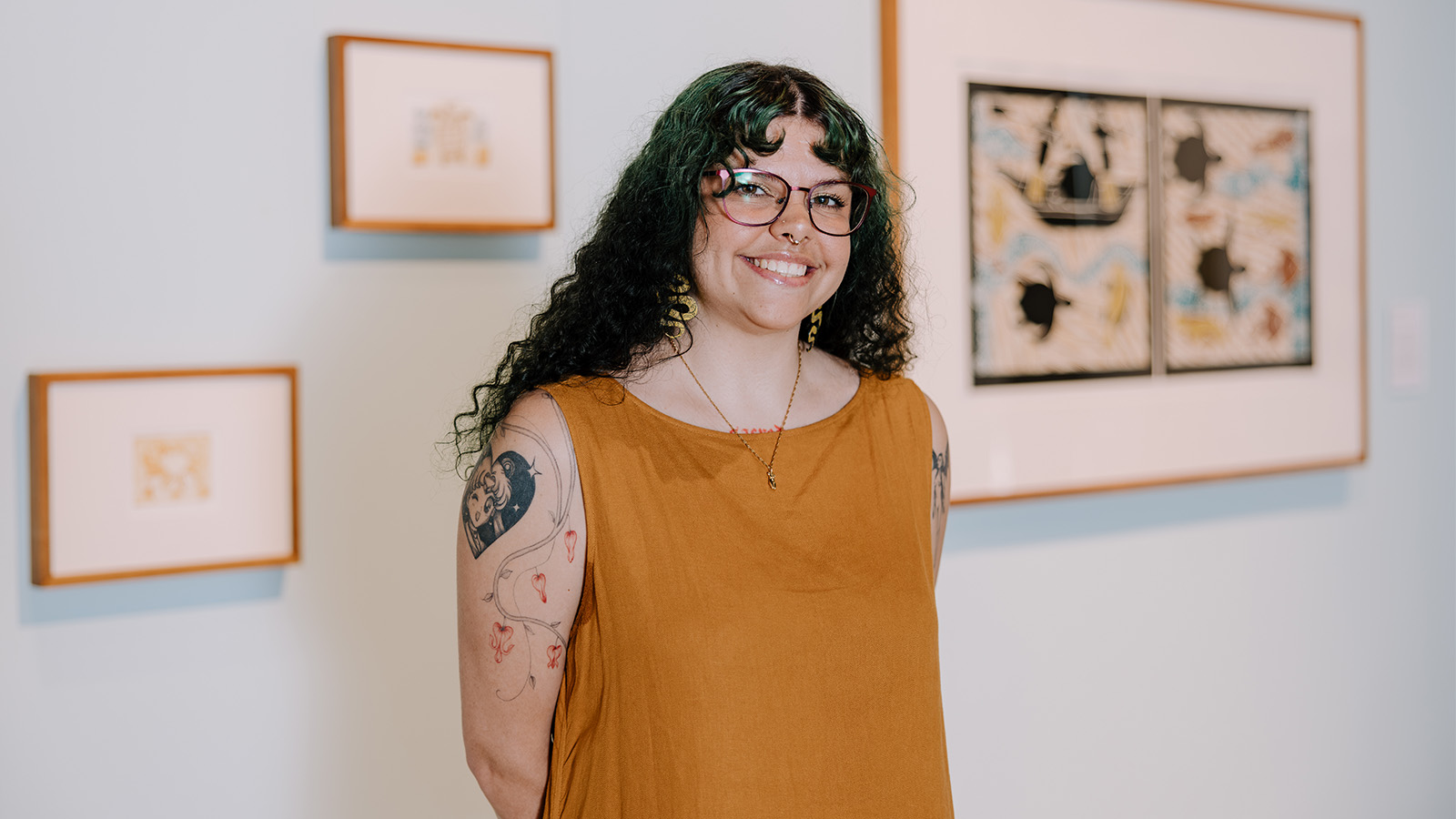
The program supports both Indigenous and non-Indigenous students through paid internships, with additional financial assistance available to Aboriginal and Torres Strait Islander students, including support for travel and accommodation.
Beyond the financial support, Meissa values the flexibility the program offers, allowing students to nominate their preferred placements based on their interests.
“I feel like the Aurora Foundation really does tailor to our interests. They let you pick where you want to go,” Meissa said.
With opportunities available to graduates for up to 10 years after completing their studies, the program also offers ongoing support as students navigate their early careers and beyond.
“I first heard about them through Woolyungah Indigenous Centre (WIC) on campus and now I’m telling everyone,” Meissa said.
The curatorial experience
The curatorial role was a pivotal two-month process for both Caity and Meissa. Their work involved delving into UOW’s Art Collection, which contains more than 5,000 works, researching the stories behind the artists and their artworks, and selecting pieces that connected to the theme of Where Saltwater Weaves.
“We picked a couple of themes but noticed our favourite artworks were all saltwater ones. I am a saltwater woman on my dad’s side, so it was also a personal connection,” Meissa said.
The exhibition was deliberately curated in three chapters to highlight mob on Saltwater Country, while also welcoming anyone who visits or lives here, Aboriginal or not, to recognise how we all weave together.
The first chapter centres on Dharawal and Yuin artists from the Illawarra, whose work shares cultural and historical stories of the South Coast and reflects their ancestral connections to Country.
The second celebrates artists who, whether born on Saltwater Country or having settled there later in life, have built connections and community through art on Dharawal Country.
The final chapter broadens the lens to Saltwater communities across Australia, highlighting the connections that weave First Nations people together along the coastline and beyond.
“Every piece is intentional,” Caity added.
There is always trial and error
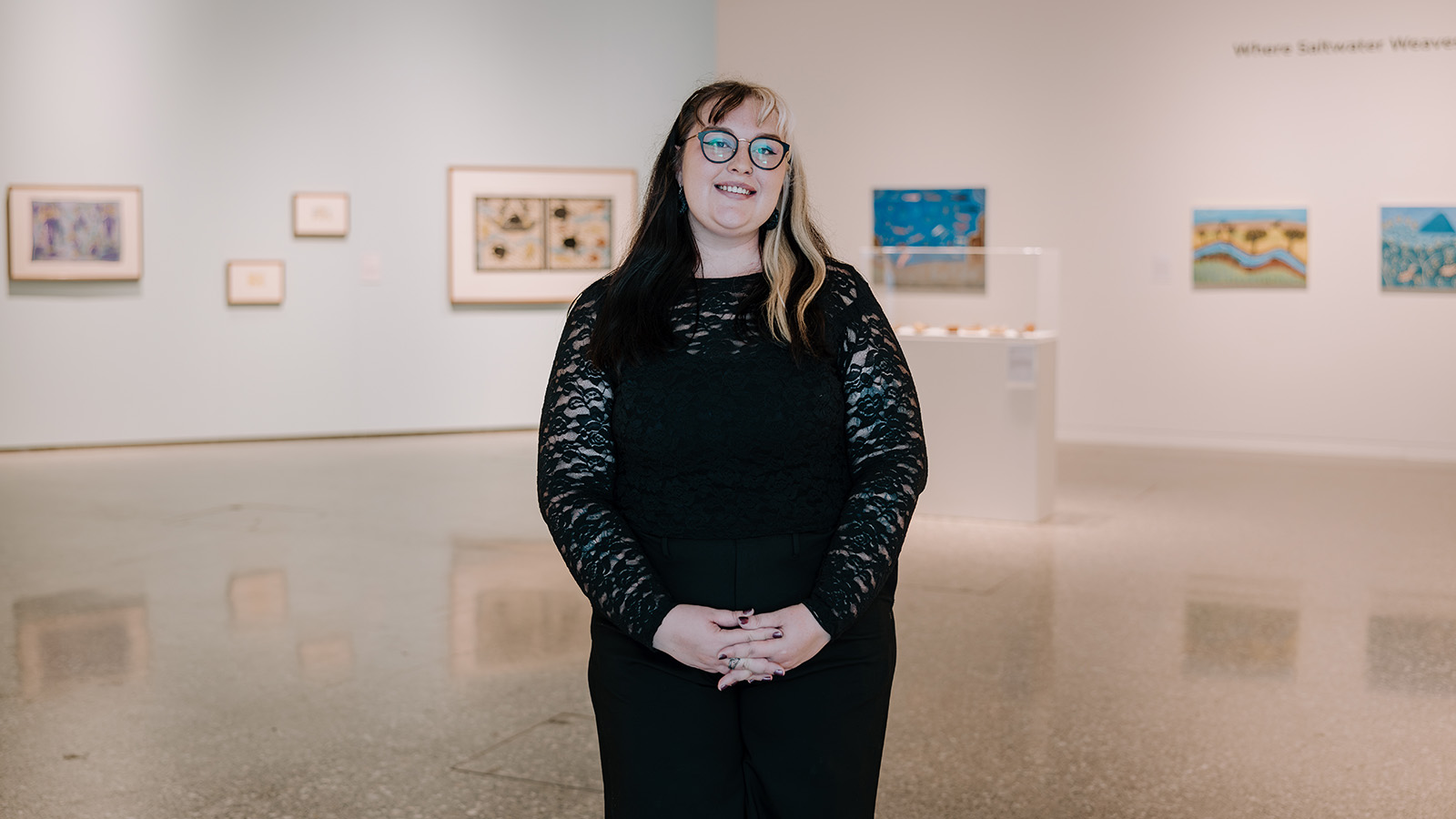
When it comes to curating an exhibition, is there really such a thing as a perfect process? For Caity and Meissa, one of the biggest takeaways from the experience was learning to adapt when things didn’t go to plan.
“At the centre of the exhibition, we were meant to have woven mermaids that were an interpretation of the Five Islands Dreaming story, woven by the ladies from the Illawarra Aboriginal Corporation,” Caity said.
“Unfortunately, they weren’t finished in time. Things happen, but we learnt to adapt and work with a new layout.”
Adapting to the exhibition space presented its own challenges, particularly when selecting artworks that could be safely displayed. Some of the works, which had spent years in UOW art collection storage, were too fragile to handle or had deteriorated over time. One such work was Brooke Andrews’ Sexy and Dangerous.
“I really wanted to display that one because it was a beautiful work, but unfortunately, the photograph was too faded to be presented,” Meissa said.
Connections close to home
The connections between artists and their shared stories became an important part of the exhibition. The featured works of Ben and Mona Brown offered a particularly personal insight, with their granddaughter, Maiquilla Brown, who works in UOW’s Indigenous Strategy Unit, sharing stories of her grandparents’ journey into art with Caity and Meissa.
“It was just beautiful to see her look at her grandparents’ works,” Caity said.
“I think we have more of an attachment to it because we’ve just spent a lot of time with Maiquilla,” Meissa added.
Learning more about the artists’ lives also revealed connections that might otherwise have gone unnoticed, adding new layers of meaning to the works.
Ben and Mona both began painting later in life, having previously worked in fruit picking to support their families. Their story resonated with Phyllis Stewart’s Bean Picking Days, which reflects the history of Aboriginal people who relied on seasonal fruit picking to make a living and provide for their families.
“To see the connections between mobs here, how they lived and their similar pathways to art. Finding out some of them have a lot of connections with each other that we didn’t know about before we started looking into it, brings more of that Saltwater weaving into the exhibition,” Meissa said.
Weaving together
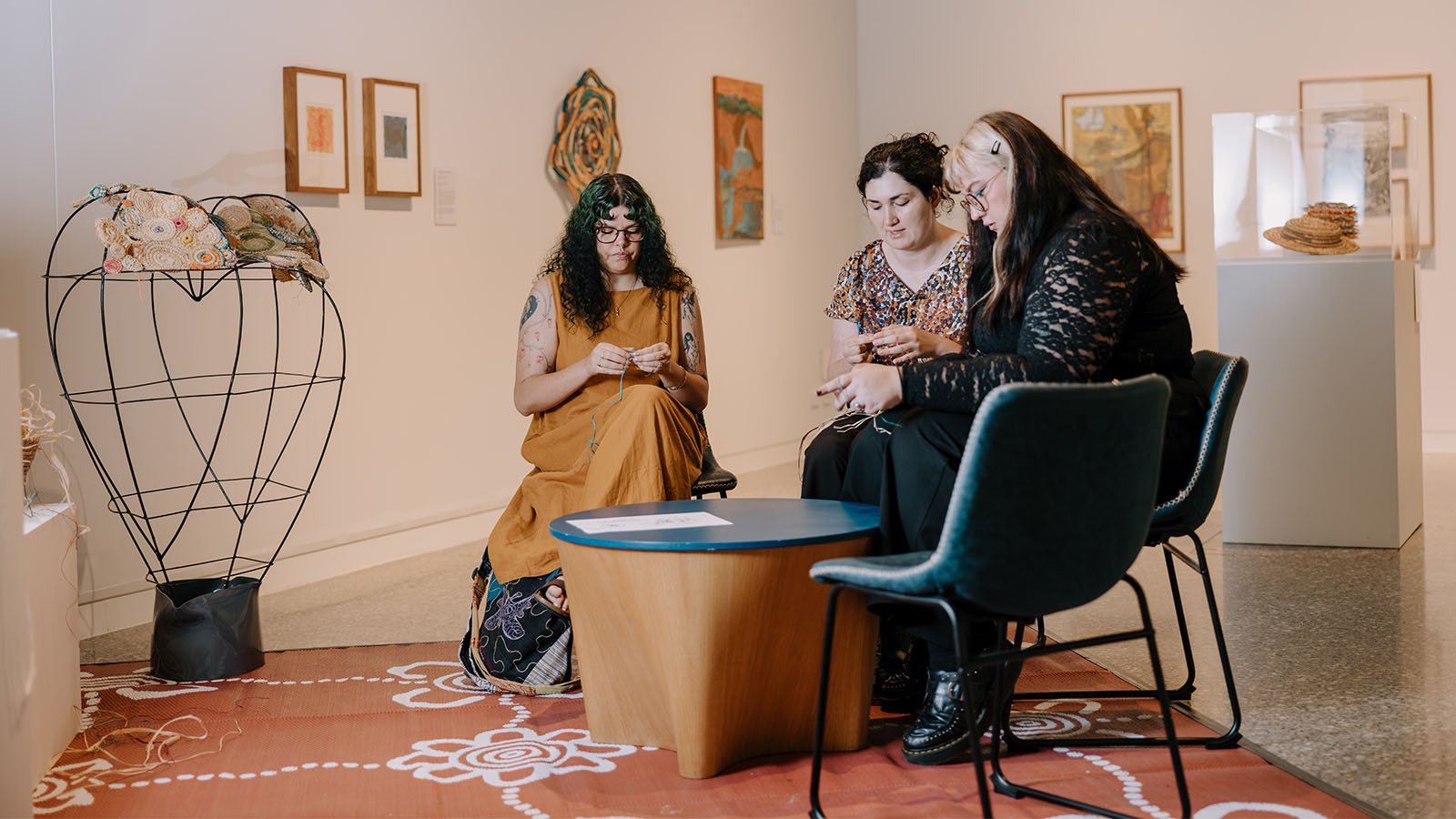
“We all have a place here. I really hope they see where they weave in, wherever they’re from,” Meissa said.
Through the exhibition, Caity and Meissa hope visitors leave with a new appreciation for art and see how Where Saltwater Weaves brings people together through storytelling, shared experiences and connection.
“I would like people to see where they weave into this exhibition. That’s why we created chapters, so everyone feels connected,” Meissa said.
For Caity, the exhibition also offers an opportunity for visitors to reflect on their own relationship with Saltwater Country, including those who have found a sense of home somewhere different from where they come from.
“Some of the artists are from places that aren’t traditionally associated with Saltwater Country, but they’ve chosen to make this Country their home,” Caity said.
“I’m anticipating moving down to Illawarra next year because I love saltwater. I feel a really deep connection with Saltwater Country.”
What’s next?
For Caity and Meissa, co-curating Where Saltwater Weaves has opened new pathways for creative expression, storytelling and connection, strengthening both their shared passion for art and their individual aspirations.
“Caity and I love art, it’s our biggest hobby and one of our big connections as friends,” Meissa said.
“We really balance each other out, and both gave each other assurance throughout this whole process,” Caity added.
For Meissa, reconnecting with art beyond a hobby at home has been a significant outcome of the Aurora Foundation internship. Exhibiting in Project Art Space’s annual Pride exhibition has also helped bring art back into her orbit.
“It gave me a look at how even if you're not doing it career-wise, community-wise, you can still do art as an adult and not just in your home by yourself,” Meissa reflected.
Meanwhile, Caity’s journey through Visual Arts and Indigenous Studies has reshaped her career aspirations, inspiring her to explore further research and a potential future in teaching Indigenous Studies.
“I am now currently working through writing up my proposal for my honours and seeing where that'll take me,” Caity said.
As they look towards what comes next, Where Saltwater Weaves reflects the breadth and depth of UOW’s curatorial vision. Caity and Meissa hope the exhibition continues to celebrate the connections, kinship and storytelling that weave together Saltwater mobs across interconnected Countries.
Visit the exhibition
Where Saltwater Weaves is on display at UOW Gallery, on the ground floor of Building 29 (Jillian Broadbent Building), until 9 December 2026.
Opening hours: 10 am to 4 pm, Monday to Wednesday.