

Walking with trees
UOW’s revitalised Campus Tree Walk blends science, culture and care for Country
January 19, 2026
Landscapers, botanists, Indigenous knowledge holders and designers came together to reimagine a familiar campus feature - and in the process, changed how they see the trees themselves.
The Moreton Bay fig beside the University of Wollongong’s Duck Pond Lawn is a campus icon, but few people passing beneath know it’s a descendant of a giant that stood there long before the University. The campus, now covered by a lush canopy, was once a bare dairy farm with almost no trees. A massive fig on the site held its ground until the 1980s when it split apart.
Cuttings were taken and those propagated siblings now form a living genealogy across campus. The fig overlooking the duck pond is one of them. Under its shade on Friday 5 December, UOW launched the revitalised Campus Tree Walk.
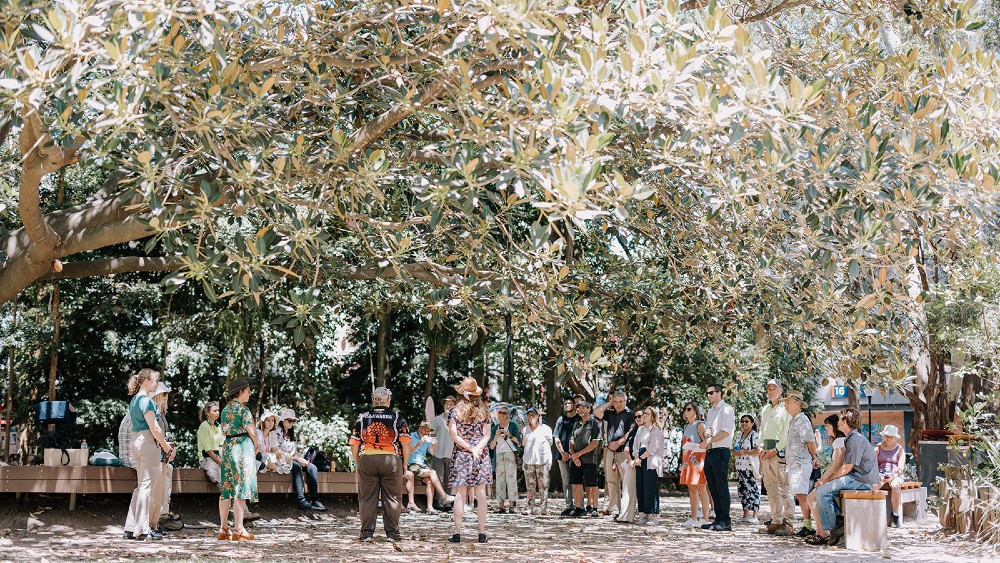
The walk - established in 1995 by the Janet Cosh Herbarium - has taken on different forms throughout its 30-year history. Most recently reviewed in 2013, it existed as two separate rainforest and eucalypt walks, pamphlet-based with only small signs naming the species.
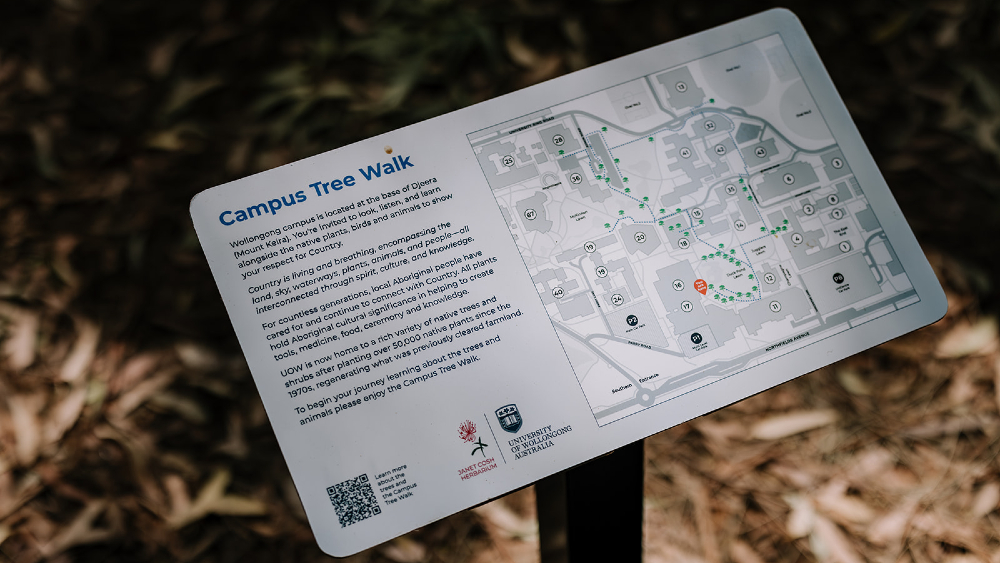
For the new walk, 50 trees of ecological, cultural and historical significance were chosen, marked with new signage and linked to a website through QR codes.
Behind each sign is a community of landscapers, ecologists, designers and cultural advisors who spent almost a year shaping the experience. It became one of UOW’s most wide-ranging collaborations, involving the Environment Unit, Landscape team, the Herbarium, Indigenous community representatives, academics, alumni and local plant experts including botanists Leon Fuller and Gary Leonard. Some trees chosen are ones Fuller planted when he was UOW’s landscaper in the 1970s.
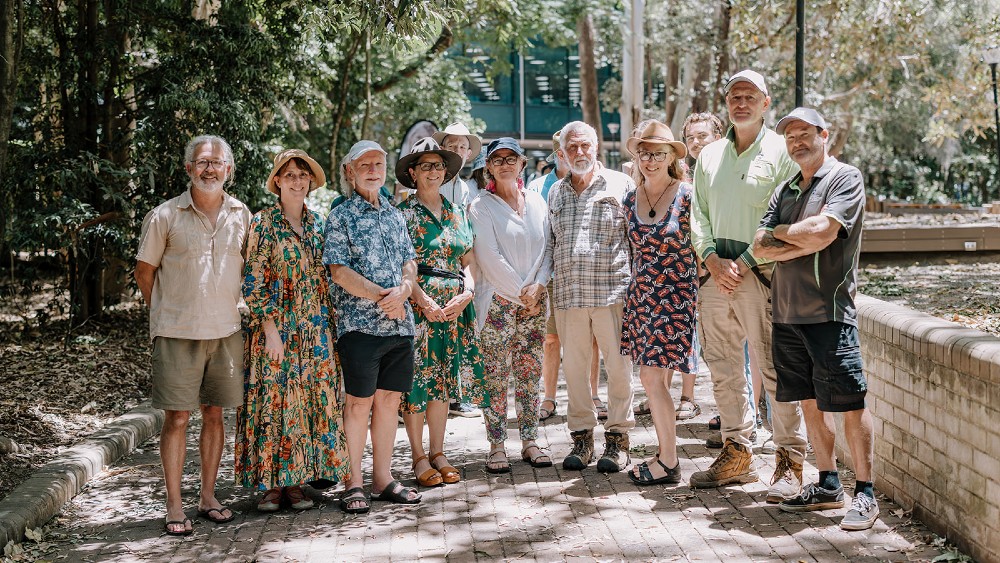
“This has been the most amazing team effort,” Herbarium director Dr Alison Haynes says. “No one person or group could have done it alone.”
“We had 15 people and 15 perspectives,” botanist Patsy Nagle adds. “It’s challenging to get that into 15 lines of text and make it comprehensible.”
But that challenge – balancing cross-disciplinary collaboration, Indigenous consultation, ecological precision and the practical work of digging 56 holes to install signs – created something stronger than any single viewpoint.
“It was organic,” Haynes says. “We started with a round table listening to each other’s perspectives. It moved slowly and respectfully, which became its strength.”
The process also changed how the experts saw the trees.
“It gave me new ways of interpreting a plant in its place and different ways to look at the same tree,” Nagle says.
A walk that asks something of you
The new walk is not simply a catalogue of species but a shift in how people are invited to engage with nature.
“The more you learn about a tree, the more you understand the environment,” environment officer Alison Scobie says. “And the more you care about it, the more you learn. It’s about trying to engage people in a learning process of care.”
That sentiment is shared by head landscaper of 32 years, Anthony Wardle, who has planted many of the trees across campus. “When you’re planting something that’s only this big,” he says, hands held a few centimetres apart. “You don’t think much of it. But you come back 25 years later and go, ‘wow, it’s huge, I planted that’.“
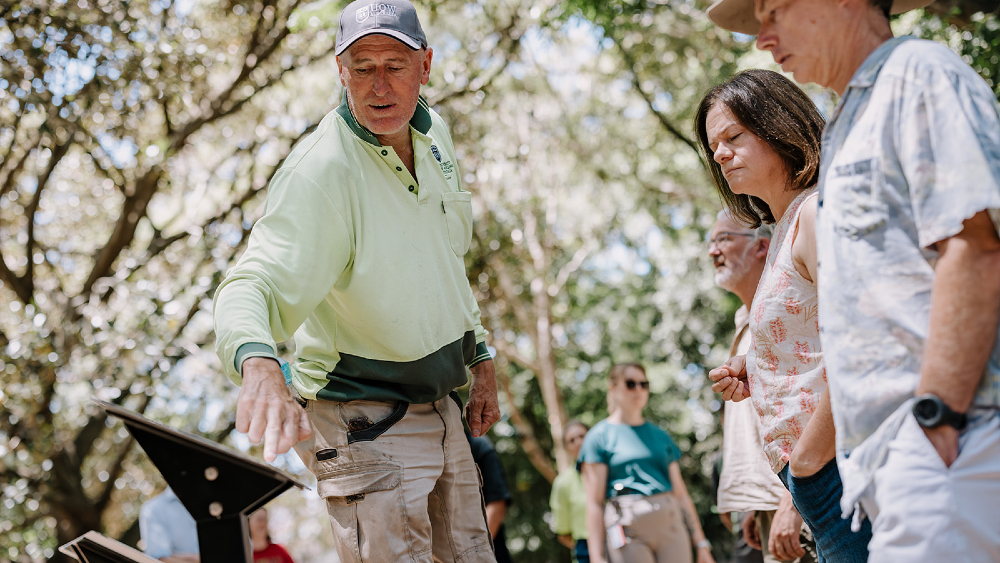
The walk aims to create that same sense of connection for anyone passing through. The signs are intentionally succinct, with the QR codes offering deeper ecological, cultural and botanical detail. But Scobie emphasises the aim is more than just information.
“We want people to think differently about how they interact with nature,” she says. “To sit, observe and learn from the tree itself. It’s not just reading a sign, it’s asking, ‘what is this tree giving us and what are we giving back?’”
An invitation to care
A key influence was Associate Professor Anthony McKnight from the Indigenous Strategy Unit and an Awabakal, Gumaroi and Yuin man. Without his voice, the walk might have been a catalogue but with it, it became a conversation.
“To start with I was against the signs,” McKnight says. “We shouldn’t need a sign to tell us what a tree is about. From young kids we should be learning about all the gifts a tree gives us.”
His perspective reframed the project.
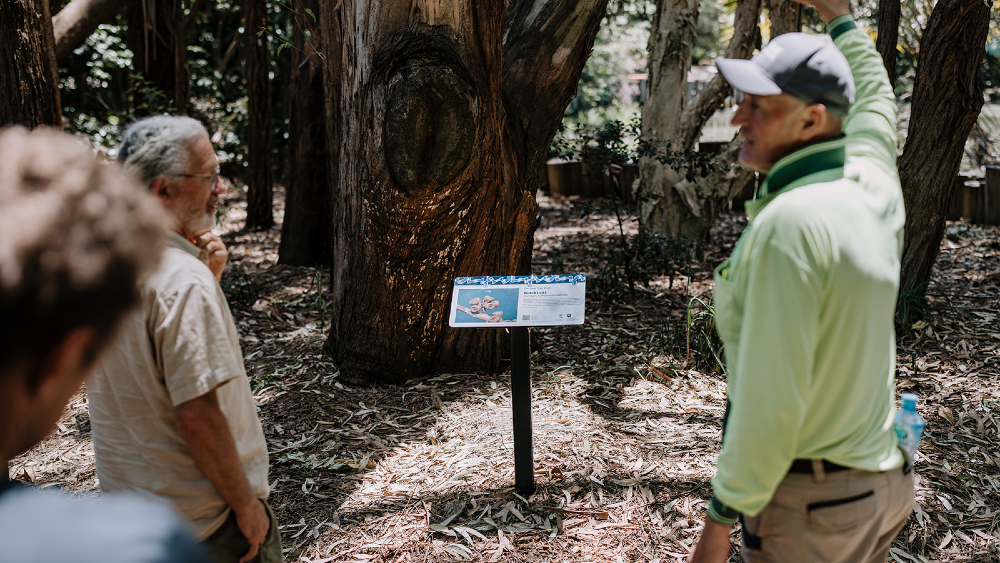
“The walk is an invitation to step into two knowledge systems,” he says. “Western science, which sees a tree as a resource, and Indigenous knowledge, which sees a tree as giving gifts all the time.”
Trees breathe for us, shade us, feed us and shelter us. They communicate, adapt and form communities, an “intelligence Western science is only now catching up with”.
“How do we include Country in our decisions instead of putting humans at the centre? If you care for something, you’ll look after it,” McKnight says.
At the launch, the idea of trees as caretakers comes to life. Scobie pointed out the birds in the fig sheltering, like us, from the sun. McKnight described how the blackbutts above are part of a family and the older ones’ deep roots bring up water to support younger trees.
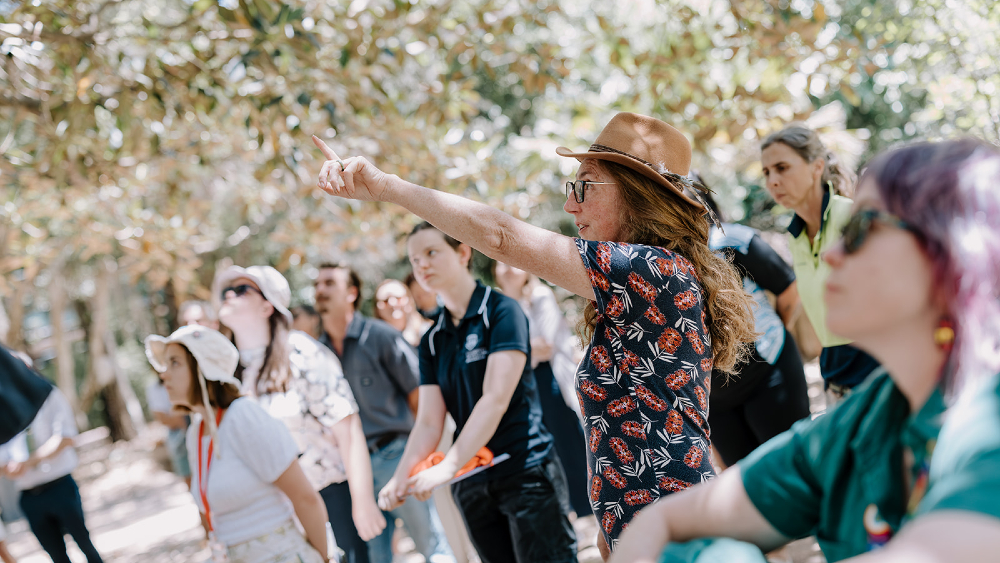
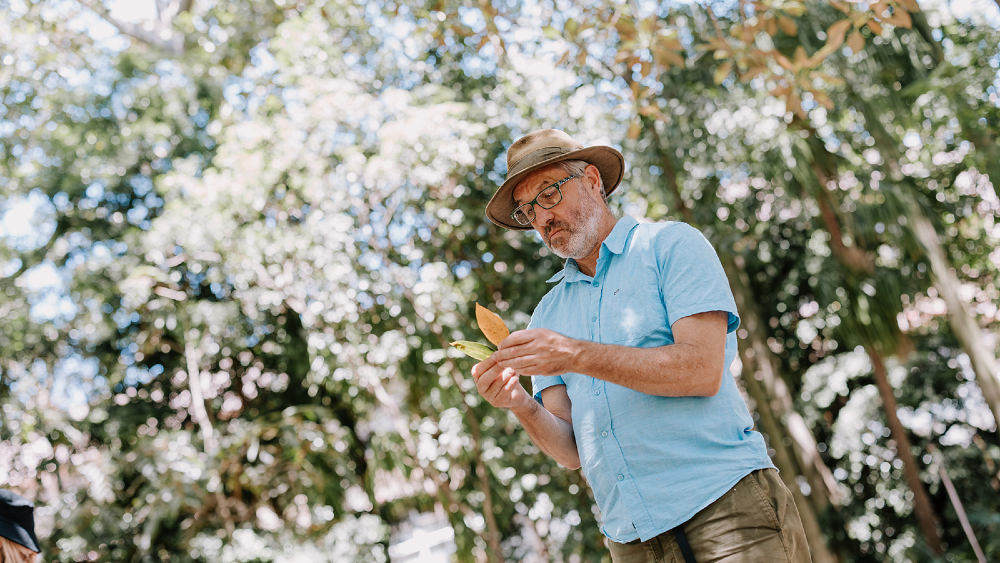
The walk encourages visitors to notice and learn from the details of the tree - the leaf shape, hairs on bark or the branches leaning toward the sun.
“Trees are aware of us. They have intellect, a nervous system, they respond and adapt to their environment,” McKnight says. “People think, ‘it’s just a tree’, but it gives us so much more than we give back.”
In this way, the walk is a lesson in seeing, listening and recognising the things trees bring to our world and that caring for them is a shared responsibility.
Built to last and to change
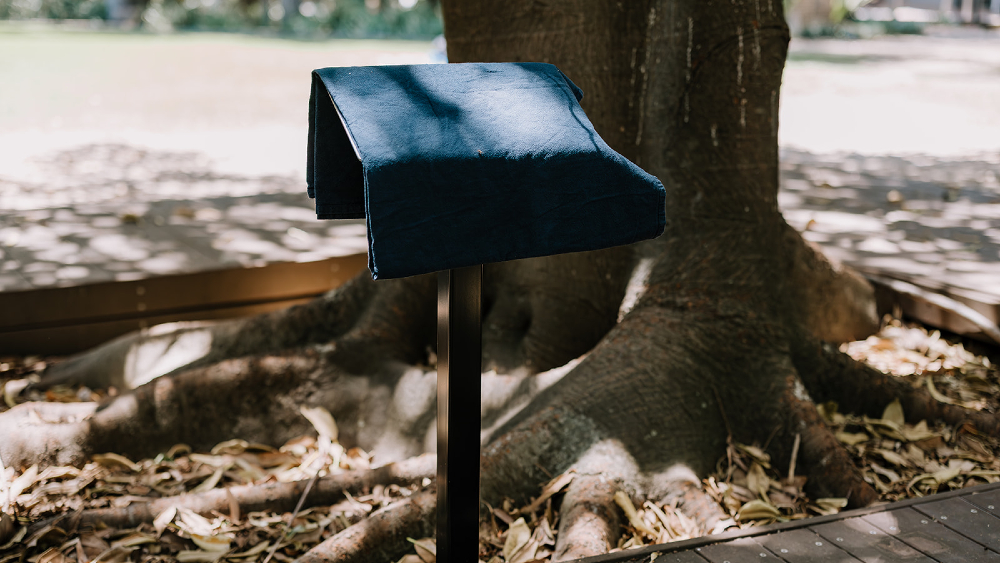
The walk was designed for accessibility. It is deliberately short, close to paths and signage – posts for the signs were made in the campus engineering workshop – sits at a height visible for all abilities. It’s also adaptable. New trees can be added, others replaced if damaged in storms and the website updated as knowledge grows.
The website will become a rich educational resource with plans to embed the walk into university, high school and TAFE learning. Visitors will also be invited to write a letter to their favourite tree to build emotional connection rather than simply presenting information.
“This isn’t the finished product,” Scobie says. “It’s going to evolve. After we’re gone, it should still grow.”
After a year developing the walk, Wardle says picking a favourite tree is like choosing a favourite child but admits the Morton Bay fig might be it. “It’s special because it’s a connection to the history and landscape of the place, grown from little cuttings.”
“You shouldn’t underestimate the little things,” he adds. “The little things you do now become big things in the future.”
The revitalised walk is one of those little things. A modest path and a scattering of signs that inspires something bigger; a slower pace, learning and care for the living world.