

The conservation crisis facing South Australia’s koalas
A koala boom risks ecological tragedy, but modelling points to a practical, ethical solution
January 19, 2026
Much of the narrative around Australia’s koala population has focused on the dwindling population of the iconic native animal.
Across Eastern Australia, habitat loss, deforestation, the Black Summer bushfires, and disease have depleted koala numbers to the point where they are now vulnerable to extinction.
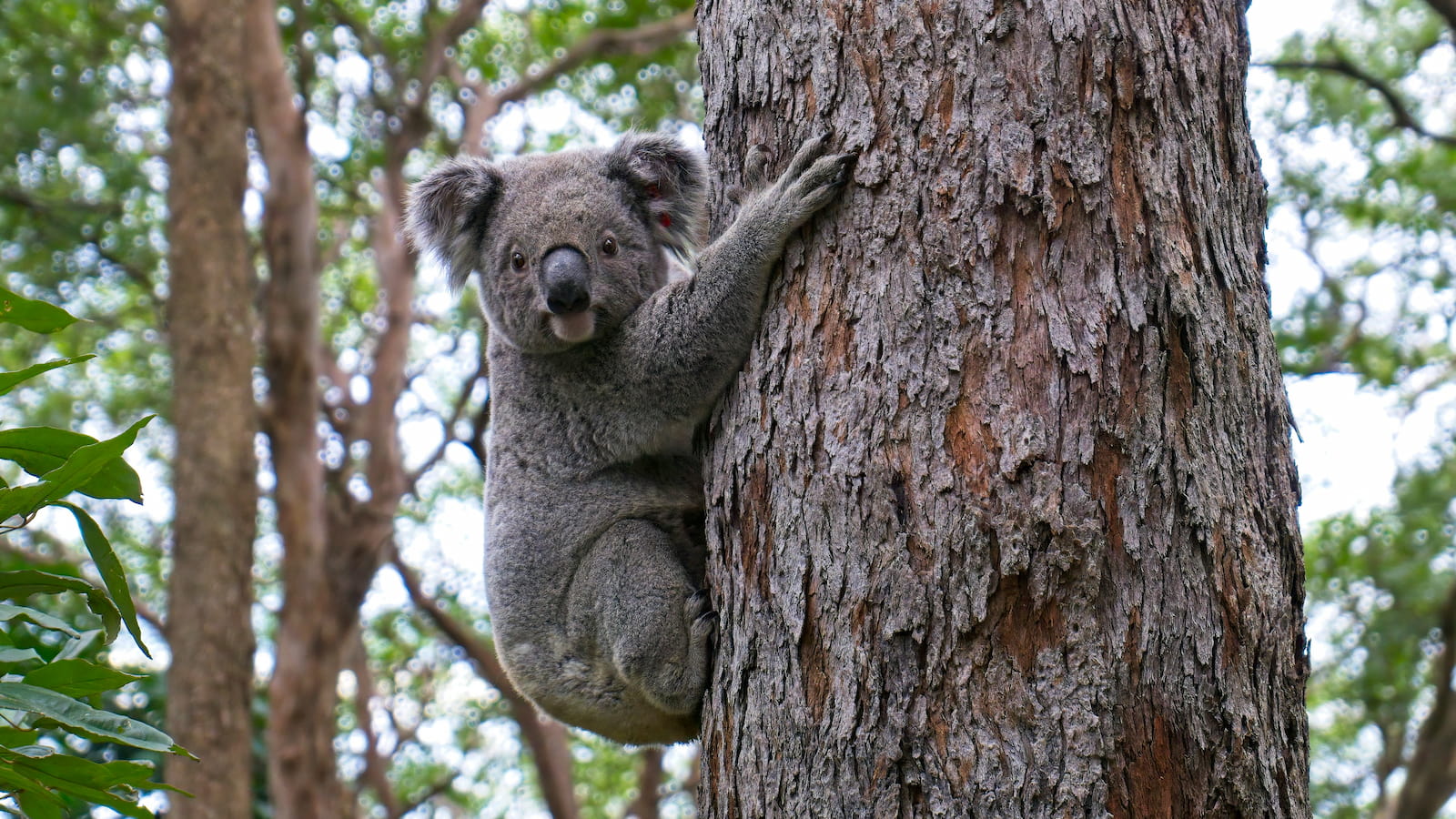
However, in South Australia’s Mount Lofty Ranges it is a different story. Koala numbers are booming, so much so that it is placing a significant strain on their habitat and food supplies.
A new study, co-authored by Dr Katharina Peters from the University of Wollongong (UOW), lead author Frédérik Saltré from UTS and the Australian Museum, and researchers from Flinders University, reveals the complexity of species conservation in a country where overabundance bumps up against scarcity.
Published in Ecology and Evolution, the research shows that South Australia’s koala population in the Mount Lofty Ranges, currently around 10 per cent of Australia's total population, threatens the species’ long-term survival
While thriving koala colonies should be good news, the researchers say these numbers are deeply troubling and highlight the quandary facing the country’s koalas, governments, and conversation authorities.

Using advanced spatial modelling and data from thousands of citizen science observations, they found koala densities in many areas are above what is considered sustainable by the South Australian government.
Without intervention, this number could grow by a further 17 to 25 per cent over the next 25 years, impacting food supply, vegetation and native habitats. The Mount Lofty Ranges are home to around 10 per cent of Australia’s koala population.
“Koala numbers are rising higher than the environment can support, increasing the chance that heavy feeding will quickly degrade the eucalyptus forests they need for survival," Dr Peters said.
"If it continues over the coming decades, it could lead to widespread food shortages for koalas and a tragic wave of starvation and death," she continued.
“We are faced with a difficult conservation dilemma, because traditional methods of population management, like culling or relocation, raise ethical concerns from the public or are not appropriate for such an iconic native animal. How do we manage a species that is now threatened by its own abundance, and do so in a way that protects animal welfare and long-term ecosystem health?"
After modelling multiple fertility-control strategies the scientists found that sterilising approximately 22 per cent of adult females annually, focusing on high-density hotspots rather than across the entire region, would stabilise the population at an estimated cost of $34 million over 25 years.
“The novelty lies in the proactivity of the approach: instead of spending money on a conservation plan without knowing whether it will succeed, we used computer simulations to identify in advance which strategies are most likely to work — optimising both costs and taxpayer investment,” Dr Saltré said.
As climate change reshapes habitats and species distributions, such evidence-based and anticipatory approaches will become essential for managing high-profile species where public values and ecological needs collide.
“Nobody wants to see koalas being culled or starved because their habitat cannot sustain their numbers. That’s why it’s so important to manage the population and prevent it from becoming too large,” Dr Peters said.
“By testing the efficiency and cost-effectiveness of different sterilisation scenarios, we can make informed decisions on how to proceed to safeguard the koala population and its habitat.”
About the research
‘Balancing High Densities and Conservation Targets to Optimise Koala Management Strategies’, by Frédérik Saltré, Katharina Peters, Daniel Rogers, Joël Chadoeuf, Vera Weisbecker, and Corey Bradshaw, was published in Ecology and Evolution.