

Studying academia from the inside out
A PhD informed by experience inside academia and the realities of women’s career progression
April 23, 2026
Drawing on her own experience as an academic in Sri Lanka, Iresha Donmanige’s research explored how women navigate career progression within universities and the systems that shape their paths.
Before beginning her studies at the University of Wollongong, Iresha Donmanige was already working as an academic in Sri Lanka, with a background in psychology. Through that experience, she had gained first-hand insight into the realities of progressing an academic career as a woman in a STEM field.
“I've sort of understood some of the hurdles that women academics face in general and when it comes to career progression,” she says. “So that’s what made me personally interested in the topic, because I've been a part of that cohort and also experienced certain difficulties.”
That curiosity became the foundation of her PhD in Management from the School of Business, which explored how women academics navigate career progression and the systems that shape those pathways.
“My PhD focuses on career progression for women academics across 14 Australian universities,” she explains. “I’ve looked into their career progression narratives, particularly from mid to senior academics, and also interviewed organisational decision-makers, so individuals on promotional committees, deans, heads of schools and even vice-chancellors to capture the full spectrum of perspectives.”
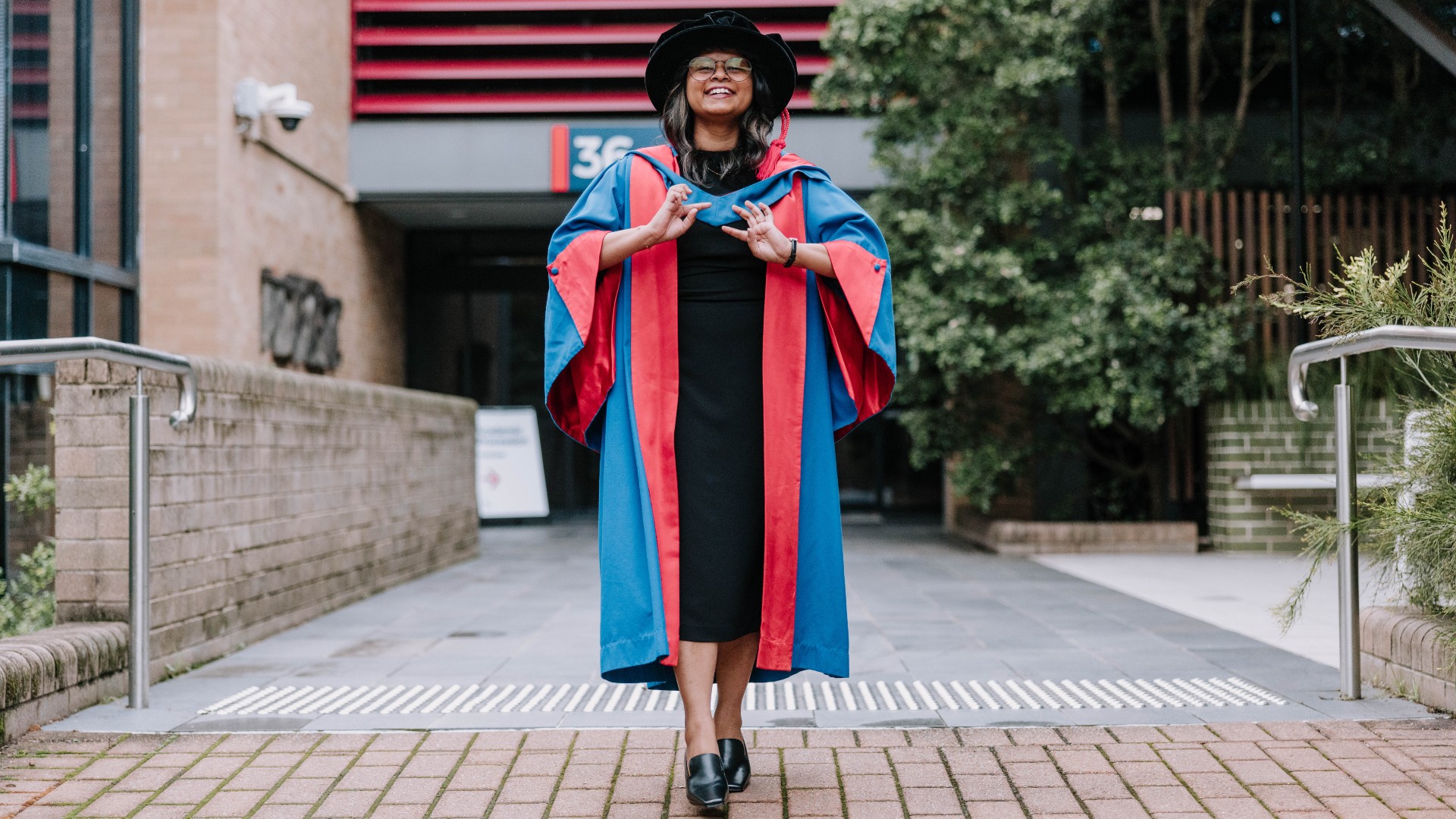
“Irrespective of the country, women face difficulties progressing their career, and it was surprising to see that some of those themes are found in the Australian context as well,” she says. “Although in Australia, we work really hard on addressing both vertical and horizontal gender segregation.”
Finding the right environment
Despite receiving offers from multiple universities, her decision to study at UOW came down to a conversation and instinct.
“When I reached out to my supervisors at UOW, we had a Zoom meeting and I really felt comfortable discussing the topic and their approach,” she says. “They created such a comfort zone where I could explore ideas, and I knew how rare that is.”
“Because I was also a part of academia, I knew the importance of having that support, so that first meeting was actually what made me say, yes, this is where I want to study.”
After researching the region, Iresha felt Wollongong mirrored aspects of her home and was somewhere she could see herself studying for over four years.
Her positive first impression was reinforced throughout her PhD, not only by her supervision team, but by the support from the wider School of Business community around her.
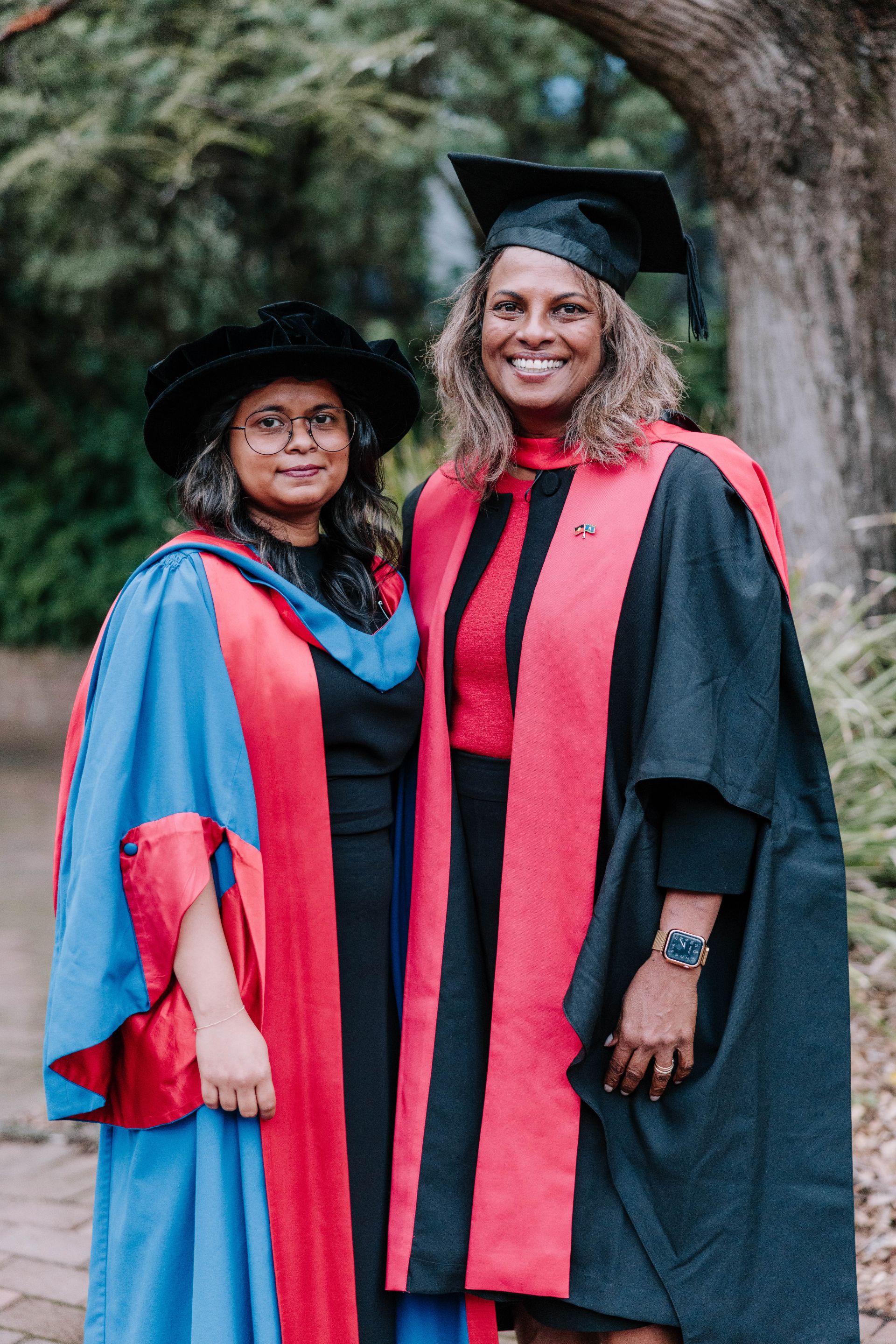
“I’m really grateful for the discussions and weekly HDR meetings we had as a cohort, the were really helpful,” she says. “PhD journeys can be quite isolating if you do it on your own, which can be demotivating. Even if you’re away from campus, being a part of those support systems that are created for you can help in so many ways. If you have someone who can walk alongside you, that burden is lessened.”
“And I don’t think I would have achieved what I have without the support of my supervisors, Associate Professor Shamika Almeida, Dr Betty Frino and Dr Rebekkah Middleton. They were honest in their feedback, they supported me in building networks and opportunities. One of my supervisors would always put me on the spot and ask me ‘why’, which when you’re deep into literature, can make you come back to the overarching impact of your work.”
That impact has already been recognised.
She has published multiple papers from her research, received the Best Doctoral Thesis award at the Australia and New Zealand Academy of Management conference, and was awarded special commendation by national and international examiners for her doctoral thesis. She says it’s beautiful to see her work being translated into so many different contexts.
“I didn’t really realise how rare it is at the beginning,” she remarks. “Everything happened so fast and I didn’t have time to digest it. But now I’m looking back and realising how important the topic I studied is and the impact it has created. It does feel really good.”
Shaping her own path
Beyond the publications and recognition, researching career identities of others has changed how Iresha sees herself.
“I’ve heard so much from senior women academics about how they navigated some of the really difficult parts in their careers that have definitely influenced my identity,” she says. “I’ve become very conscious of it now and how I see myself as an academic, what I want to do, and the kind of impact I want to create.”
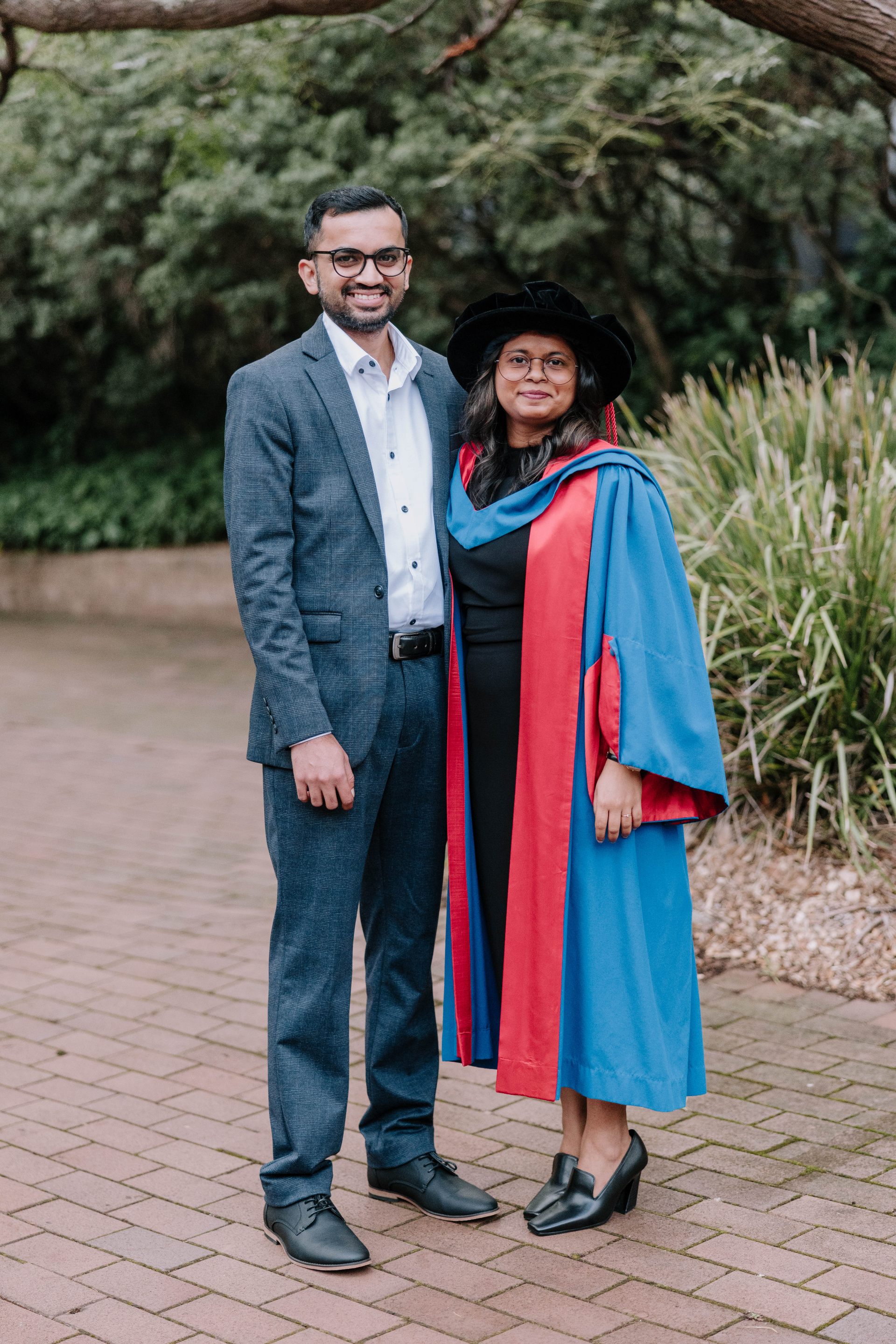
“For those who are first in their family to study, or who speak English as a second language, I think it’s important to maintain an inquisitive nature,” she says. “Be curious about things, question things, even if they come from someone more senior. Don’t stop questioning.”
Post graduation, Iresha plans to build her academic career, balancing teaching, research, and collaboration across multiple institutions.
“I’m thoroughly enjoying that oscillation between being a researcher and being a teaching academic,” she says. “I’m currently teaching at UOW and doing some research activities at other universities. But I’m enjoying the balancing act.”
For her, graduating from UOW represents more than academic success.
“It gives me a sense of pride and achievement,” she says. “UOW is such a diverse community that accepts you for you which helped me quite a lot. The sense of community at UOW speaks volumes.”
“That feeling adds up to me being very proud to say I’m a UOW graduate.”