

Postcards from the edge of the world
UOW researchers part of a global community turning Antarctica memories into art
September 8, 2026
Few people will ever stand on Antarctic ice. For most, the white continent exists only in the abstract: awe-inspiring wilderness, strange and charming creatures, icebergs of breathtaking scale and colour.
But for a group of researchers who travelled south as part of the groundbreaking Homeward Bound initiative, including the University of Wollongong’s (UOW) Professor Martina Sanderson-Smith and Georgia Watson, Antarctica was far from abstract. Indeed, it was transformative, an adventure that will stay with them for years to come.
Now, that encounter has found a home on the back of a humble postcard. And the result is anything but ordinary.
Professor Sanderson-Smith and Ms Watson are among a global team of more than 120 STEMM professionals who have captured the magic of Antarctica through this unique, creative medium in a project that combines science with storytelling.
Each participant has designed an original artwork that reflects what Antarctica means to them; traversing the far-flung landscape, the ice, the silence, the sheer beauty of an environment that is like nowhere else on Earth.
Alone, each postcard is a personal reflection of a once-in-a-lifetime experience. Together, they form a powerful symbol of why this remote and remarkable place at the bottom of the world is worth preserving.
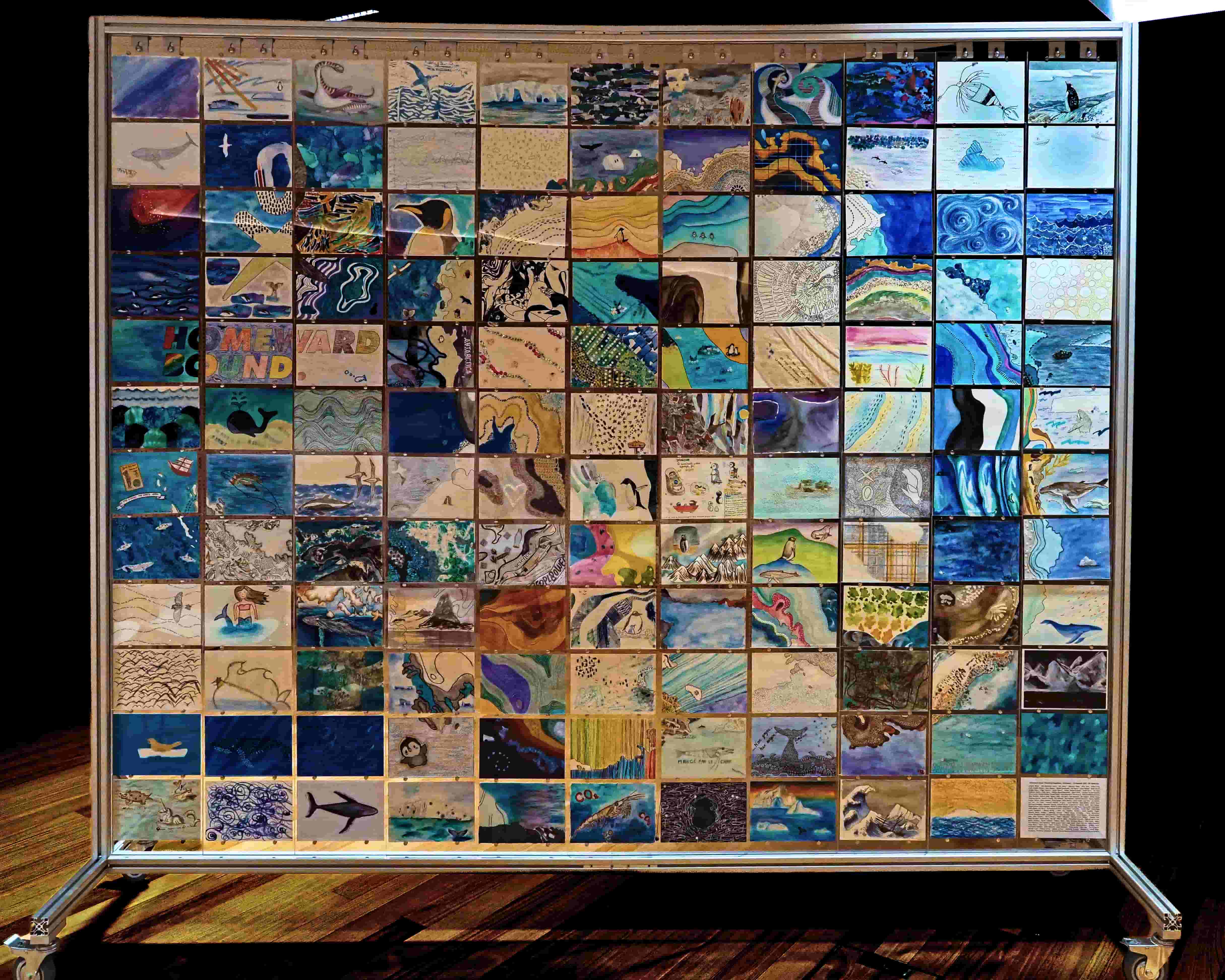
Postcards from Antarctica
Postcards from Antarctica made its global debut in Sydney last month, as part of National Science Week. At its heart, the exhibition features a striking collective artwork; 132 individual postcards, which together transform into a single, large-scale contour map of Antarctica.
Created aboard the final Homeward Bound voyage to Antarctica in February 2025, the artwork was developed by 124 women and non-binary people working across science, technology, engineering, mathematics and medicine (STEMM), representing 23 countries and more than 110 professions.
Antarctica is on the frontline of the warming planet, with rising sea and air temperatures melting ice and wreaking havoc on the delicate and vital flora and fauna that call the southern-most continent home.
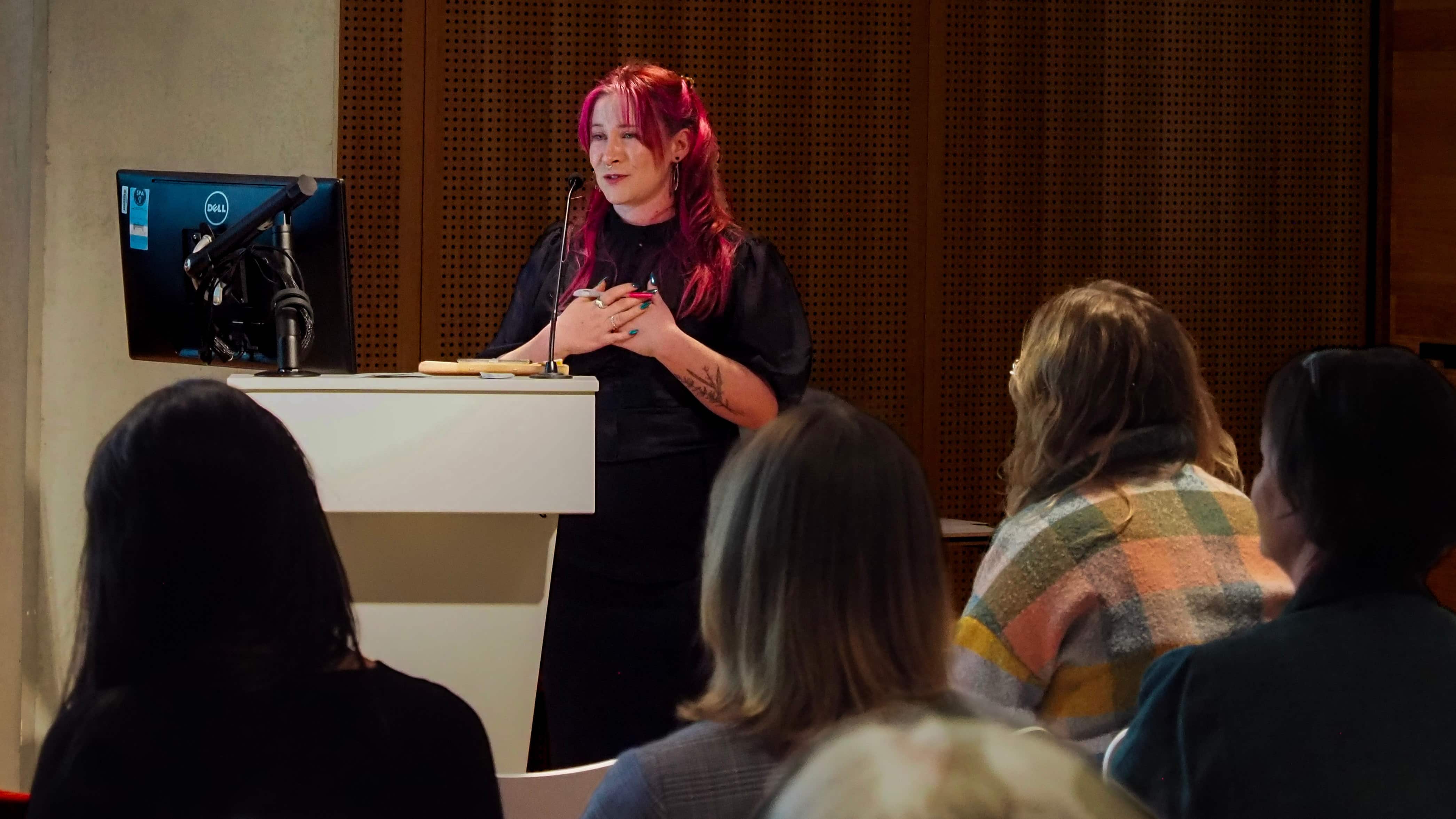
“Antarctica leaves a deep impression on everyone who visits, though the experience is never the same for any two people. This artwork captures how collaboration allows those individual reflections to come together in a powerful way,” said Professor Sanderson-Smith, Director of Molecular Horizons at UOW, who was part of the 2025 Homeward Bound expedition, along with Ms Watson.
The pieces were created with the guidance of a skilled artistic team, who were on board the voyage.
A molecular microbiologist who is currently researching infectious disease and antimicrobial resistance, Professor Sanderson-Smith said creating art was a new, but welcome venture, a unique way to depict the extraordinary nature of her Antarctica adventure.
“I’m not an artist, so taking part meant stepping far outside my comfort zone. What made it truly rewarding was the leadership of the artistic team,” she said.
“They championed everyone’s input, offering guidance and encouragement, and never once making the project about themselves. Their approach was a powerful reminder of what positive leadership in STEMM can look like: moving away from the myth of solitary genius and toward a model where collaboration, generosity, and shared ownership drive the outcome.”
Homeward Bound
The Antarctica voyage was the final step in the year-long Homeward Bound program, a global leadership initiative which aimed to improve the skills, visibility, and influence of women in STEMM.
Homeward Bound concluded this year after 10 years, but during that time, it built a coalition of outstanding women with science backgrounds leading the fight against climate change. Many UOW researchers are among its esteemed alumni, including Distinguished Professor Sharon Robinson AM, Dr Tamantha Stutchbury, Professor Danielle Skropeta, Dr Diana King, Dr Rachelle Balez, and Associate Professor Sarah Hamylton.
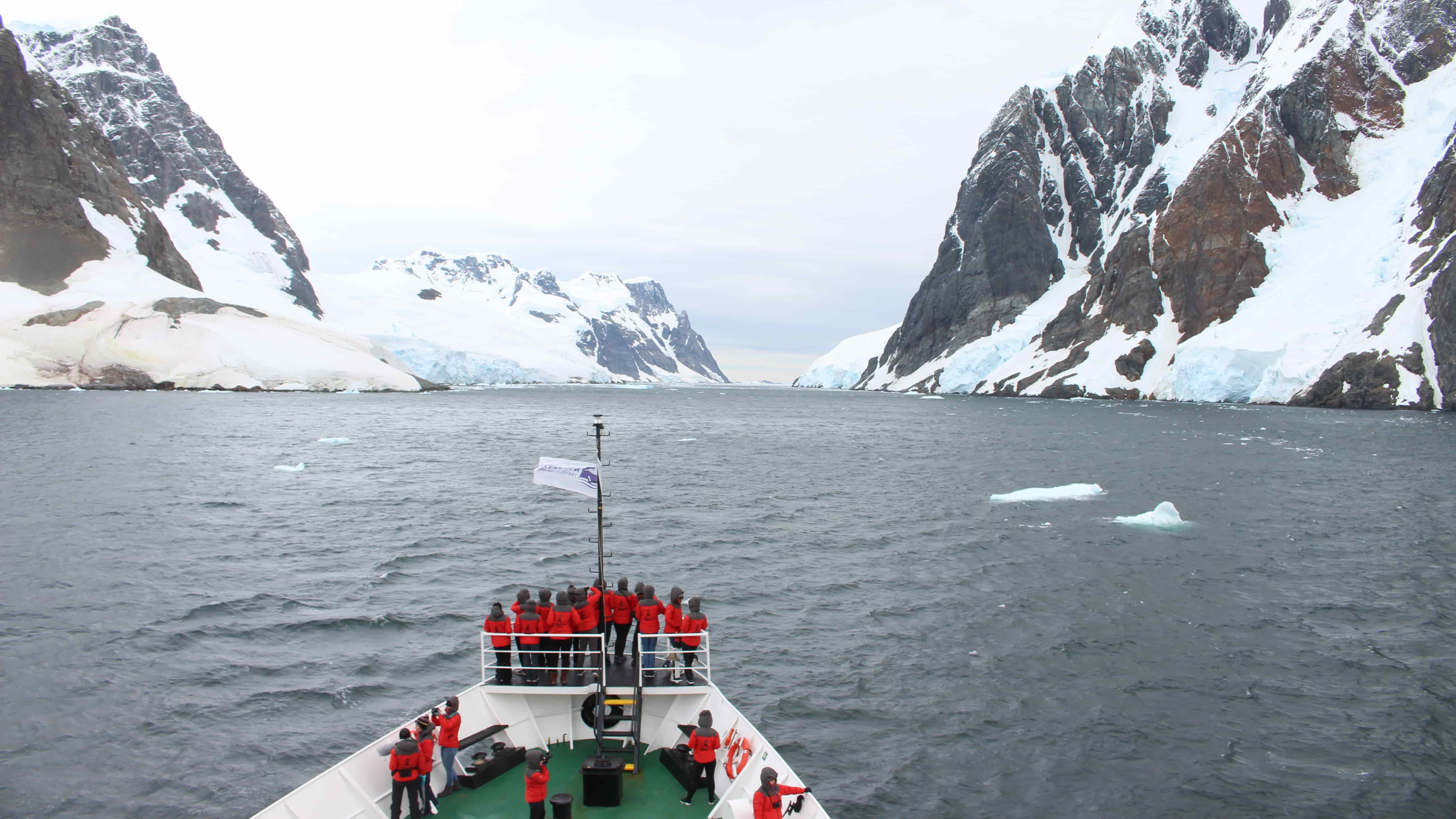
The program focused on fostering a new generation of outstanding leaders and providing innovative, collaborative solutions to the wicked problems plaguing our world, including climate change and sustainability.
At the time of her own Homeward Bound voyage, in 2023, Dr Stutchbury said nurturing and encouraging women to take on leadership opportunities was fundamental to the health of society and to the health of the planet.
“We need more women leaders and we need more leaders with a science background. We can no longer accept the status quo, we need people from different backgrounds, who ask different questions and lead in different ways to have equal representation across all sectors,” she said.
Art and science
Postcards from Antarctica feels like a fitting swan song for Homeward Bound. The exhibition captures the beauty and complexity of an environment that does not yield its secrets easily, while at the same time arguing for its preservation from the onslaught of a warming planet.
“Antarctica belongs to no one nation, yet it influences every person on Earth,” said project co-lead Jessica Leck.
“Very few people will ever have the opportunity to visit Antarctica, but everyone is connected to it. Through this project, we wanted to create a way for people to experience Antarctica emotionally as well as scientifically. Every postcard represents one person’s perspective, but together they tell a much bigger story about hope, leadership and our shared responsibility for the future.”
On one side, each postcard offers a personal reflection on one of Earth’s most extraordinary places. On the other, a handwritten message, addressed to a leader of the artist’s choosing, exploring themes of hope, responsibility, and collective action.
Postcards from Antarctica was designed as an immersive experience, combining creativity, science and storytelling to help audiences connect with one of the world’s most remote, yet globally significant, environments.
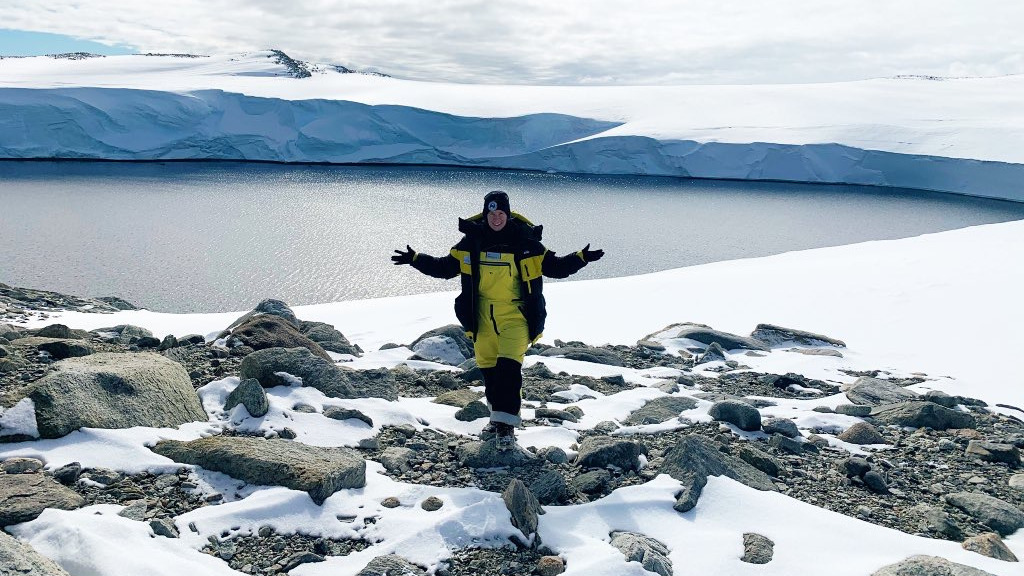
Ms Watson, science communicator, women in STEMM advocate and Research Internship Specialist at UOW’s iAccelerate, said the exhibition illustrates the urgency of protecting this remote part of the world.
“Our voyage to Antarctica was transformative. Being able to solidify the connections with 124 STEMM leaders from all over the world through this exhibition is an incredible way to tell our story. Each postcard represents a person, and every person is critical to the bigger story. We need every person’s skill, perspective and vision for the future when we consider the scale and urgency of climate action needed,” she said.
“I’m wildly optimistic about the future. From the renewable energy leadership we see in the Illawarra to our global network of intelligent, passionate, collaborative women and non-binary STEMM leaders, there’s a lot that gives me hope.”
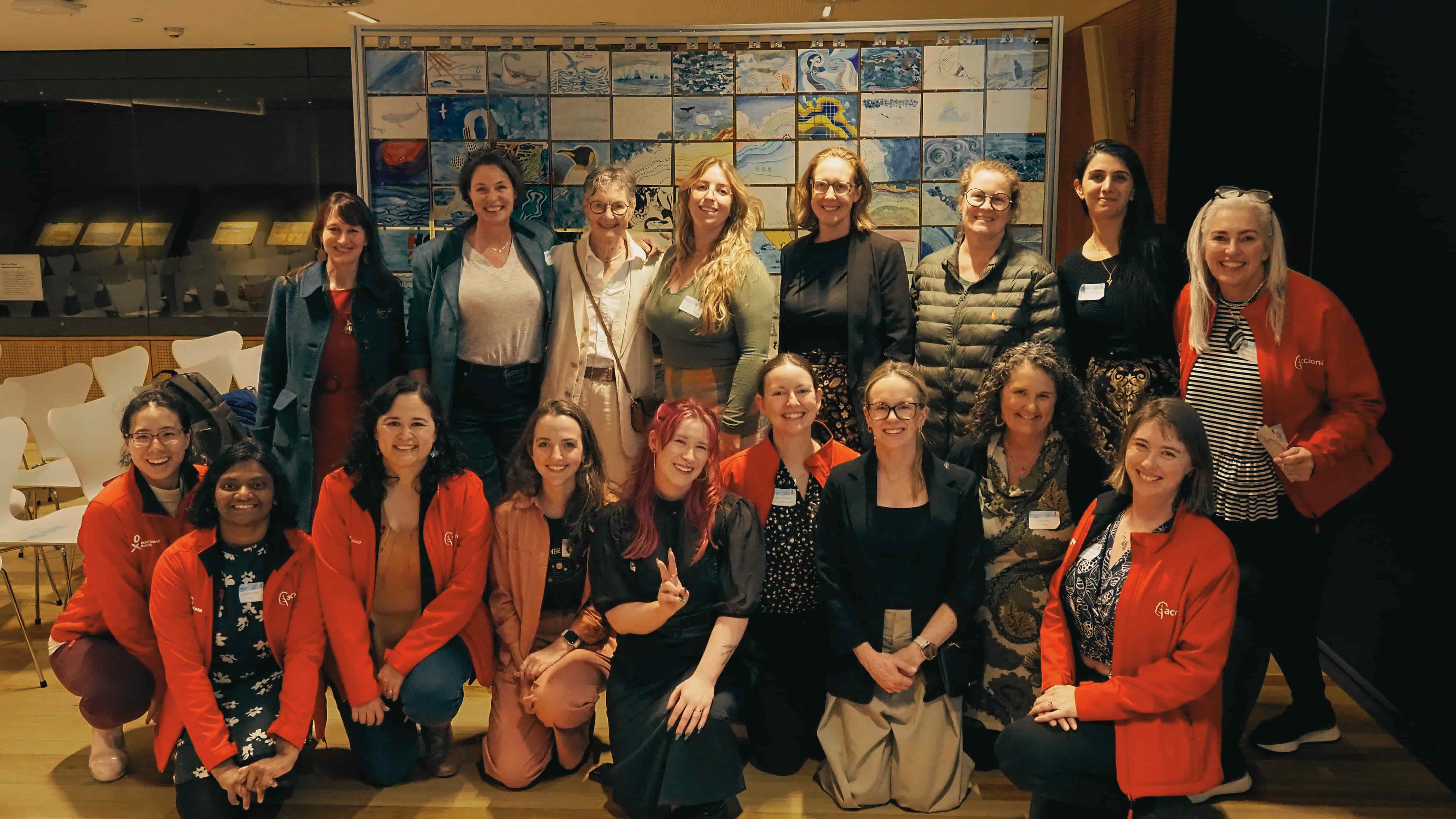
The Sydney exhibition, at Chau Chak Wing Museum, was the first chapter of Postcards from Antarctica, which will travel to museums, galleries, universities and public events across the network of collaborating artists over the coming year.
To learn more and see the postcards for yourself, visit https://postcards-from-antarctica.netlify.app/artproject