
Books that have shaped us: ABC Illawarra and UOW book club
Add these titles to your ‘to read’ list
March 9, 2026
University of Wollongong (UOW) creative writing and English literatures academics join ABC Illawarra’s Nick Rheinberger to discuss the books that changed how they think and see the world.
It’s something that Dr Ellie Crookes, Dr Emma Darragh and Associate Professor Catherine McKinnon from UOW’s School of Creative Arts and Humanities have talked about for years: starting a podcast where they can chat about their favourite books. Through a conversation between Discipline Leader Dr Christine Howe, journalism lecturer Dr Ben Ball, and UOW journalism graduate Jake Cupitt – now Producer at ABC Illawarra – that idea became a book club for all to join.
Now in its second year, listeners can tune in to Mornings with Nick Rheinberger just after 10.30am on the third Monday of each month from March to September to hear from UOW academics discussing ‘books that have shaped us’.
If you’ve ever wondered what happens at a writers festival, or if you’re simply on the hunt for reliable recommendations for your next read, this book club is for you.
“It’s a bit like having a mini festival panel once a month,” says Dr Howe. “The book club is a way for us, as creative writing and English literatures academics, to invite the local community into what we do at the University and to share our expertise and our passion for books and reading.”
Ahead of the first show of 2026 on Monday, 16 March (see the full schedule below), we asked writer Dr Howe and literary scholar Dr Crookes which books they’re most excited about and what they hope listeners take away from tuning in.
About the UOW/ABC Illawarra book club
What can listeners expect?
Dr Christine Howe (CH): Listeners can expect a lively conversation between Nick, the presenter, and two academics who are a little bit in love with the book they’re discussing. We often give some context about the writer, talk about the qualities of the book that make it stand out, discuss why it has made such an impression on us and, if you’re lucky, we might read an excerpt.
Dr Ellie Crookes (EC): We try to walk a fine line between critical analysis of literary works and making that interesting or engaging to a broader audience. It's not us saying “this is how you should read the text”, because that is not what we do. It's about opening a dialogue so that everyone can come up with their own interpretation. Because every time a book is read, it's made anew, it becomes a part of us.
What do you want people to take from listening?
CH: There are so many books out there and sometimes it’s nice to have someone curate a selection for you. We do this for our students all the time – it’s one of my favourite things about teaching creative writing. I hope listeners are introduced to books they might not have thought to read before and feel their world shift because of what they’re reading.
EC: I also hope it broadens peoples’ perspective of literary studies. There is this idea that we study literature or creative writing at a university in an ivory tower and that we are only interested in certain kinds of texts, but popular fiction has just as much of substance to say about its present moment as a classic novel like… Wuthering Heights. (Can you tell I'm writing something about Wuthering Heights right now?) This book club has expanded my horizons to texts that I haven’t read before and has helped me become a better communicator of my research.
Do people need to read the books before they listen?
CH: You can come at it either way. We have a book list ready to go, so if you’re itching for a good book and like to be prepared, you can read it first. Or, if you’re pushed for time, you could think of our conversation as an opportunity to work out whether this book is for you or not.
EC: I don’t think listeners need to have read the texts, but I hope it encourages them to go and read them. I think that's how I go about teaching all literary texts. I try to give as broad of an impression as I can, dipping into art history and fashion and critical theory in the hopes that something might spark an interest.
This year’s book club theme is ‘Books that have shaped us’ – what does that mean?
CH: The books we’ve chosen this year have all made a deep impression on us in one way or another. There’s something enduring or unusual about them that makes them stand out, whether that’s deep social and political engagement, delightfully complex characters, an unusual narrative voice, or all of the above. They all have something different to offer.
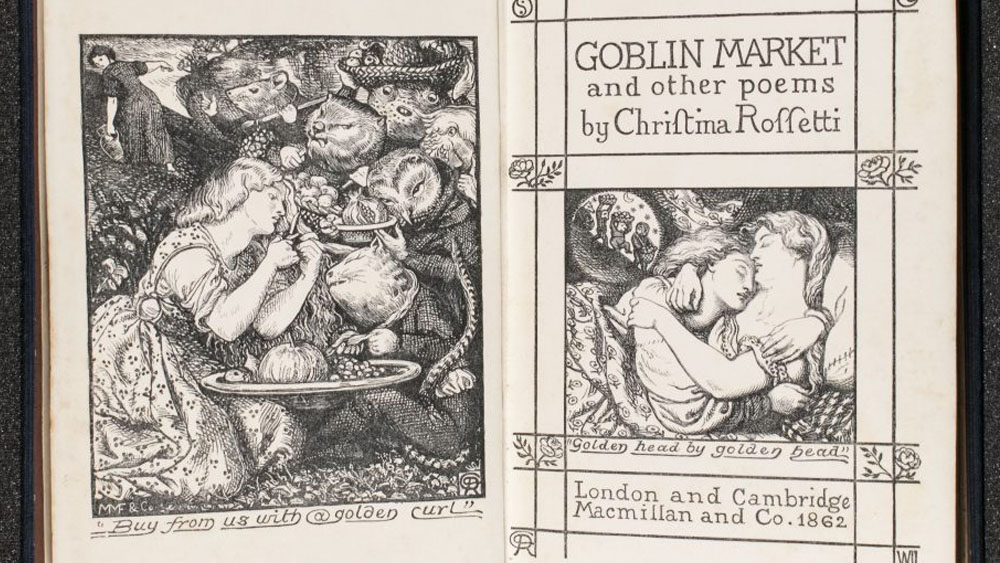
EC: The two texts I’ll be speaking about were chosen because they changed how I think about literature and history. One of them is the poem ‘Goblin Market’ by Christina Rossetti. I teach it as an introductory text to the Victorian era because I think people have this idea of the Victorians as staid, uptight and boring. Yet this strange text works as a fantastical metaphor for women’s subjugation in society, especially the threat of sexual violence. It’s also such a fascinating example of the whimsy, sentiment and weirdness of the era. I remember reading it for the first time and thinking, “I have to study the Victorian period now, they’re not who I thought they were.”
Can you tell us about the first book of the year?
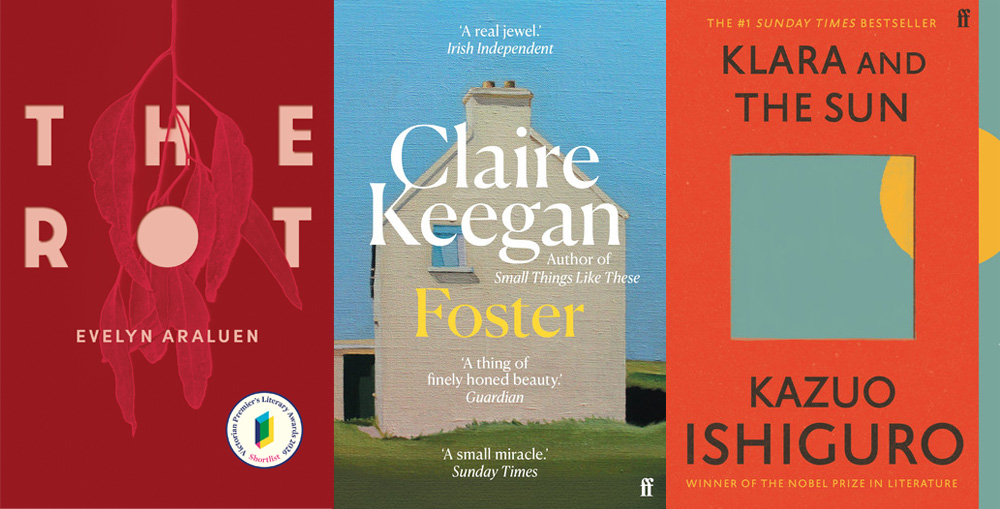
CH: Foster is a novella by Irish writer Clare Keegan. It’s about community and the connections and disconnections between people, told through the perspective of a little girl sent to live with foster parents in rural Ireland.
For the hour or so it took me to read it, I was completely immersed in this child's world. We only ever have access to her perspective, which means that we, as adult readers, often understand the nuances of adult interactions more than she does. The impression of this small Irish community – the undercurrents of grief, the tenderness of the characters – have been imprinted on me forever. The writing is so clear and evocative that it’s very hard to put this book down.
It’s also one of the shortest texts we’ve chosen this year and it’s easy to get into. For people wanting to join us, it’s a great one to start with.
Which book are you most looking forward to?
CH: Kazuo Ishiguro's Klara and the Sun, which Professor Shady Cosgrove and Associate Professor McKinnon will be talking about in September. It’s set in the near-future in Japan, and is narrated by Klara, an AF (artificial friend). This book raises so many questions about what it means to be human.
EC: I think we all fought over Klara and the Sun. It was one of the only ones everyone had already read and wanted to talk about. I’m most excited to talk about ‘Goblin Market’.
CH: I’m also looking forward to discussing Evelyn Araluen’s latest book of poetry, The Rot, with Dr Sarah Nicholson, the director of the South Coast Writers Centre. We’re discussing this in July, a week before the South Coast Readers and Writers Festival, which Evelyn Araluen will be speaking at.
How can listeners get the most out of the book club?
CH: Whether you buy or borrow all the books on the list to read before each discussion, or listen in to hear which books sound most interesting to you, the best way to get the most out of the book club is to carve out some time and space to read. Take this opportunity to engage your imagination, meet new characters (or fall in love again with old ones), explore new ideas, be curious about other perspectives and, most of all, enjoy the read!
2026 book club schedule
16 March
Claire Keegan’s Foster (2010) | Purchase from Unishop or Collins Booksellers Thirroul
A hauntingly beautiful novella about a young girl sent to live with foster parents in rural Ireland.
Presented by Associate Professor Catherine McKinnon and Dr Christine Howe.
20 April
Elizabeth Strout’s Tell Me Everything (2024) | Purchase from Unishop or Collins Booksellers Thirroul
A hopeful, healing novel about new friendships, old loves, and the desire to leave a mark on the world.
Presented by Dr Emma Darragh and Dr Joshua Lobb.
18 May
Christina Rossetti’s ‘Goblin Market’ (1862) | Purchase from Unishop or Collins Booksellers Thirroul
This Victorian classic – a narrative poem about two sisters tempted by the goblins' forbidden fruit – launched Rossetti's career as the foremost female poet of her time.
Presented by Dr Ellie Crookes and Dr Emma Darragh.
15 June
JM Coetzee’s Waiting for the Barbarians (1980) | Purchase from Collins Booksellers Thirroul
An allegory of the war between oppressor and oppressed by Nobel Prize-winning South African author JM Coetzee.
Presented by Associate Professor Michael Griffiths and Dr Joshua Lobb.
20 July
Evelyn Araluen’s The Rot (2025) | Purchase from Collins Booksellers Thirroul
This bold, emotional and politically uncompromising poetry collection was awarded the Victorian Prize for Literature and the Victorian Premier's Prize for Indigenous Writing in February 2026. See poet Evelyn Araluen at the 2026 South Coast Readers and Writers Festival (25–26 July).
Presented by Dr Christine Howe with special guest Dr Sarah Nicholson, Director of the South Coast Writers Centre.
17 August
Jean Rhys’s Wide Sargasso Sea (1966) | Purchase from Unishop or Collins Booksellers Thirroul
A postcolonial and feminist novel that acts as a prequel to Charlotte Bronte's Jane Eyre, set in the lush, beguiling landscape of Jamaica in the 1830s.
Presented by Professor Shady Cosgrove and Dr Ellie Crookes.
21 September
Kazuo Ishiguro’s Klara and the Sun (2021) | Purchase from Unishop or Collins Booksellers Thirroul
A novel that asks what it means to be human, narrated by Klara, who is a robot (or 'Artificial Friend').
Presented by Professor Shady Cosgrove and Associate Professor Catherine McKinnon.
How to listen
Tune in to ABC Illawarra online, on the ABC listen app, or on air, from 10.30am–10.50am on the third Monday of each month from March to September, 2026.
During the program, you can join in the conversation by calling 1300 973 300 or texting 0467 922 684.