

A PhD defined by distance and determination
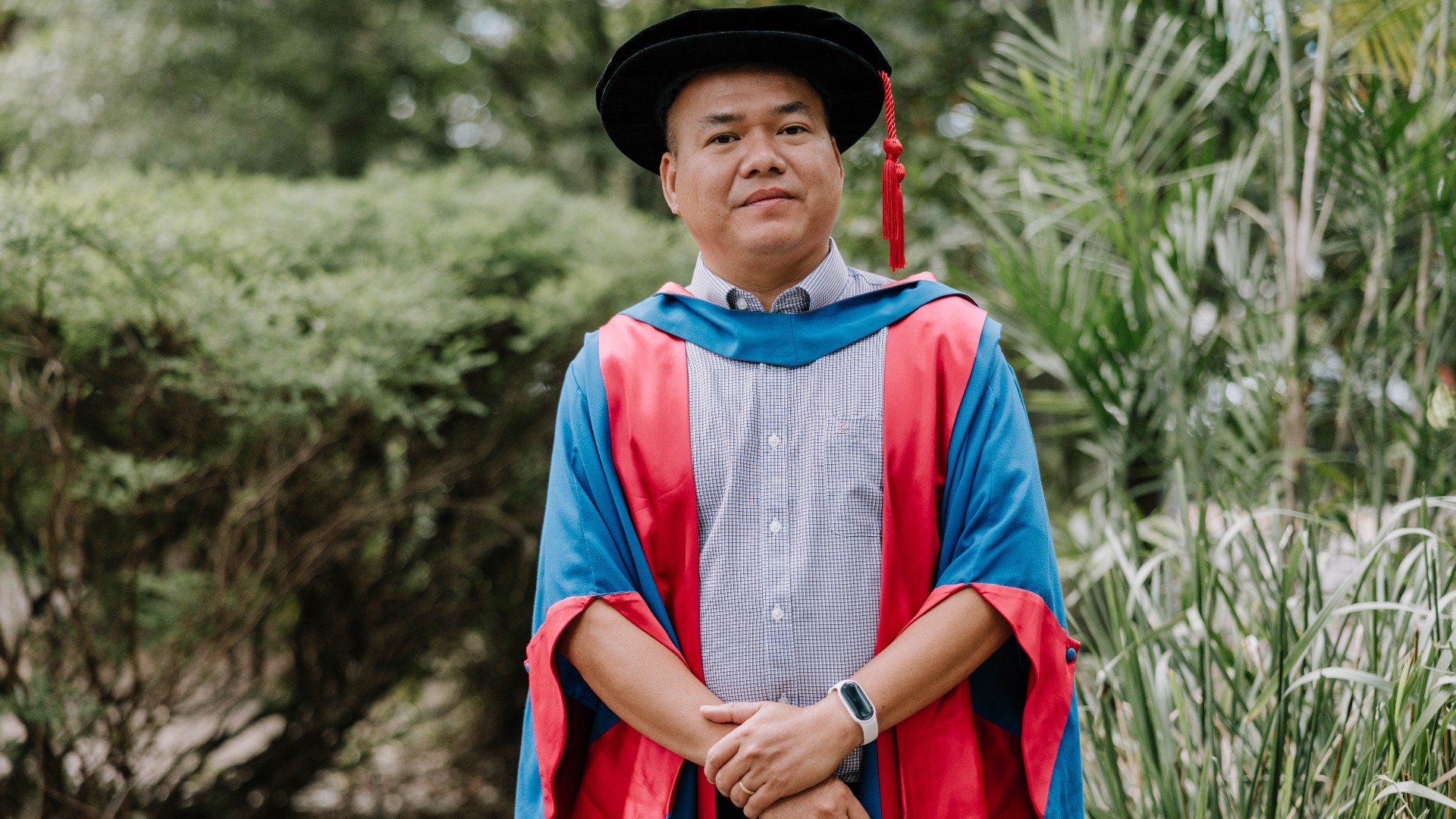
Leaving his young family for over five years, Kong Le’s journey to graduation was driven by sacrifice and resilience.
April 23, 2026
Amid a period of rapid economic change in Vietnam, Kong Le became interested in how people were being managed within organisations, sparking questions that would take him far from home and shape his PhD research at UOW.
Working in human resource management in Vietnam following the Đổi Mới reforms, Kong Le noticed the way workplaces were changing around him.
“In Vietnam, the country went through major economic reform after introducing its open policy, which changed the way the country is managed,” he explains. “Alongside that, human resource management in local companies also changed a lot.
“Many multinational companies came to Vietnam, and I could see that their approach to managing people was very effective. That had a positive influence on Vietnamese companies, and I became very interested in how those changes were happening.”
The desire to better understand these changes motivated Kong to pursue a PhD in human resource management at UOW. This decision came later in life, just as he was starting his young family.
“I started my PhD at the age of 35, at a time when my twins were just one month old,” he says. “It was very emotional.”
Relocating to Australia alone, he spent over five years away from his family, relying on daily video calls to stay connected.
“My kids were so young when I left. It was very hard at first,” he says. “But thanks to technology, we talked every day. My wife took care of the children, and my mother-in-law helped. It was very, very hard for them.
“That was a big challenge, but it was also a kind of motivation. Every time I missed them, I reminded myself why I was doing this.”
Understanding change in a changing system
Drawing on his experience in the sector, his research focused on how human resource practices have changed in Vietnam.
“I conducted research on human resource management development in Vietnam,” he says. “I looked at how HR practices changed in state-owned companies when they moved into joint stock companies, and how the way of managing people changed.”
Just like trends affecting management – which during his research, Kong discovered are not linear – Kong’s PhD journey was anything but straightforward.
Conducting his PhD during the COVID-19 pandemic added another layer of complexity, particularly as his qualitative research relied on engaging with participants.
“I expected it would be hard, but it was even more than I thought,” he explains. “I had to think about how to ask questions, how to access participants, and how to make the data meaningful for my research.
“Even after restrictions were lifted, it was still very difficult to get access to participants. It delayed my PhD for almost one year, which was very hard.”
Support from his supervisors – particularly Professor Cortese - became critical during these moments.
“They helped me with the bigger things like how to get participants, how to ask questions, and how to analyse the data,” he says. “They even gave me a set of questions I could use and showed me how to talk with participants.
“When people say no, or they don’t have time, you feel down. But they told me it’s normal. It’s just part of doing research.”
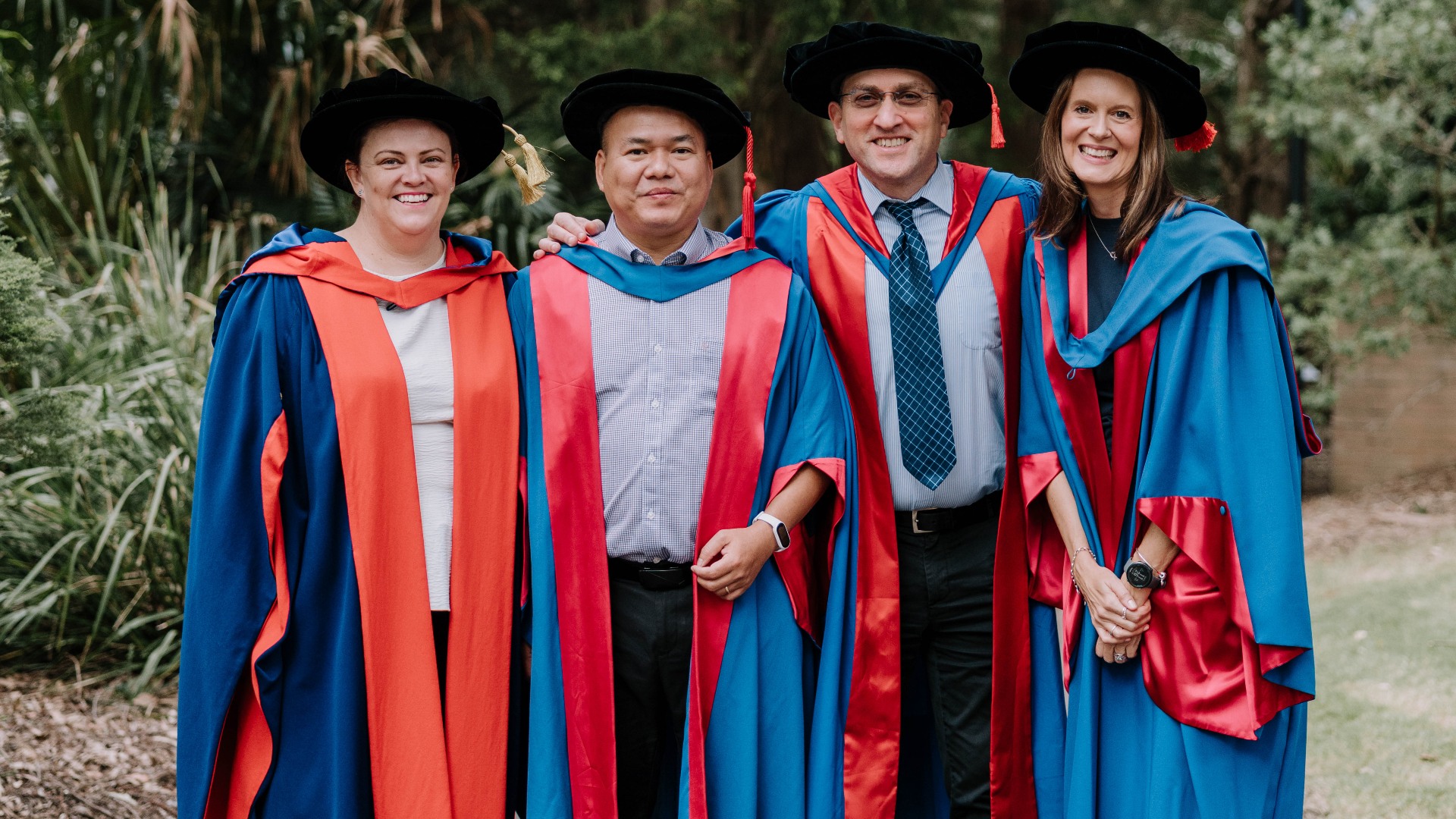
“My academic friends and my peers helped me a lot,” he says. “They listened to my research, and I listened to theirs too. We shared ideas and it was a good experience to connect with people.”
“I think the most important thing is that you have support from supervisors and from academic staff in the university.”
That support extended beyond the classroom, shaping his experience of Wollongong itself.
“In my acknowledgement in my PhD thesis, I thank Wollongong,” he says. “I thank the people in Wollongong, they’re very nice. The weather is very good, the scenery is very good, but I’m most impressed with the people.”
Recognition and reflection
Despite the challenges, his work has been recognised at the highest level. His thesis received strong external reviews, with one examiner even offering special commendation with no revisions required, which is an achievement that fills Kong with pride.
“I feel relieved, and I feel proud of the journey,” he says. “Now I have experience in research, and I have a degree.”
That sense of achievement is deeply tied to the people who supported him along the way, both professionally and personally. During his PhD, Dr Le experienced significant personal loss, with the passing of his grandmother, and later his mother-in-law, who had played a central role in caring for his young family while he was overseas. Their support and their loss made the final years of his study journey even more meaningful.
“I would like to take this opportunity to express my gratitude to many people who helped me reach this stage,” he says.
“I want to thank Professor Corinne Cortese for her support, her care, for pushing me and helping me when I needed it. And my supervision team — Dr Mathew Todres, Dr Laura Rook, Dr Anne Vo — for their support, for believing in me, and encouraging me when I faced difficult moments in my life.”
“I couldn’t do it alone.”
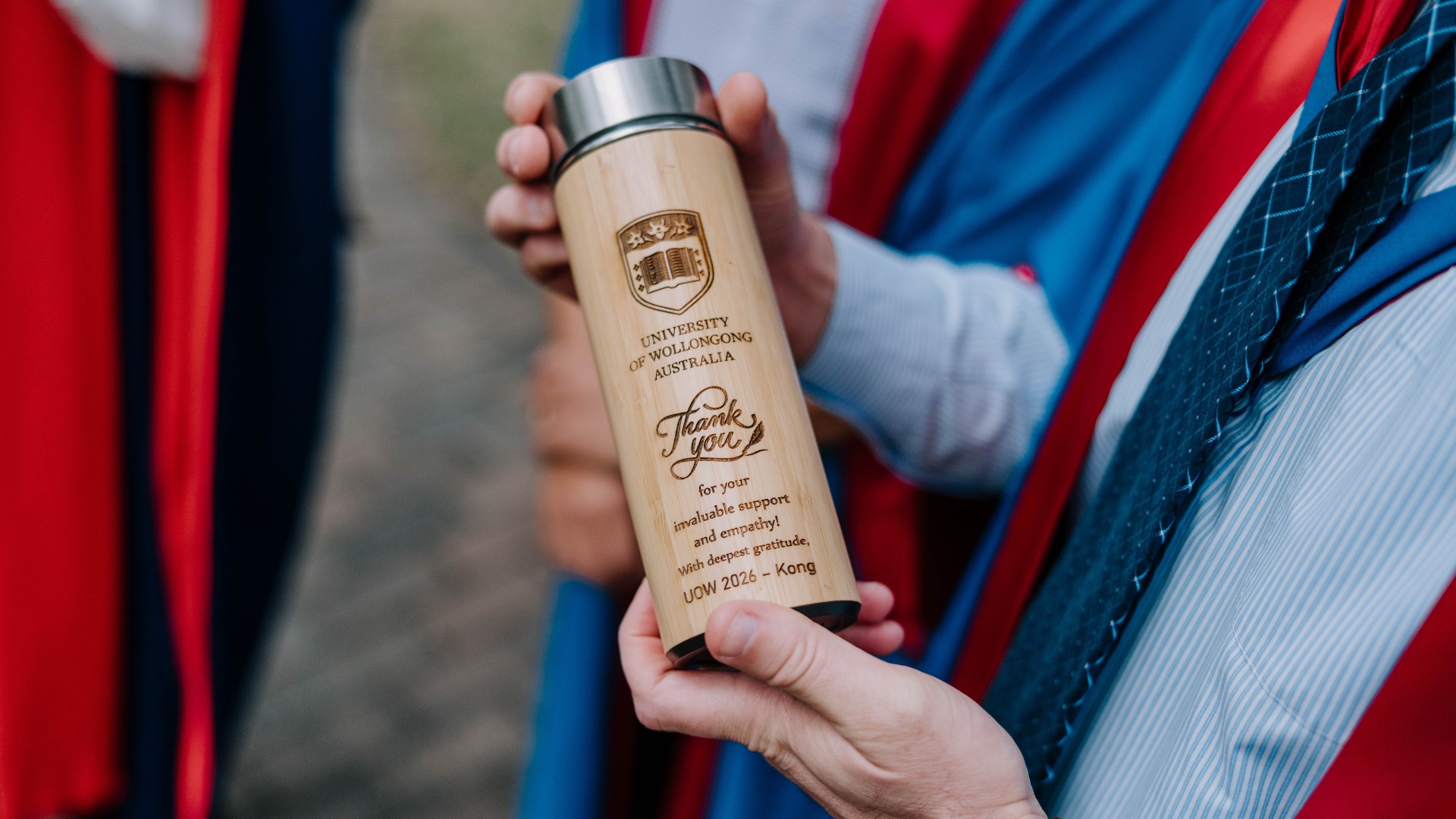
He says graduating from UOW is one of the milestones of his life.
“I feel like I disappeared from my world for five years,” he says. “So, I’m really looking forward to the ceremony and to wear the gown and hat, to receive my degree.
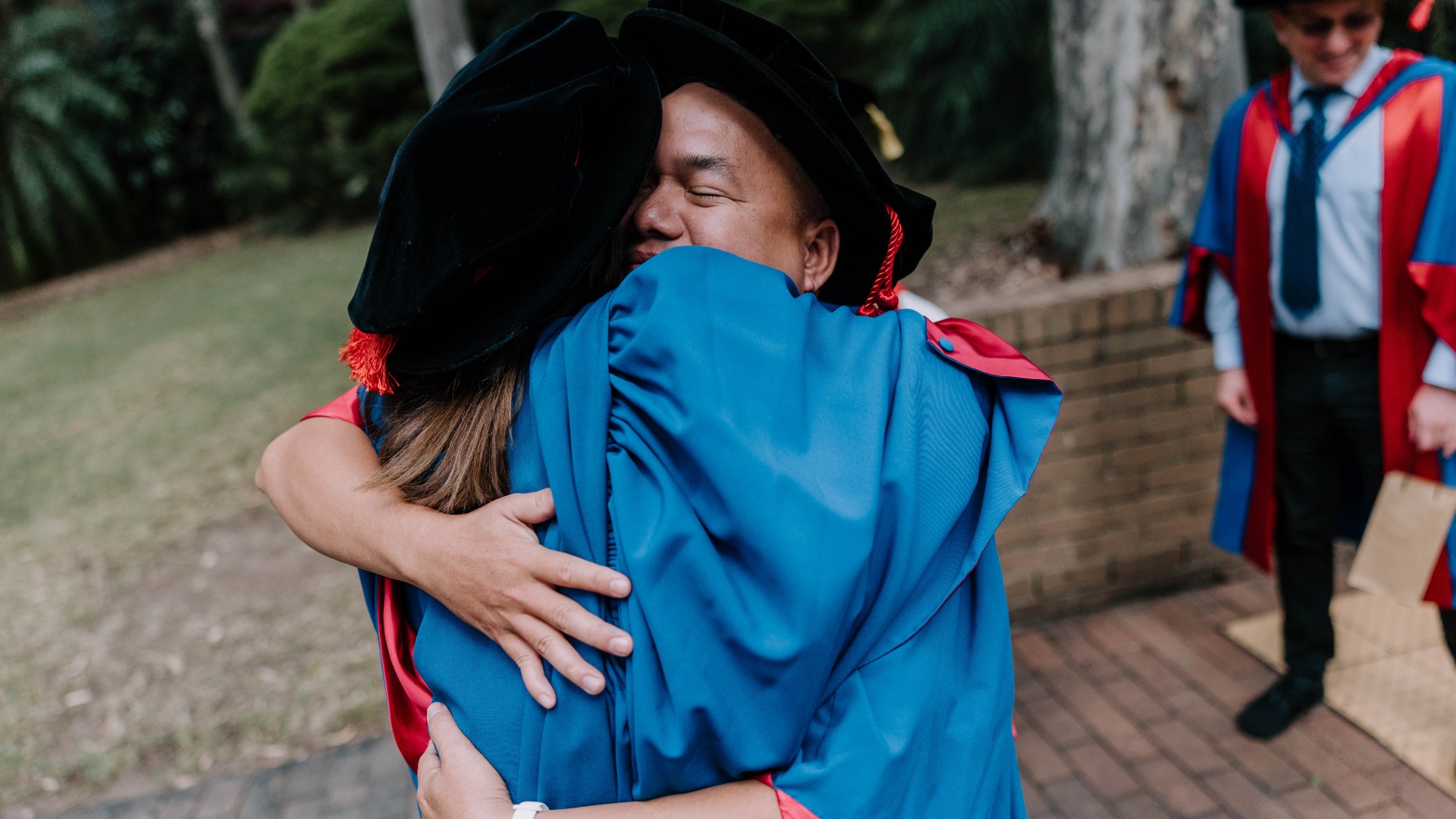
“I’ll have a chance to see my supervisors again, to say thank you and give them a hug. I really miss Wollongong, the campus, and the duck pond.”
“I still work in a public organisation, but maybe I will do both,” he says. “I want to go into the academic field, to teach and do research.”
“My supervisors really influenced that. When I felt stuck, they gave me the energy to go ahead. I would like to support future students in the same way. That’s what I’m planning. That’s my achievement.”