

A family’s investment in learning comes full circle
Manatu Samani-Maile is using her fisheries expertise to support her home country of Tonga and its future generations.
November 10, 2026
Grateful for the opportunities her parent's sacrifices created for her, Manatu is carrying that investment forward through her own work and her hopes for her daughters.
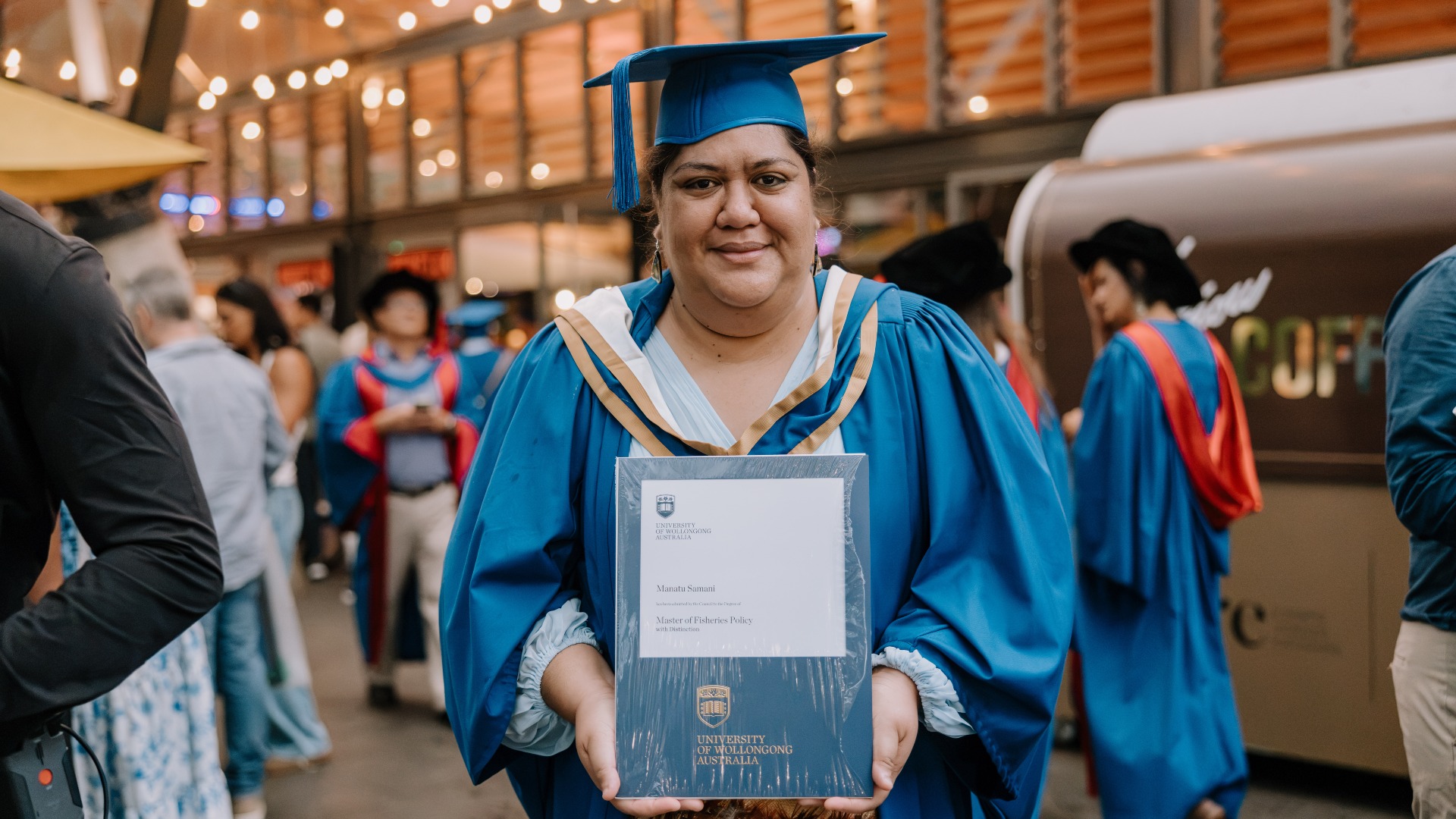
For Manatu Samani-Maile, dedication to education has always been a family affair, and her graduation from the University of Wollongong with a Master of Fisheries Policy with distinction is another milestone in a family journey shaped by sacrifice, hard work and a deep belief in the value of education.
Manatu’s own appreciation for that opportunity began with her father, who travelled – and bought the whole family along - to Perth, Western Australia to study environmental science at Murdoch University when she was young.
Her father later became the Chief Executive Officer for Tonga’s Department of Environment, a career that helped inspire Manatu’s own interest in the environment. His commitment to his children’s education left an equally lasting impression.
There were five children in the family – four girls, including Manatu and her twin sister, and a younger brother. Her father was the sole breadwinner, yet he privately funded all five children’s undergraduate education at the University of the South Pacific in Fiji.
“It always makes me emotional to think about,” she says.
Her mother also played an important role in supporting the family by managing a small retail store while her Dad had his watermelon and peanut plantation. During harvest season, market vendors would buy the produce to later sell in the market. All proceeds from the watermelon and peanut plantations helped her dad fund his children's education.
When they went to Fiji, all five of the children stayed on campus while studying - an expense he took on to make university more accessible and ensure they were safe.
“I can’t even imagine the cost. But he did it to make sure we were safe and to make school more accessible so not have to worry about commuting. My dad just thought it was safer to stay on campus and wanted us to live comfortably while pursuing our studies.”
The opportunity came with responsibilities. While other students could spend semester breaks on holiday, her dad would pay for Manatu and her siblings to return to Tonga, where they would help their mother with the family store and also to be home during the semester break to spend time with family.
“We had a little oven at the back of the house and we would roast the peanuts,” she says. “I can still smell it.”
After graduating from the University of the South Pacific with a Bachelor of Arts double majors in Geography and Marine Affairs, Manatu returned to Tonga. Being a private student, finding employment was difficult, so she initially helped her mother with the family store before securing her first formal role as a geography teacher at Tonga High School.
During her tenth year of teaching, she saw a vacancy with Tonga’s Ministry of Fisheries. Her background in geography and marine affairs made the opportunity a natural next step. Today, she works within the Fisheries Management and Development Division, assisting with the drafting and monitoring of fisheries policies and plans.
Wanting to build on the knowledge from her undergraduate degree, Manatu enrolled in a Graduate Certificate in Fisheries Management and Development through UOW, completing the course online while continuing to work.
She was part of the program's inaugural cohort, which was developed with funding from DFAT and Australia Awards to build capacity among fisheries managers across the Pacific.
“It was a lot of work to juggle both work and school, but everything was worth it,” she says. “And when the graduate certificate course ended, I wanted to do even more and move onto a Master’s.”
This next step, however, would require another significant investment from her family.
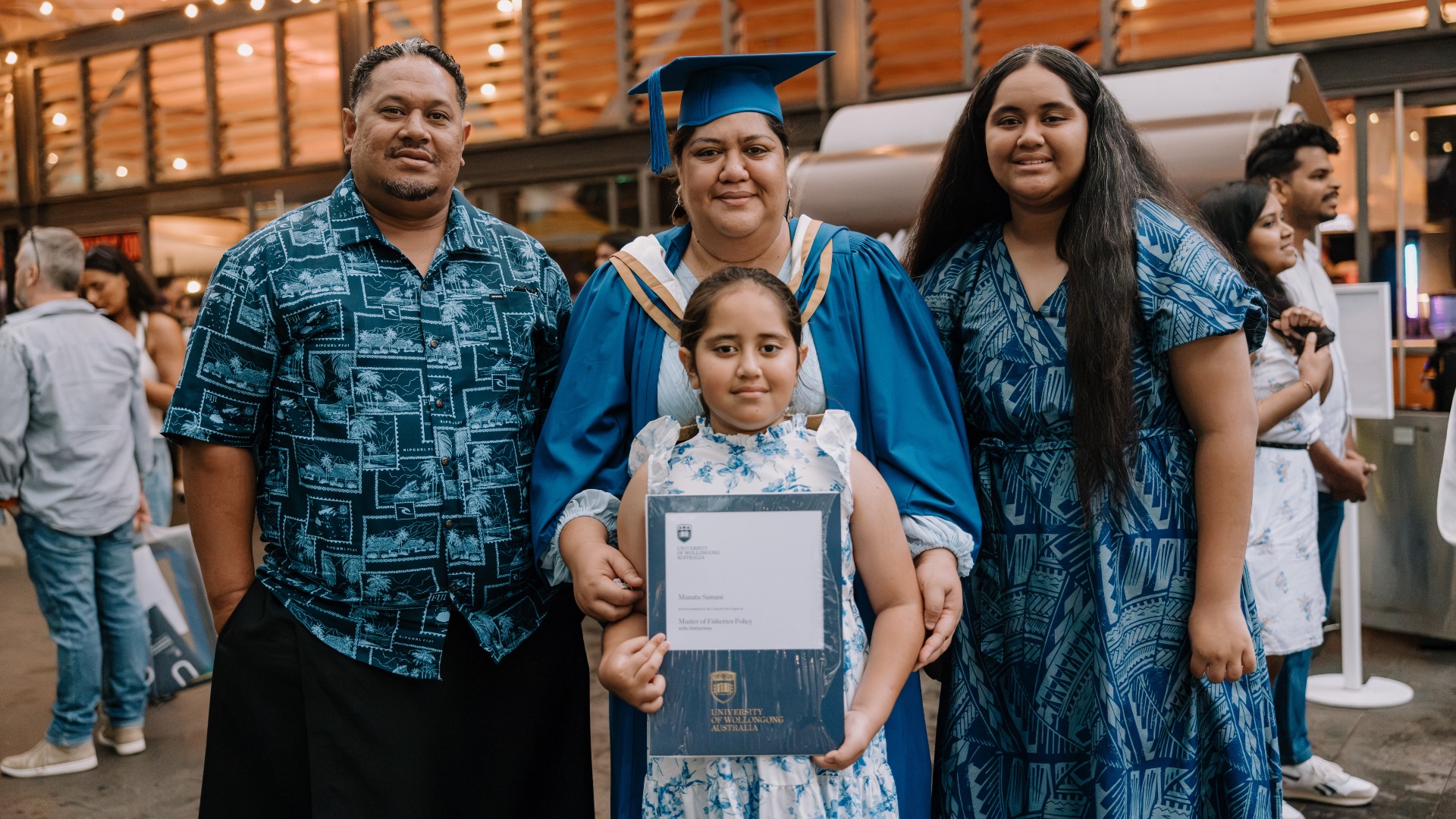
Manatu applied for a scholarship in 2024 but was unsuccessful. Her husband, a nurse practitioner, went for further studies in 2025 at the Fiji National University for a Master in Nursing Practice. His brother, a Doctor working in Fiji helped fund his education. Manatu also contributed through savings from her own work.
Even though Manatu was disappointed that her first scholarship application was unsuccessful, she thought she had nothing to lose by applying for an Australia Awards sponsorship in 2025.
This time, she was shortlisted, interviewed and eventually received the news she had been waiting for: she would be travelling to Wollongong to complete her Masters of Fisheries Policy.
“When they contacted me, they called my home and my mum answered the phone,” she says. “When she told me about it, I was like, ‘Are you sure you heard the message right? Because I've been waiting for this call for so long.’”
“It was very exciting and I will always be grateful for the Australia Awards and Government of Australia for the invaluable opportunity to pursue postgraduate studies abroad.”
Moving from Tonga to Wollongong meant adjusting to a different environment, a different pace of life and, most significantly, being away from her family.
Manatu says she quickly grew fond of Wollongong’s beaches and relaxed atmosphere.
“I loved Wollongong. I found it very similar to home, maybe because of its beaches. And I love the convenience of the free bus operating.”
She also appreciated the practical support that helped her settle in, including assistance from UOW to find accommodation close to campus.
But being away from her husband and children proved much harder than adapting to a new city.
Her family had initially hoped to travel to Australia with her with her children even staying out of school until February. But plans changed.
“I ended up paying for my own plane ticket to travel back into Tonga for two weeks explain to them in person why they can't come across, that there's a change of plans and to settle them back to school.”
It was an emotional and financial sacrifice, but one she felt was important so she would begin the semester with a much clearer mindset.
Support from UOW’s Australian National Centre for Ocean Resources and Security (ANCORS) also helped make the experience more manageable.
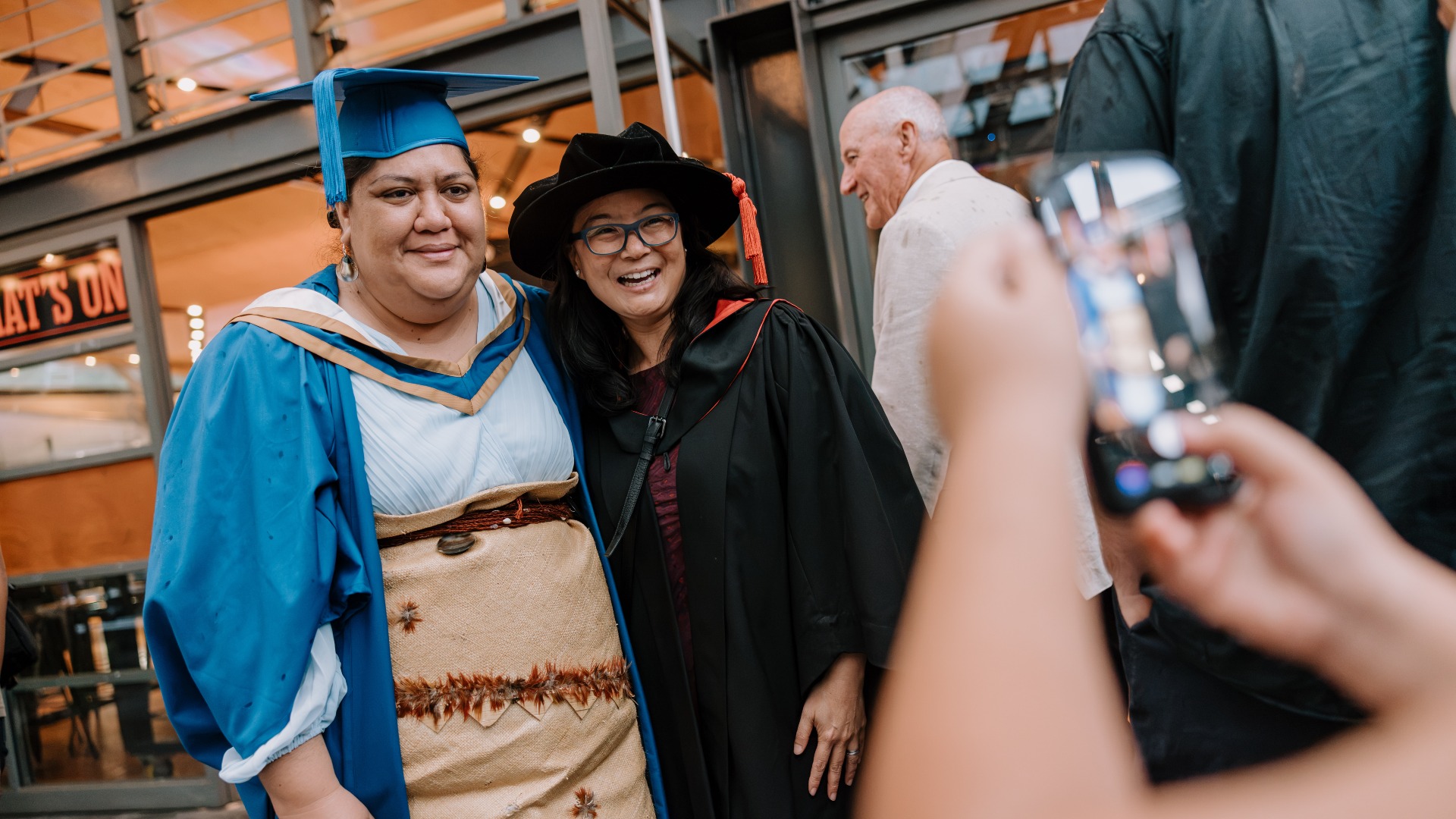
Manatu says the academic team, including Ruth Davis, Dr Kamal Azmi, Dr Aurelie Delisle, Rachel Nichols, Dr Frances Anggadi and Dr Aline Jaeckel, were generous with their time and guidance, particularly when she was adjusting to postgraduate study and finding her feet with assignments.
“At first, I would struggle a bit with trying to catch up with assignments and not being sure whether my draft was good enough to be assessed,” she says.
“I would try to meet them one-on-one just to ask for their help and ask them if they could review my assignments and feedback. And they were very helpful.”
Their support made all the difference beyond the classroom.
“It also made things a bit easier with being away from home and my family,” she says. “Their support is one of the reasons I was able to complete my studies with .”
One of the highlights of Manatu’s degree was her research capstone, which explored the roles of women in Tonga’s fishing sector and how those roles are affected by climate change.
“Women are involved throughout the fishing value chain. They go out gleaning, process the catch and sell their products in local markets. Their contributions extend from the sea right through to the marketplace. However, these important roles are often undocumented, creating significant gaps in fisheries data and limiting the recognition of women's contributions to the sector.”
Her research sought to better understand the breadth of women’s contributions and the challenges they face as climate change affects the communities and resources on which they depend.
Importantly, the work has already begun to inform her professional role back in Tonga.
Manatu is now helping to draft a climate change strategy for the country's fisheries sector, working with the plan and policy staff within the Ministry and the Foreign Fisheries Agency and the Pacific Community.
Her studies have also strengthened her understanding of the relationship between fisheries policy and the communities it is designed to support.
In a country where the ocean is central to livelihoods, fisheries management can sometimes be misunderstood as an attempt to restrict people's access to the sea.
“When people hear there's a new fisheries management, they think, okay, they're coming to stop us from doing so and so,” she says. She recalls community consultations where people have questioned why access to the ocean should be managed at all.
“They often express the view that, when God placed us on this earth, the sea was given freely for everyone to use and enjoy.”
But she believes education and awareness are essential to helping communities understand the purpose of sustainable fisheries management.
“Coming from a small island nation where the ocean is central to people's livelihoods, I understand that change can be difficult to accept,” she says.
“However, from awareness and understanding, communities can see that these measures, these fisheries policies and management measures are not about taking away their livelihood but protecting fisheries resources for future generations.”
Manatu is the first student from the program's inaugural Graduate Certificate in Fisheries Management and Development cohort to progress to and complete the Master of Fisheries Policy.
Her master’s now complete, Manatu plans to remain in the fisheries sector in Tonga, applying the knowledge and skills she has gained to her work. She hopes to continue researching the relationship between gender and climate change, particularly its impacts on women working in fisheries.
She is also interested in future opportunities at a regional level, while planning for her own daughters’ education.
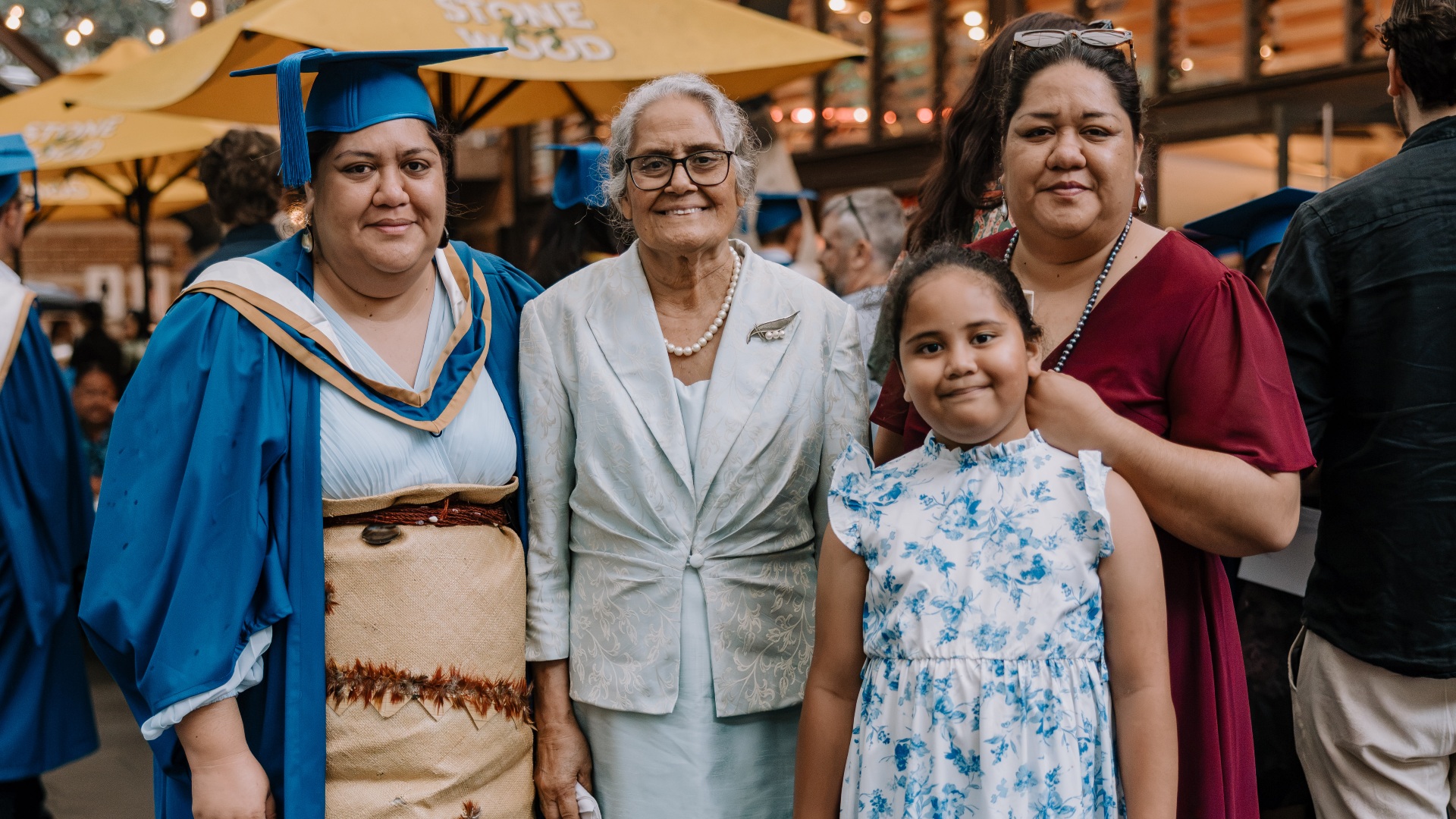
Her graduation was a chance to celebrate her achievement with the people who made it possible. Her family came from Tonga to be with her in Wollongong, bringing the story that began with her father's own studies in Australia full circle.
To have her mother travel to witness the milestone was something Manatu did not take for granted.
“My dad passed away from cancer in 2023 and my mum, who is turning 75, is a breast cancer survivor,” she says. “I am so grateful that she could see me graduate.”