

Studying happiness in Bhutan
A semester in the land of Gross National Happiness
October 15, 2026
Through the New Colombo Plan, UOW student Bharathi Gotyal spent five months in Bhutan exploring what it means to measure a nation's wellbeing.
Most students go overseas to experience a new place. For UOW student Bharathi Gotyal, it was a chance to explore a bigger question. What does it mean for a nation to measure its success by happiness?
Through the Australian Government's New Colombo Plan (NCP), Bharathi, who is studying a Bachelor of Arts in Western Civilisation (Philosophy) (Sociology), spent February to July at Royal Thimphu College (RTC) in Bhutan. The NCP supports immersive learning and internship opportunities across the Indo-Pacific.
While there, she explored Bhutan's approach to Gross National Happiness, a concept introduced in the 1970s that looks beyond economic measures to consider the overall wellbeing of the population.
In her own words, Bharathi reflects on what she found.
Arriving in Bhutan
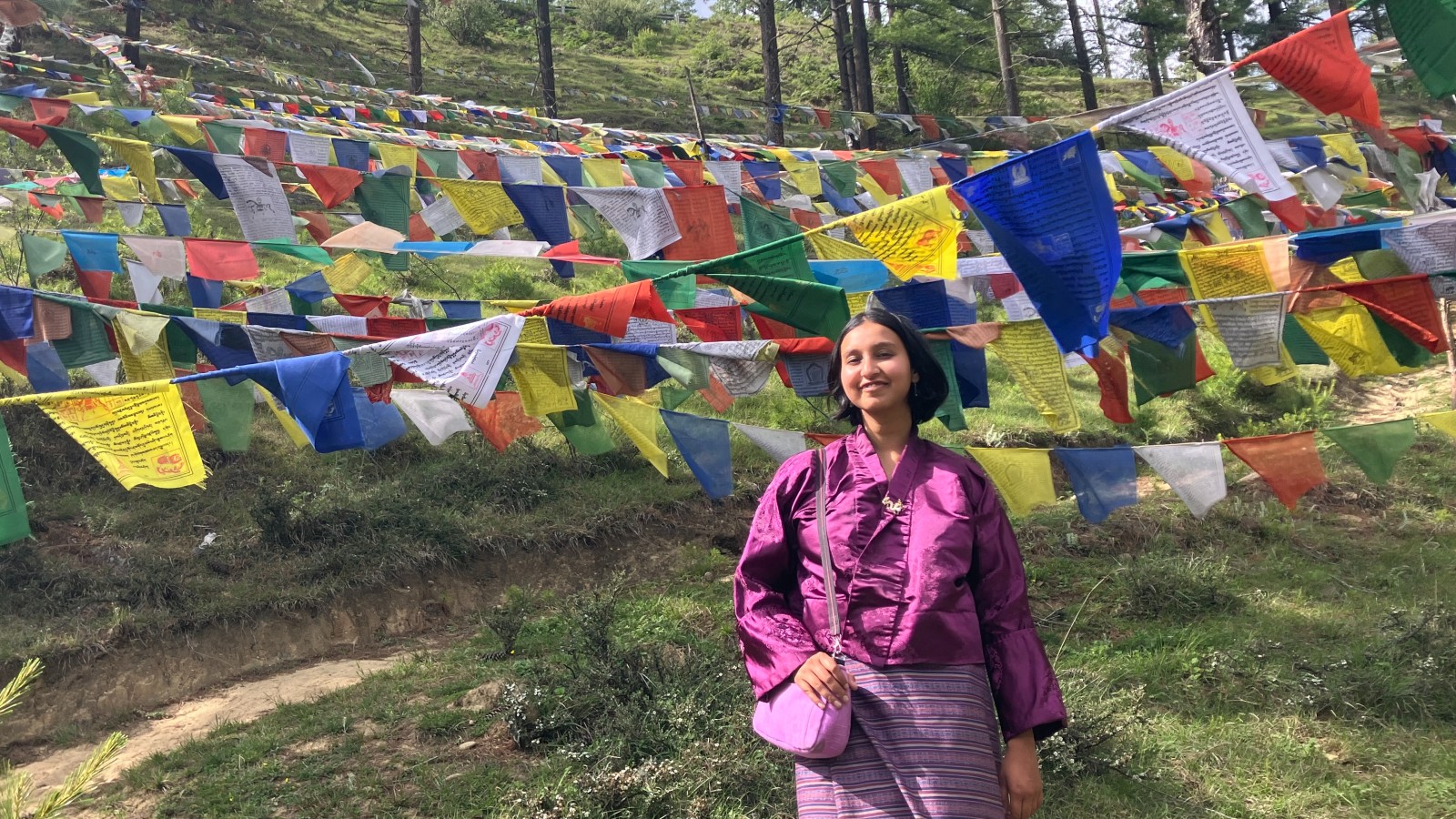
The flight to Paro is known for being one of the most exhilarating flights in the world, as it winds through the Himalayas, with the plane flying impossibly close to the mountain ridges. Landing in the valley of Paro surrounded by the peaceful mountains and the quaint airport, I immediately felt that I had made the right decision to come and live in Bhutan.
I chose to study in Bhutan after falling in love with the country when I learned about it eight years ago. I was intrigued by the countries concept of Gross National Happiness, a challenge to the idea that Gross Domestic Product should be the only measure of national progress. Bhutan is also one of the world’s few carbon-negative countries, and it only opened to the rest of the world in 2022.
Turning a passion for philosophy into an overseas experience
When I came across the New Colombo Plan scholarship and realised I could immerse myself through study, language and internships offered through an incredible amount of funding I immediately knew I had to apply for Bhutan. I’ve been interested in the philosophy of happiness through my major of the subject, so, once I got the scholarship, I went in hoping to learn all about it.
During my time overseas I began a research mentorship with an RTC academic, with the aim of producing a paper on Bhutanese understandings of happiness. Despite the theory, I found the greatest value of learning was from the Bhutanese people directly.
Immersing in the culture of Bhutanese happiness
Living on campus at the Royal Thimphu College (RTC) was an incredibly valuable experience to my pursuit of understanding the Bhutanese perspective of happiness. During my semester abroad I studied Contemporary Buddhist Ethics for a theoretical understanding of the Buddhist ideas of happiness and political sociology.
Living there gave me a base, to meet so many different groups of people and ask them, “what does happiness mean to you?”.
I spent hours talking to fellow students, academics, taxi drivers, monks, nuns, monastery principals, prisoners, rappers, shop-owners, security guards and other immigrants. Learning Dzongkha, the national language of Bhutan made this pursuit of understanding happiness infinitely more rewarding.
The joy that lit up on their faces when I spoke in my newly learnt Dzongkha with them was addictive, and made people open up so much more.
The perks of the trip
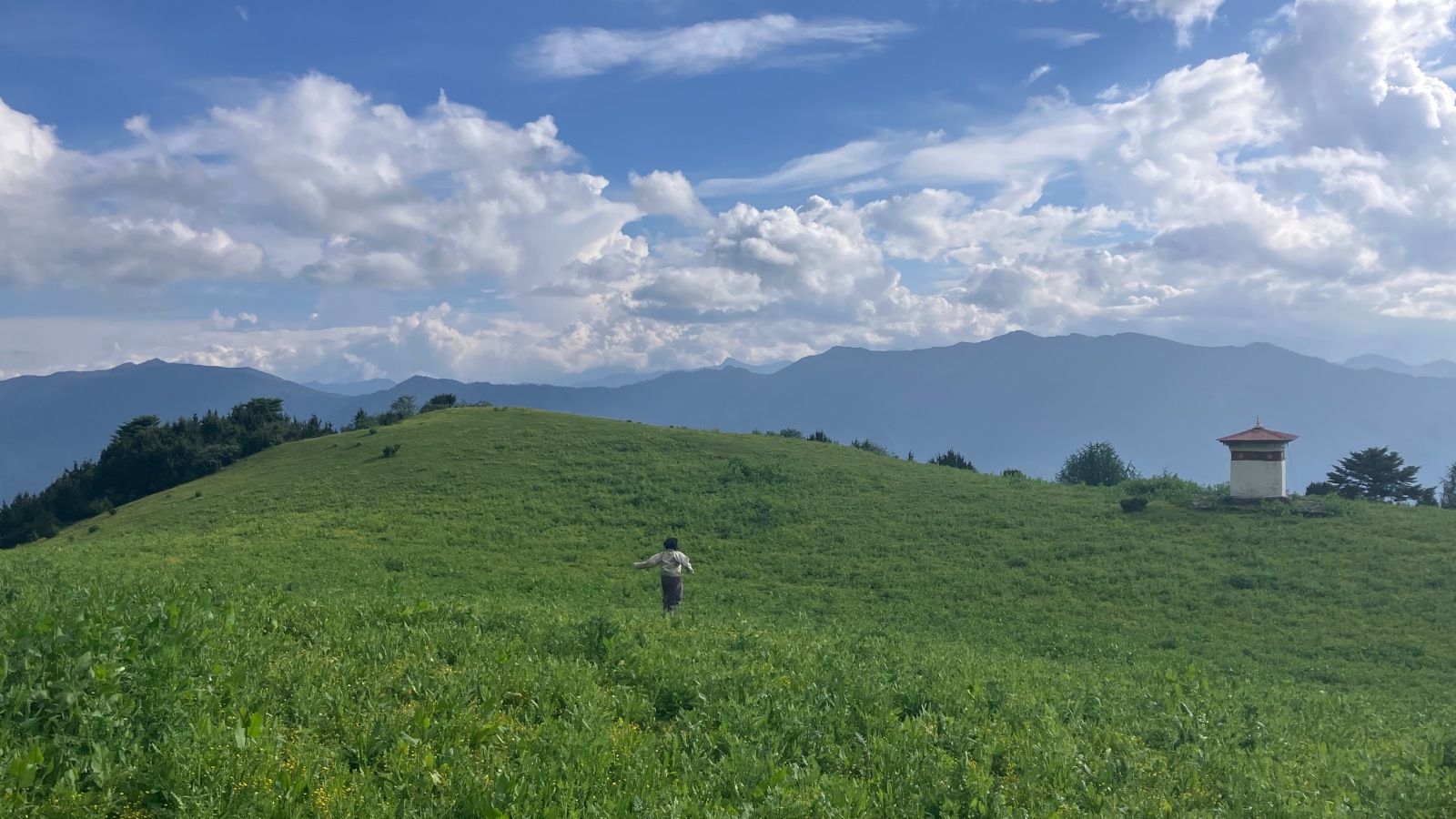
I ended up learning Dzongkha well enough that I appeared on Bhutanese national television and went viral on TikTok (over 120k views).
I had an extraordinary opportunity to stay five days a Buddhist monastery. I lived and practised alongside a community of kind monks each day, joined 5am morning prayers, hiked, fed monkeys and learnt Buddhist theory. I also learnt meditation and received a Bhutanese name from the principal.
All whilst asking questions about Buddhism and happiness.
Although my main aim was to learn about happiness, by the end of my immersion I had also received the gift of feeling like I belonged to a community. I even got mistaken for a Bhutanese person by taxi drivers and monks and was the first international student to be invited to a graduation farewell.
What is happiness?
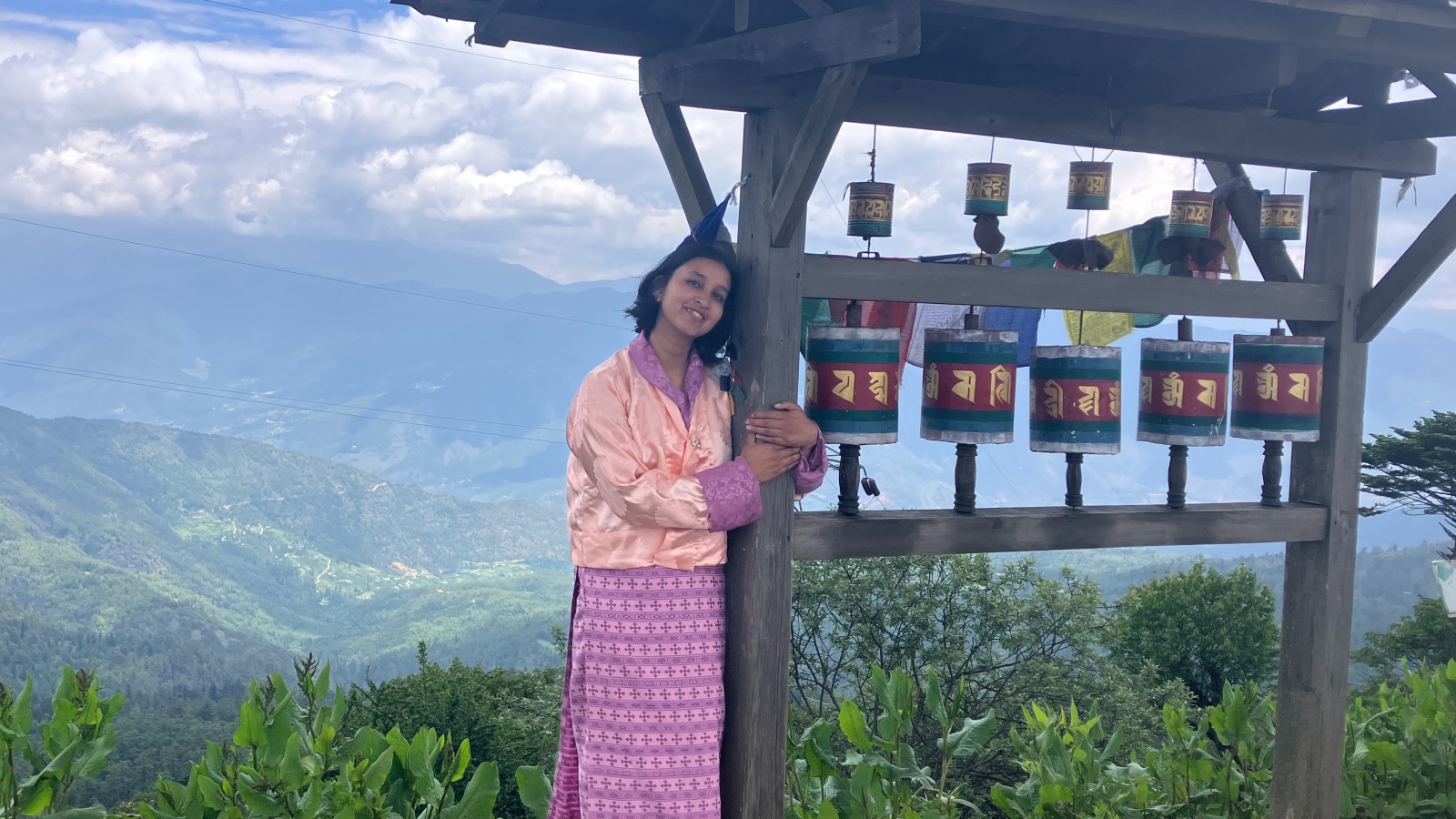
One of the most important realisations I came to whilst completing my immersion was that the Bhutanese understanding of happiness was much “thicker” than a regular conception of happiness such as more than a positive feeling. I repeatedly encountered ideas of connectedness to the community and the natural world. Instead of learning this theoretical understanding of happiness, I ended up experiencing many of these ideas and understandings first hand in a practical manner.
Looking ahead
My whole experience taught me that immersion is an incredibly powerful mode of learning, one that I drastically underestimated. Not only was I able to grasp a new language, I was able to experience a different way of being and began to question if I take for granted my life in Australia.
I had arrived in Bhutan looking for an intellectual answer about happiness but realised understanding the question required learning the language, building relationships, participating in communities and overall inhabiting different ways of being.
Additionally, the research mentorship allowed me to develop my first independent research project and confirmed my interest in pursuing postgraduate research in philosophy.
The biggest lesson
If there is one thing I would recommend to anyone considering studying overseas, it would be to do it and jump in! It is such a rare and special opportunity to immerse yourself in and to really appreciate both the Australian way of living and other possibilities.
While you’re at it, you might just find a home away from home like I did.