UOW
Excellence - Innovation - Diversity
University of Wollongong
Site Search
Advanced Search  
SEDLOs
Skip navigation
SEDLOs
Other Services


Living and Studying in Australia

Back to Index

 Australian Customs and Culture

Australians come from many different backgrounds: from the Aboriginal people who have lived on this continent for many thousands of years immigrants who have come from all parts of the world. Although their backgrounds are different they have many things in common: English is the common language, the laws are held in common and they share many attitudes.

Body language

Generally, Australians like to look people in the eye when they greet each other and while speaking. This is not considered impolite as it is in some cultures, although it is considered rude to stare at people. Australians do not stand very close to others or touch them much during conversation. It is not an insult in Australia if you are handed something with the left hand.

Informality

You will notice that Australians like an atmosphere of relaxed informality. Young people in particular are uncomfortable with complex rules.

Individuality

Many Australians want to be treated as individuals, rather than as representatives of a certain class or group. This independence tends to make them suspicious of authority. Their concept of government is that it exists to serve them, not the other way around.

Equality

Australians grow up believing that people should have equal social and legal rights. There are laws to prevent discrimination on the basis of race, religion, gender, disability, sexual preference and marital status. Many women seem more independent than women in some other countries. They may have responsible jobs and often continue to work after they get married and have children. There is great informality in social relationships between men and women. Many young women leave their parental home before they marry to live with friends of either sex. Women have great freedom in the way they dress. Brief clothing is usually a reflection of the relaxed lifestyle and warm climate and does not suggest low moral standards.

Directness

Discussing issues, events and ideas openly with others is considered quite proper in Australia. Issues might be discussed which you would consider embarrassing or rude: try not to be offended. Australians are also quick to get to the point, particularly in business situations. They may also voice disagreement openly, whether with friends, teachers or employers.

Greetings

Men usually shake hands firmly the first time they meet. Women often do not shake hands. “How do you do, “good morning” or “good afternoon” are formal greetings but usually young people just say “hello” or “hi” or “how are you”?

Punctuality

You are expected to be punctual in Australia. If you have a business appointment at 10.30, be there at 10.30. If you are invited for dinner at 7 p.m., you would be expected to be there at 7. p.m. or within about ten minutes. If you cannot keep an appointment or you are going to be late, it is important that you let the person know, otherwise you may find them unfriendly when you next meet them.

Social invitations

When you receive a social invitation you are expected to respond quickly and honestly. If you cannot attend an event you are invited to, you should thank the person for the invitation but say you are unable to come. “RSVP” on a written invitation means “please reply”. If a person invites you to a restaurant or theatre they may intend to pay for you. However, since students are often short of money, an invitation may simply mean they want you to join them but you are expected to pay for yourself. You should ask what costs are involved if you are not sure.

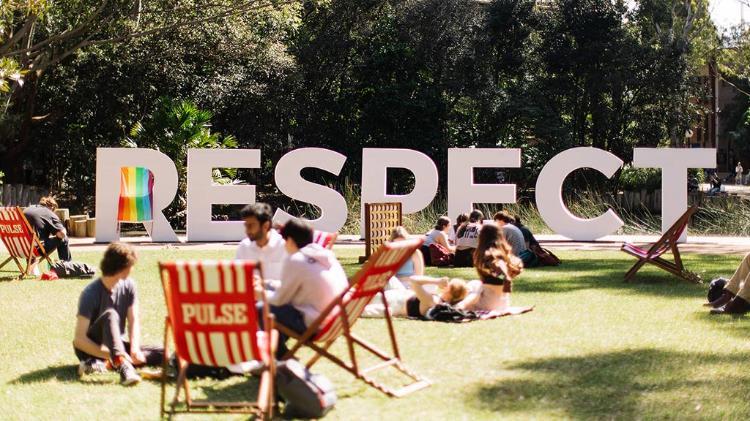
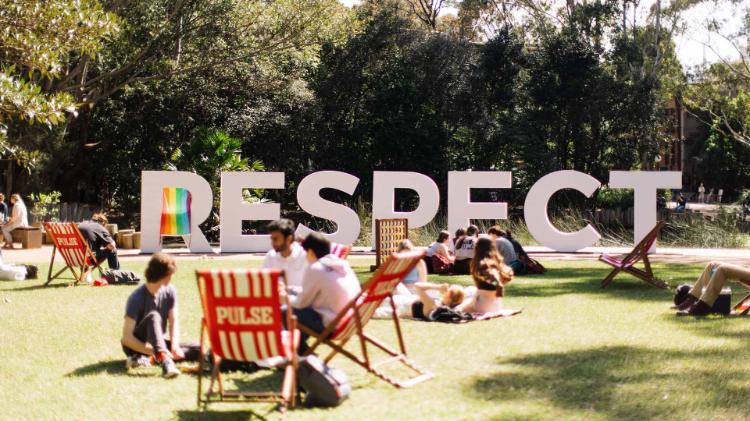
Respect

Most people in Australia think of themselves as your equal and so the waitress and garbage man expect to get the same respect from you as the bank manager or the lecturer. “Thank you” is a phrase often used. Even when a person is only doing their job (such as a shop assistant) it is customary to say “please” and “thank you”. Nobody has servants in Australia and it is not considered shameful to do manual work. Husbands frequently share in household duties.

Gift giving

If you are invited to someone’s home for dinner it is customary to bring with you a bottle of wine, beer or other drink for the host. Some people bring chocolates or flowers for the hostess. Because of Australia’s anti-corruption laws, it is safest to use a “thank you” greeting card to acknowledge good service from a person acting in an official capacity. For example, if you wish to express appreciation to a member of University staff who has been particularly helpful, a card may be welcomed, whereas a gift could cause discomfort because of the potential that someone may misinterpret it as a bribe.

Tips

The giving of tips to waiters, taxi drivers and hotel staff is optional in Australia. Laws governing the minimum wage payable to employees mean that Australian workers do not have to depend on tips to earn a livable income.

Audience behaviour

In Australia it is customary for the audience to remain silent during a public performance or film. It is regarded as bad manners to carry on a conversation as it may interfere with the capacity of others to hear and enjoy the performance.

Living in harmony – what not to do

There are laws against some behaviour considered socially unacceptable such as being drunk in a public place, swearing in public, talking or behaving in a sexually indecent way or urinating in public. There are council rules against spitting or dropping rubbish on streets. If you need to clear your throat or nose, it’s usual to use a tissue. Australian toilets are not made to handle the pressure of someone squatting on them. There are laws against unreasonably loud noise, for example loud music is prohibited after midnight. Smoking is not allowed on public transport, on a railway station, in public buildings or in any building on the campus.

 Coping With “Culture Shock”

No matter what country you come from, Australia will be unfamiliar to you at first. Much will be new to you such as the people, their behaviour, their clothes, the food, the houses, the smells, the countryside, the sound of another language. You may miss the comfort of friends and family. Students can find these changes upsetting and confusing. You may feel hopeless, frustrated or angry or you might feel like withdrawing from your new surroundings by staying in your room. If you experience any of these feelings you are probably undergoing culture shock. It is quite normal to have some of these feelings and most students learn to overcome them in the first weeks and months of their stay. There are ways you can find out about Australia and Australians so that you begin to feel “at home” here, for example:

  • Remember that when people behave in a way you don’t understand, there is usually a reason for what they do, even if their behaviour might be unacceptable in your culture.
  • Try to observe people, listen to them and ask questions. It is important not to judge people before you understand their values.
  • Try to learn to laugh at your mistakes. People will be happy to help if you are relaxed and ready to learn.
  • Find ways to meet as many people as possible. Join clubs, take up a sport, attend organised activities, concerts, etc.

The SEDLOs or the University Counsellors would be happy to help you with any problems you have settling into your new life.

 How Can I Make Friends?

Sometimes international students say it’s hard to make Australian friends. This could be because:

  • Everyone seems to be in a hurry at Uni and it’s hard to talk to anyone for very long.
  • Australian students may have known each other in high school before coming to Uni, so they have their established networks.
  • Aussies themselves might have many “acquaintances” but only a small number of true friends. It takes time before a speaking relationship turns into friendship.
  • Some Aussies, perhaps like you too, feel more comfortable mixing with people of similar background to themselves.

However don’t give up. If you are open and friendly and keep on trying to establish contacts, you will succeed. Tell people where you are from. Usually people are interested in knowing about other countries. Don’t be afraid to make language errors: nobody is going to laugh at you. One way to meet new people is to get involved in activities on and off campus.

 Study/Life Balance

Many international students respond to the adjustment to the Australian education system by studying for very long hours. This is easy to understand, but it is a strategy that usually works only initially, because stress levels build up over time and affect study performance. Keeping fit physically, socially and emotionally enables you to be more productive over the duration of your studies. We therefore encourage you to use the same strategies to reduce stress that you used in your home country, whether this is pursuing a hobby, social life or physical exercise.

 Social Life

There are many organised activities on campus to improve your social life and provide opportunities for you to meet people. You can become involved in student activities through the student clubs, the Centre for Student Development or a sports club or through groups such as ICIS. A percentage of your study body fees goes towards your Student Association so why not get involved in some of the activities they can offer you. You may form friendships with students in your classes and there are opportunities to meet families or people in the community through activities such as the International Friendship Program.

Living in University managed accommodation can provide opportunities for friendship. If you live off campus, try to eat on campus now and then. You can take part in student parties, music nights and dances at the UniBar or go to a cheap movie at UniMovies. You can have soft drink or coffee at the UniBar or you can buy a meal, you don’t need to drink alcohol there.

Some international students make friends in the community by becoming involved in their local Church activities. You can also meet new people, learn new skills and contribute to the community by volunteering. Volunteer opportunities can be found through the Wollongong City Council or the University Career’s Service.

 Off-campus Activities

In the City of Wollongong you can find many community events, festivals, concerts, exhibitions and commercial activities which may be of interest to you. Tourism Wollongong has a list of current events, recreational activities, information on eating out, etc. Here you can find screening times of movies in a cinema near you.

 Sightseeing –The Illawarra, Sydney and Beyond

The Illawarra Region offers many attractions for visitors such as sparkling clean beaches, spectacular coastal views, rainforests, picturesque countryside, historical villages and busy towns with first-class shopping and interesting nightlife. You can find out more about regional activities here.

Here you can find a calendar of events and information on the many attractions that Sydney has to offer such as Sydney Harbour, the Opera House, harbour cruises, The Rocks, Darling Harbour, walking tours, shopping.

ICIS organises regular bus trips at student prices to places such as Snowy Mountains, Canberra, Blue Mountains, Huskisson Dolphin Cruise, Nowra Animal Park.

Click here for details of travel packages organised by STA Travel on campus such as Surfing in Royal National Park, Gold Coast, Fraser Island and Uluru and the Outback.

Countrylink provides special deals, discounts for advance purchase tickets and reduced fares for holders of an International Student Identity Card (ISIC) for train trips to many towns and cities in New South Wales, Victoria and Queensland.


   Back to index next


Last reviewed: 21 July, 2008 


Student Services
3rd Floor, Building 11, UniCentre
Hours: 9.00am to 4.30pm
Telephone 02 4221 3445 - Fax 02 4221 5667
  CRICOS Provider No: 00102E
Privacy, Disclaimer and Copyright Info
Feedback: StudentServices@uow.edu.au