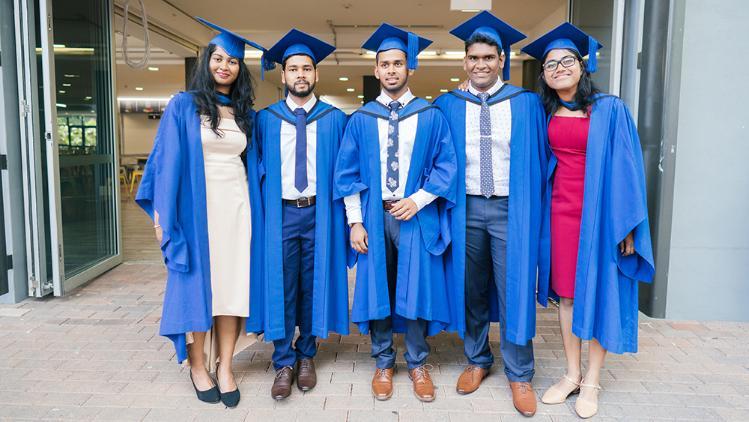

Graduation represents years of hard work, dedication, and sacrifice. This is a significant milestone in the lives of our students, and we are proud of all you've achieved.
Graduation
Ready to graduate?
Your graduation involves two stages: the completion and conferral of your course, and an in-person graduation ceremony.
Follow the steps below and refer to the graduation key dates to ensure a seamless graduation experience.
Stage 1: Conferral

1. Apply to graduate
If you are near course completion, check your eligibility and apply to graduate.

2. Conferral
Once your application to graduate is approved by the University, you will be conferred. Conferral is the act of 'officially validating' or awarding your course and qualification.

3. Receive official documents
Official documents come in two formats - digital and hard copy.
After conferral you will receive an email asking you to register with My eQuals so you can access your digital documents. If you've previously completed a course, you may already have a My eQuals account so you won't need to register again.
A hard copy Testamur will be sent to the address you provided in your application to graduate. You should receive it within a month after conferral.
Stage 2: Graduation ceremony

4. Receive invitation to graduation ceremony
After conferral, you will receive an invitation to register for an upcoming graduation ceremony. Invitations are sent to the email you nominate for My eQuals, not your UOWMail.

5. Register and pay fee
To attend a graduation ceremony, you must register and pay the graduation fee by the specified deadline.

6. Attend graduation ceremony
Celebrate your amazing achievement with friends and family at our UOW Wollongong Campus. Find out what you need to do to prepare for your ceremony, and what to expect on the day.
Beyond graduation
Official documents
Information about receiving your digital and hardcopy official documents

Connect with UOW Alumni
Join a global community of more than 163,000 leaders and innovators

Postgraduate study
If you're looking to advance or change your career, UOW’s postgraduate degrees can help you get there

Graduate roll
A register of the courses conferred by the University of Wollongong each year
Graduation photos
View photo archives of treasured moments captured at UOW's graduation celebrations
View albums on Flickr