UOW
Excellence - Innovation - Diversity
University of Wollongong
Site Search
Advanced Search  
Research & Innovation
Skip navigation
Information For
Our Research
Research Management
Organisational Units


The Centre for Maritime Policy

The Centre for Maritime Policy at the University of Wollongong is the Asia-Pacific region's leading academic centre for research on issues of national and international ocean law and policy, ocean management and maritime security.

The Centre's researchers play a key role in helping governments grapple with a wide range of maritime issues such as security, threats of sea-borne attacks by terrorists or pirates, border issues, protection of the marine environment, introduced marine species, illegal fishing and boundary delimitation.

Established in 1994 as a joint initiative between the Royal Australian Navy (RAN) and the University of Wollongong , the Centre played a significant role in the development of the Australian Government's Ocean Policy and continues to influence the policy process in Australia .

The University of Wollongong , through the Centre for Maritime Policy, offers the only multidisciplinary maritime postgraduate degree program in Australia , and is one of the few universities in the world to do so. It combines aspects of marine policy, law, science and security to offer a genuinely comprehensive and multidisciplinary approach to the study of maritime issues.

Many senior Australian and overseas government officers working on ocean-related policy are graduates of the Centre's degree program. The Centre also offers regular professional short courses on the Law of the Sea, Maritime Regulation and Enforcement, Regulation of Shipping, Maritime Security Law and International Fisheries Law. In addition, the Centre develops and teaches specialised courses tailored for Government agencies in Australia and overseas.

The Centre has strong linkages with Australian government agencies including the RAN, Environment Australia, the National Oceans Office, the Australian Fisheries Management Authority, Coastwatch, the Department of Defence, the Australian Maritime Safety Authority and the Department of Foreign Affairs and Trade.

The Centre also has a strong international presence, particularly in the Asia-Pacific region where its research and policy development projects range from helping the Indonesian and Philippines Governments resolve fishing rights issues in the Sulewesi Sea , to research consultancies on Ocean Governance for the Asia-Pacific Economic Cooperation (APEC) forum. It also works closely with overseas governments and international organisations such as United Nations agencies.

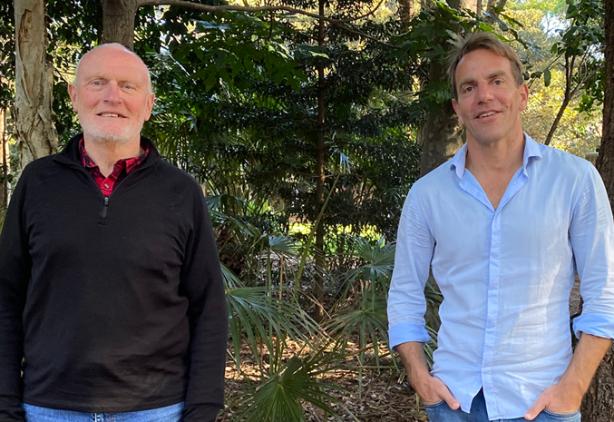
"There's not much that happens in maritime policy in the Asia-Pacific region that we aren't involved in," says Centre Director Professor Martin Tsamenyi.

CENTRE DIRECTOR: PROFESSOR MARTIN TSAMENYI
EMAIL tsamenyi@uow.edu.au
WEBLINK www.uow.edu.au/law/cmp

ILLEGAL FISHING AN INTERNATIONAL ISSUE

The dramatic 21-day pursuit across the Southern Ocean by an Australian fisheries patrol boat of a suspected illegal fishing activity by the Uruguayan vessel Viarsa 1 highlighted the high stakes of illegal fishing. The Viarsa 1 was found to have 85 tonnes of the rare and endangered Patagonian Toothfish - termed the "white gold" of the South Ocean - in its freezers. The vessel had caught the fish off the Heard and McDonald Islands in Australia 's exclusive economic zone, 2,400 km south-west of Western Australia .

Illegal, unreported and unregulated (IUU) fishing is a major problem across the world's oceans. Not only does IUU fishing deprive nations and their legitimate fishing fleets of economic benefit, it also creates significant problems in the sustainable management of fish stocks and fish habitats. Poachers are not concerned with key scientific issues such as breeding cycles, maintaining breeding populations and setting aside sanctuaries in areas of critical habitat.

The Australian Government's reaction to the illegal fishing activities by the Viarsa 1 was unequivocal. With the assistance of ships from other nations, it cornered the Uruguayan vessel after a chase through some of the world's most inhospitable waters and escorted it to Fremantle where it and its catch were formally seized.

The Viarsa 1 incident was a dramatic example of the problems of IUU, which confront all governments concerned with the sustainable management of the world's fishery resources. IUU fishing can lead to an erosion in the relationship between fishing nations, possible conflict over resource use, the collapse of fishing stocks and the loss of social and economic opportunities for fishing communities.

It was precisely these issues which prompted the Indonesian and Philippines Governments to seek the assistance of UOW's Centre for Maritime Policy to undertake a three-year research project funded by the Australian Centre for International Agricultural Research (ACIAR) to establish workable policies, agreements and fishing stock management structures between two of South-east Asia's major fishing nations. Both suffer significant economic and social losses due to IUU fishing, which is estimated to cost the Indonesian economy US$2 billion annually, while the cost to the Philippines is also well over US$1 billion.

IUU fishing is particularly serious for both nations in the Sulawesi Sea , where the two nations have no agreed maritime boundary, but where they share a number of common fish stocks and where there is a high level of illegal foreign fishing.

The Centre started work on the three-year project in mid-2003, and is working to achieve a range of outcomes including greater bilateral cooperation between Indonesia and the Philippines in the absence of agreed boundaries,

  • development of policies and legislative framework to address IUU fishing and help the development of sustainable management of fish stocks
  • facilitation of capacity building to help the two nations deal with IUU fishing
  • development of a "Regional Plan of Action" to combat IUU fishing.

< Back to Contents | Next Article >


Last reviewed: 14 February, 2007 


University of Wollongong
Wollongong NSW 2522 Australia
UOW Switchboard: +61 2 4221 3555
Prospective Student Enquiries
Australia: 1300 367 869
International:  +61 2 4221 3218  

CRICOS Provider No: 00102E
Privacy, Disclaimer & Copyright Info
Feedback: webmasters@uow.edu.au